WILLISTOWN CONSERVATION TRUST

  • Facebook
  • Instagram
  • LinkedIn
  • YouTube
DONATE
  • About
    • HOW WE WORK
    • WHERE WE WORK
    • OUR STAFF AND TRUSTEES
    • JOBS & INTERNSHIPS
    • RUSHTON CONSERVATION CENTER
    • STRATEGIC PLAN
    • INCLUSION, ACCESS, AND BELONGING
    • FAQs
  • LATEST
    • BLOG
    • IN THE NEWS
    • PUBLICATIONS
    • PHOTOS
  • EDUCATION
    • GROUP EDUCATION
    • LAND PROTECTION
    • STEWARDSHIP
    • BIRD CONSERVATION
    • COMMUNITY FARM
    • WATERSHED PROTECTION
    • RUSHTON NATURE KEEPERS (RNK)
  • NATURE PRESERVES
    • ASHBRIDGE PRESERVE
    • HARTMAN MEADOW
    • KESTREL HILL PRESERVE
    • KIRKWOOD PRESERVE
    • RUSHTON WOODS PRESERVE
  • EVENTS
    • EVENT CALENDAR
    • BARNS & BBQ
    • RUN-A-MUCK
    • WILDFLOWER WEEK
    • ACCESS Program
  • Support
    • WAYS TO GIVE
    • SPONSOR THE TRUST
    • CORPORATE PARTNERSHIP PROGRAM
    • JOIN THE SYCAMORE SOCIETY
    • LEGACY SOCIETY & PLANNED GIVING
    • VOLUNTEER
    • DELCO GIVES 2026

Chester County Commissioners, PA DCNR, Willistown Conservation Trust, and Willistown Township Celebrate 12-Acre Addition to Kirkwood Preserve

November 2, 2022 By CommIntern

image.png
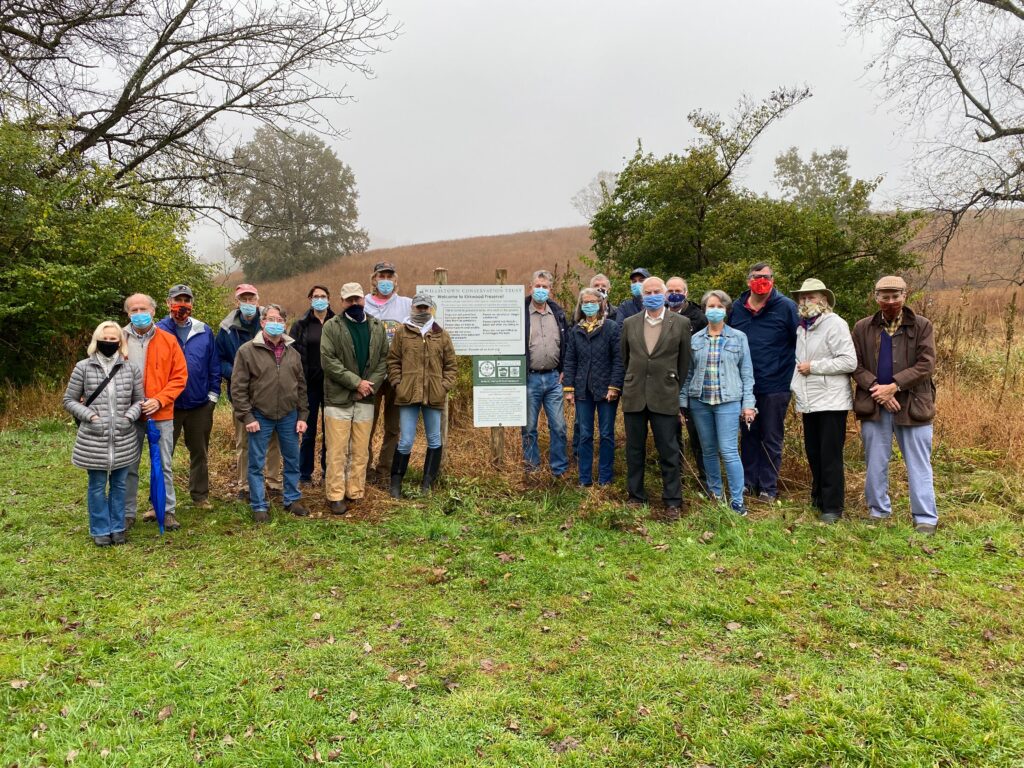
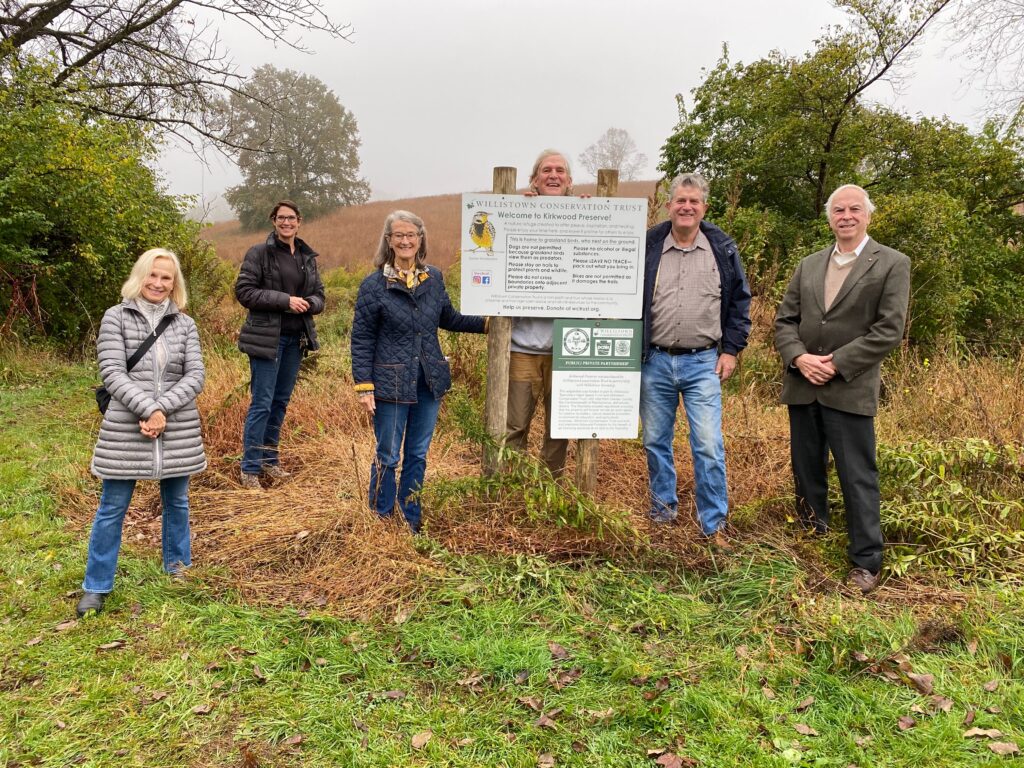
Photo from L to R: Julie Graham (WCT), Drew Gilchrist (PA DCNR), Judy Thomas (Chester County Parks & Preservation), Jeanne Swope (WCT Volunteer), Ted Leisenring (Willistown Township Open Space Review Board), Erik Hetzel (WCT), Michelle Kichline (Chester County Commissioner), Bill Shoemaker (Willistown Township Supervisor), Josh Maxwell (Chester County Commissioner), Kate Etherington (WCT), Bonnie Van Alen (WCT), Mary Hundt (Willistown Township Parks & Recreation), Beth Hucker (WCT), Brook Gardner (Willistown Township Open Space Review Board), Molly Perrin (Willistown Township Supervisor). Chester County Commissioner Marian Moskowitz joined Willistown Conservation Trust at Rushton Conservation Center prior to the Kirkwood Ceremony.

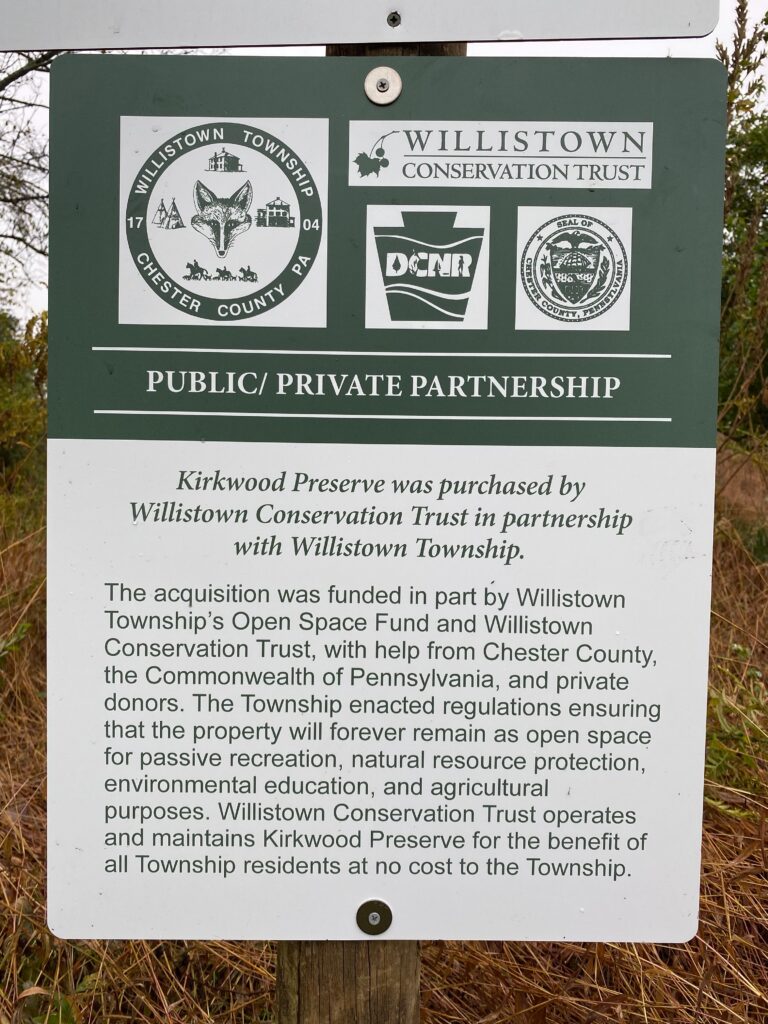
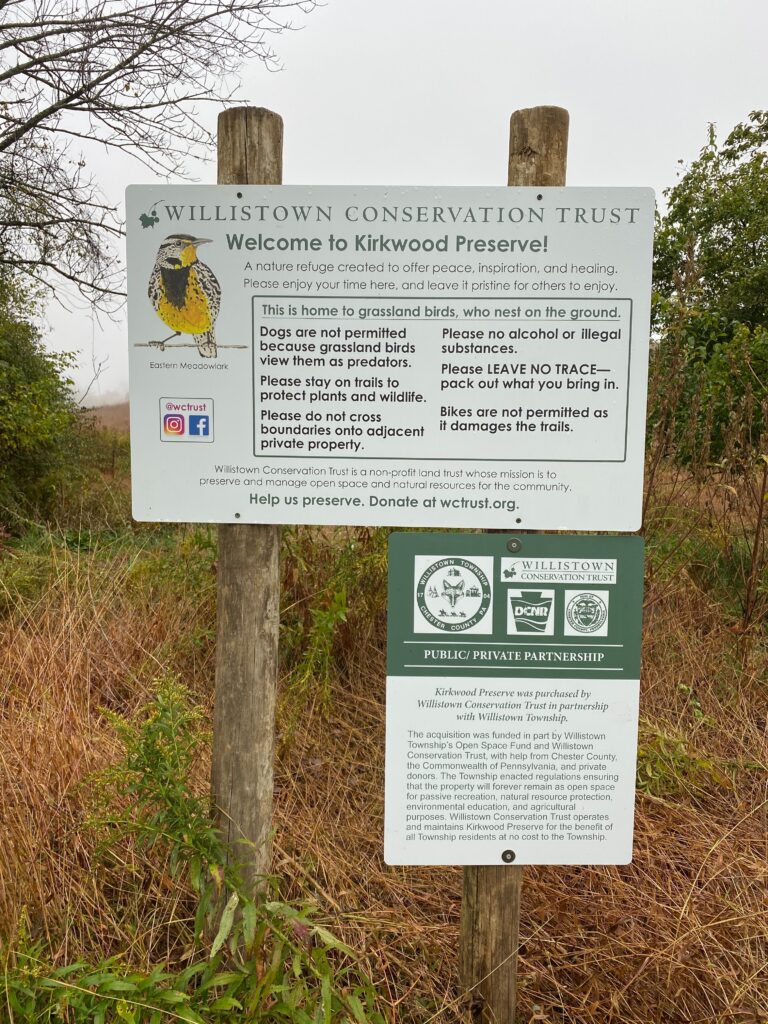
Willistown, PA — On Monday, October 24 Willistown Conservation Trust welcomed the Chester County Commissioners, the Pennsylvania Department of Conservation and Natural Resources (DCNR), and Willistown Township to Kirkwood Preserve (855 Grubbs Mill Rd., Newtown Square) to commemorate an additional 12 acres added to the 83-acre Nature Preserve owned and maintained by Willistown Conservation Trust.

Partners in attendance at the ribbon cutting ceremony included Willistown Conservation Trust Executive Director Kate Etherington and Director of Land Protection Erik Hetzel; Chester County Commissioners Michelle Kichline and Josh Maxwell (County Commissioner Marian Moskowitz joined WCT before the ceremony); the PA DCNR Grants Coordinator Drew Gilchrist; Willistown Township’s Parks & Recreation Director Mary Hundt, Board of Supervisors Chair Bill Shoemaker, Supervisor Molly Perrin, Open Space Review Board Chair Ted Leisenring and Open Space Review Board Member Brook Gardner; and Chester County Preservation Programs Coordinator Judy Thomas.

This ceremony honored the partnering funders who were vital in the acquisition and permanent protection of this additional 12 acres of public open space. The project was financed and made possible by a grant from the PA DCNR through the Keystone Act of 1993 to WCT; grant funds provided by the Chester County Commissioners through the Chester County Landscapes 21st Century Fund; and the Willistown Township Open Space Fund.

Chester County Commissioners Marian Moskowitz, Josh Maxwell, and Michelle Kichline note, “The beauty of Chester County’s open space program is found not only in thousands of acres preserved, but also in the partnerships that make it happen. We are admired by communities across the commonwealth and the nation, and this is because all preservation partners — be they the State, the County, our municipalities, and conservancies like Willistown Conservation Trust — always make smart, well-planned investments in open space.”

image.png

“Kirkwood Preserve is a special place,” says WCT Executive Director Kate Etherington. “Nestled among privately conserved lands, its protection preserves an important greenway, scenic vistas, important habitat for grassland birds and other species, meadows abundant with pollinators, and a prime section of Crum Creek. Additionally, Kirkwood provides ample recreational activities for the community with miles of pedestrian and equestrian trails.”

With the additional 12 acres comes a new trail within the Preserve — one that will provide access to many more miles of trails on adjacent conserved lands throughout the Willistown Countryside.

Says PA DCNR Grants Coordinator Drew Gilchrist, “The DCNR is pleased to partner with Willistown Conservation Trust and other funding partners in the preservation of this important parcel. With its preservation, the land will continue to provide essential environmental services, wildlife habitat, connect existing preserved land and expand the local trail network for all to enjoy and appreciate.”

Thanks to Willistown Township funding, WCT intends to install a stepping stone creek crossing along Crum Creek, which will connect the main portion of Kirkwood Preserve to this new addition. This creek crossing will also provide access to a portion of the existing Preserve that has not been accessible to the main area. WCT anticipates the creek crossing installation beginning in early fall of 2023, though walkers and hikers are currently permitted to cross the creek to access the Kirkwood Preserve addition. Proper footwear is advised.

Says Bill Shoemaker, “The celebration of this addition to the Kirkwood Preserve marks another chapter in the longstanding partnership of Willistown Township and WCT. The expanded parking lot and the soon-to-be-added stepping stones across the creek make the Preserve even more available for people to enjoy. The advantages of preserving open space resources are so important to this community, and Willistown Township is proud to be a part of this today!”

This open space is also part of a larger 16-acre conservation project across Grubbs Mill Road that will enable the preservation of an historic farmstead dating from the late 18th century that includes an iconic Chester County bank barn. Portions of the property that are not subject to the Kirkwood acquisition have been placed under conservation easement and restricted from any further development, allowing for the preservation of an historically significant landscape that embodies the rural character of the Willistown countryside.

Filed Under: Conservation, Land Protection, Nature Preserves, Stewardship, Trails

Step Back in Time with Owen McGoldrick

May 24, 2022 By CommIntern

All photos are currently on display and for sale in the Rushton Conservation Center, May 17 – August 28.

INTRODUCTION BY OWEN MCGOLDRICK

The color photographs were made using a 4×5” Linhof view camera. Notch and clip marks are shown to emphasize a bygone era, which involved carrying a heavy view camera and tripod, loaded with Kodak or Fuji film, and taking a picture somewhere on the grounds of what is now part of the Kirkwood Preserve, or in the very accommodating and voluminous interior of our mid-19th century farmhouse and barn.

Dr. S.H. overlooks Grubbs Mill and Goshen Roads

“Silo Cap” was one of the very first photos shot with a 35mm Pentax for a beginning photography class at the Columbus College of Art, Ohio. Our family lived in the lower house of Massey Farm (always referred to as White Horse Farm by our clan) from 1963 to 1990. The photographs in this exhibit depict the house, barn and fields that surrounded the fence line.

The landowner, Dr. Robert Strausz-Hupé, lived in the mansion at the top of the hill. He was an Austrian immigrant with Old World ways, a plume of cigarette smoke and cravat. He served as a statesman, professor at Penn and a term as the US ambassador to NATO, as well as Turkey, Sweden and Sri Lanka.  Dr. S. H. could be stern, especially when it came to our lawn mowing abilities, or lack thereof; however, he was also generous, allowing us to use his glamorous swimming pool every summer day from 5 to 6 pm. What a relief it was to jump into that cool water on a hot, muggy summer afternoon. The pool was surrounded on three sides by apple trees which offered useful content for two of the pictures in this exhibit, not to mention homemade applesauce.

Here’s a tidbit. Mrs. Strausz-Hupé once called my mother and asked frantically if we had a car to pick up Dr. S. H. and a military general at the Philadelphia airport. Being the only resource available, off I went to pick up the good doctor and General Alexander Haig in the family VW. As a longhaired 16 year old with limited driving experience, it was a bit soon to be chauffeuring major political figures of national importance. After I dropped them off, mom asked me what they talked about. I replied, “Mostly themselves.”

Tidbit #2. Dr. Strausz-Hupé had an aesthetic streak. He was the first person to turn me on to the 18th century British artist and poet, William Blake. There we sat in his study with little hippie me looking at color plates of this visionary artist. Blake is still one of my favorite historical figures, and not only visually, but the whole daring philosophy of his creative universe is something to behold.

Growing up on a farm with a big barn to play in, acres of fields and woods to explore, and Crum Creek to swim and fish in, was more than a fair deal for any childhood. How remarkable it is that those fields and creek are today’s Kirkwood Preserve! Deep appreciation and a little awe goes to Bonnie Van Alen, Kate Etherington, Willistown Conservation Trust and the active group of local citizens for taking action and saving the day.

The select group of images were recently scanned and retouched in Lightroom and Photoshop and printed within the last two months on Epson Premium inkjet and Kodak professional paper. This is known as “straight photography,” where all effects happened on site and outside the camera, without machinations in Photoshop to create the visual results. The transparencies came out of a 40-year hibernation in carefully stored boxes through many a move, and now my old friends have returned.

GALLERY DESCRIPTIONS

All gallery photos are on display and for sale at the Rushton Conservation Center, May 17 – August 28.

1. The Barn is a Camera | A window shines a sunbeam inside the west storage room, or hay mow.

cam·er·a ob·scu·ra : a darkened box with a convex lens or aperture for projecting the image of an external object onto a screen inside. ORIGIN early 18th century: from Latin, ‘dark chamber.’

2.  Silo Cap | One of the earliest photos from the first year of photography at the Columbus College of Art and Design. I wished I’d thoroughly documented the silo since we have so few photos of it. It was demolished later that year in 1977, after being deemed an unsafe structure.

3. Inside Looking Up | Inside the silo looking up at the deteriorating rooftop. A worker would have stood on those steps and lifted the sileage from the outside on an “elevator,” which was actually no more than an iron bucket. Dangerous work.

4. Black and Light | The result of a photography assignment using Dektol as a developer for B&W film. Or was it M-D3? It gives a grainy, high contrast look to the print. I took two negatives and sandwiched them. The barn’s a camera, a playground, a studio, a subject, an object.

5. Northwest Side | I took this snapshot in the mid-1990’s. Those doors are usually called “X-braced” and lead into the upper threshing room. The double decker barn traces back to English antecedents. A recent shot of one of the storage rooms is shown below.

6. The Exemplar | I remember floating by that oak tree in a great flood in June, 1968. There was a continuous wave at the bottom of Barr road.
Crum Creek was flowing to the right of this tree at about a 5-foot depth, a moving lake 10 times its normal size. That’s when I went for a swim and my friend Tom thought I was drowning so he made Boy Scout signals on the edge of the field. You can still see the high water mark from that storm event, put there by the township on telephone poles.

 7. Pennsylvania Landscape | “Tootsie Roll” bales somewhere on Davis Road looking south. Archetypical Pennsylvania farmland nostalgia. For some reason, I think of the Civil War when I look at this print.

8. Cow Palette | Living amongst the Holsteins brought up mischievous thoughts of the black and white tonal scale in photography. But I didn’t expect the cow to be waiting for me on top of the hill. Hello Ansel Adams Zone System. That’s Crum Creek in the far ridgeline.

9. Speed of Light | From the third floor west bedroom looking into Wyeth country.

10.  A Single Excellent Night | The title comes from the name of an ancient Buddhist text. That’s a 35mm slide projected from a Kodak projector of a TV still shot (was it a Magritte documentary?) into the far room. I painted the walls yellow and asked a friend to pose with an umbrella. She put on my bowler hat. I wish I still had that bowler hat.

11. Flag Composition | Still life arrangement courtesy of the Strausz-Hupé apple grove. The antique dress was courtesy of mom’s shop in Berwyn. It was a lot of work to get those apples into our enclosed yard in cosmic order. The flag was a family heirloom from family ancestor and WWI flying ace, George Evans. One time I showed the photograph to the father of a very good friend who exclaimed, shocked and angry, “But that’s desecrating the flag!” (The flag should never touch the ground, let alone decaying apples.) You can’t predict some people’s reactions. But I got his point.

12. Thornley Bush III | I found this natural oddity and stuck it between barbed wire and a fence rail just outside of the mudroom. One time the field behind caught fire from an unmonitored rubbish burn and the fire department had to be called out to douse the flames. The next year the field grass grew back very, very green and healthy. Sometimes calamity brings an improvement.

13. Still Life with Moonrise | A Kodak projector beams a slide of the moon in the third floor bathroom. I was big into projecting slides into interiors and exteriors, and then photographing the on-the-site collage with a view camera. That’s called analog. Ya dig?

14. Three Tree Hill | A saddle sloped hill that was great for tobogganing. Brought to you by billions of years of tertiary history and a 4×5 view camera. Somewhere near those trees I remember there was a salt block for cows. After some research, sodium in the salt helps with the absorption of calcium and helps to avoid “grass tetany.” I tried licking that maroon colored block once as a kid and never did get grass tetany after that.

15. Priest at Crum Creek 

Crum Creek. I wonder what the Lenni-Lenapes called it?

This is a shot of Father Dinda launching a toy boat. He was a real fun character who used to come into my mother’s antique shop in Berwyn. Mom would always have some interesting items in the shop and that’s how I came to borrow the boat.  I love Father Dinda’s self-satisfied grin – a man of the cloth comfortable in his…cloth. How I got him on that rock I’ll never know.

We used to go swimming in one spot called the Sheep hole, where the creek was six feet deep. There was a rope swing on a pine tree, and swing we did into beautiful Crum Creek. I would get a stick and put a piece of bacon on a hook and fish from a large rock. In those summer days in the 60’s, I’d often see rainbow trout, which was always tantalizing because not once did I ever catch a trout with bacon. They don’t go for worms either. I’d inevitably catch a sunfish. This was Huck Finn style fishin’. One time I took my catch home and put him in our aquarium. We called him/ her, Sunny, he/she lasted all summer.

Right across from the big rock where I always sat, there was, and thankfully still is, a magnificent oak tree. Around the time I took Father Dinda’s picture, I set up the view camera in front of a tree in all its autumnal glory, The Exemplar.

16. Portrait of Father Dinda

17. White Horse Farm, 1900 | The house on the hill is the mansion where the Strausz-Hupé family lived.

From the Chester County Historical Society Archives.

18. The Lion in Winter | The home had a great fireplace. An excellent home for the holidays.

19. Beatle John | My brother John Pancoast posing in front of the apple cosmos in Alfie’s yard. It could have been a great album cover. John used to go to parties and tell everyone he was George Thorogood’s brother. It worked.

20. First Polaroid: Forebay | A copy of the very first Polaroid trying out a new view camera in 1981. Perspective issues!

Filed Under: Conservation, Education, Film, Land Protection, Nature Preserves, Photography

Beaver Business

January 4, 2022 By Anna Willig

Please Note: The Watershed Protection Team is excited to welcome our newest team member and encourages all visitors to keep an eye out for beavers at Ashbridge but please do not go searching for them. The health of our waterways will benefit from the presence of Castor canadensis, so please be respectful of their space.  

In the middle of the 2021 spring tree planting, the Watershed Protection Team had quite the surprise when we spotted evidence of beaver activity in Ashbridge Preserve. A single tree was knocked down along Ridley Creek, with distinctive teeth marks that indicated a beaver had found itself a tasty meal. In October, the first lodge was located, and it was clear that the beavers had settled in the center of 1,000 freshly planted trees. But more than concern was a feeling of validation; the hard work of every staff member, volunteer and student has resulted in the creation of suitable habitat for one of nature’s most effective ecosystem engineers.
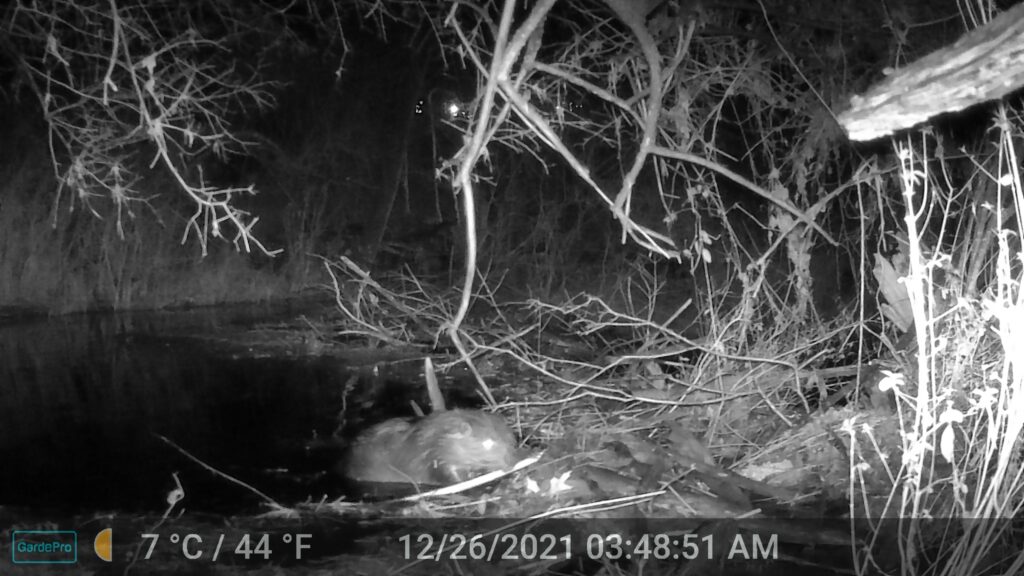
  • A beaver caught on the Trust’s wildlife cam
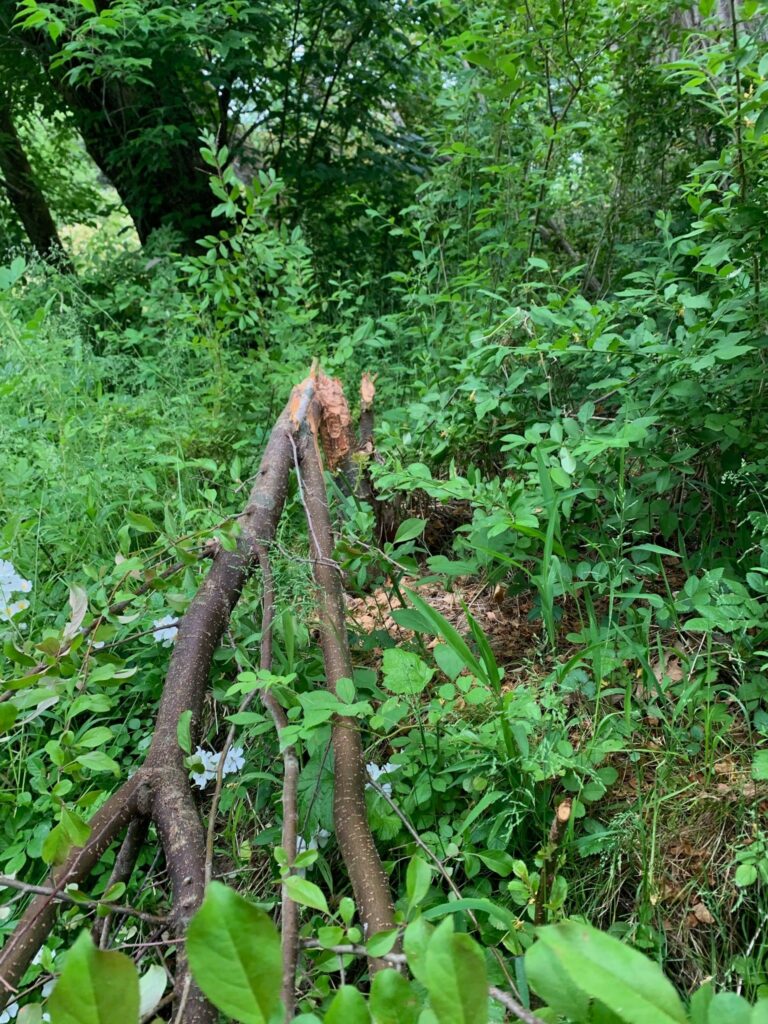
  • Evidence of beaver activity at Ashbridge Preserve. Photo by author.

Beavers (Castor canadensis) are the largest rodent found in North America, reaching 3 feet in length and weighing between 30 and 60 pounds. They have small faces, stocky brown bodies, and a distinctively hairless, paddle-shaped tail. Their tail allows beavers to be distinguished from groundhogs, which have short, furry tails, and muskrats, which have long, hairless tails. Beavers are well-adapted for an aquatic lifestyle: when they dive underwater, their eyes are protected by a set of transparent eyelids and their ears and nose are protected by watertight membranes. They even have a second set of lips that close behind their teeth, which allows them to chew while underwater and not drown. They can remain underwater for 15 minutes, and their oily, waterproof fur helps them stay dry. Their webbed feet and rudder-like tail allows beavers to swim at speeds of 5 miles per hour.
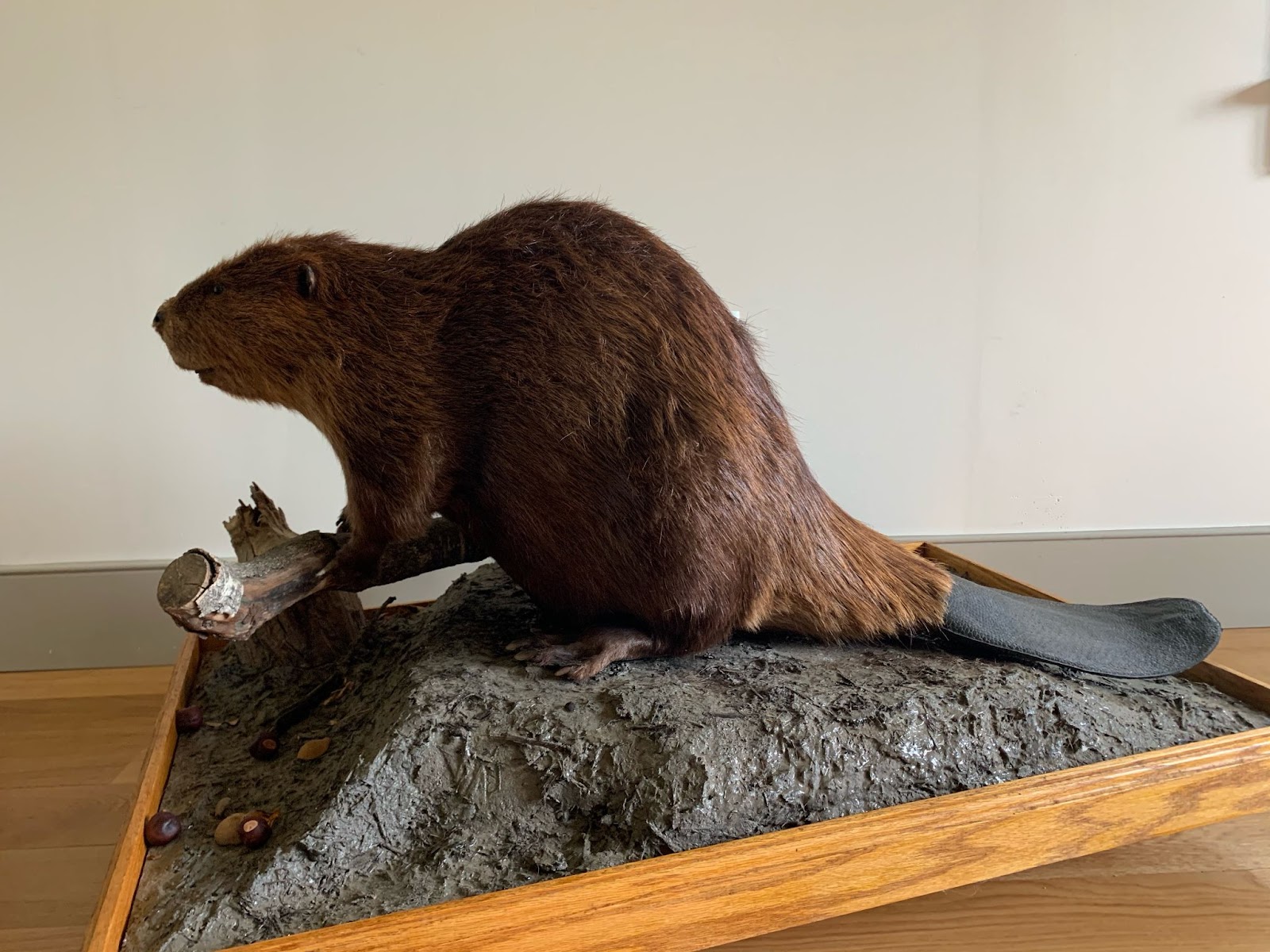
Chompy the beaver was donated to Willistown Conservation Trust and currently lodges in the Rushton Conservation Center. Note its glossy fur and hairless, paddle-shaped tail. Photo by author.

Beavers were once abundant throughout North America, from northern Mexico all the way up to the southern Arctic. However, they were heavily hunted for their waterproof pelts by European colonizers, and their numbers dropped rapidly. In Pennsylvania, beavers were wiped out by the beginning of the 20th century. Reintroduction efforts in the 1920s proved successful, and beaver populations have been stable in Pennsylvania since the 1930s, though they likely are not as abundant as they were before European colonization. There are a few known beaver colonies near Willistown in Ridley and Darby creeks, and evidence of beaver activity is occasionally spotted in Willistown, most recently at Ashbridge Preserve.

Beavers are perhaps nature’s most effective engineers, changing entire ecosystems to fit their needs. They build their homes, called lodges, almost exclusively in the middle of slow-moving ponds, where the surrounding water acts as a moat that protects them from terrestrial predators. If no such pond can be found, beavers dam streams and rivers to create the perfect pond. To create their dams, beavers cut down trees with their chisel-like teeth, which constantly grow and self-sharpen. They generally prefer trees with diameters of less than 3 inches, but will cut down larger trees if small trees are not readily available. They construct their dam with logs, branches, twigs, and grasses and seal everything into place with mud. 

Once the dam backs up enough water, beavers build wood and mud lodges in the middle of the pond that can be 6 feet high and up to 40 feet wide. These lodges have 1 or 2 underwater entrances, a ‘living area’ above the water line, and a small air hole in the top to provide ventilation. A lodge houses a colony made of a breeding pair — believed to mate for life — the current years’ kits, and the surviving offspring from the year before. Before the kits are born, the female drives out the second year young. After the young are driven out from the den, they disperse to find new habitat and form their own colonies. 

Beaver settlement causes widespread changes to an ecosystem. The first noticeable change is the clearing of several trees, usually small, that the beaver will use to build its dam. After the dam is built, the creek will start to back up, flooding the adjacent land and forming a small pond. More trees may be felled to build the beaver’s lodge. What was once a wooded valley with a small stream becomes an open pond bordered by wetland vegetation. This new pond supports a host of wetland species that would not otherwise be found in the area — ducks, geese, herons, turtles, fish, frogs, salamanders, and more. Even beaver lodges create habitat: the underwater base of the lodge provides shelter for young fish and the top of the lodge can be a nesting area for birds. 
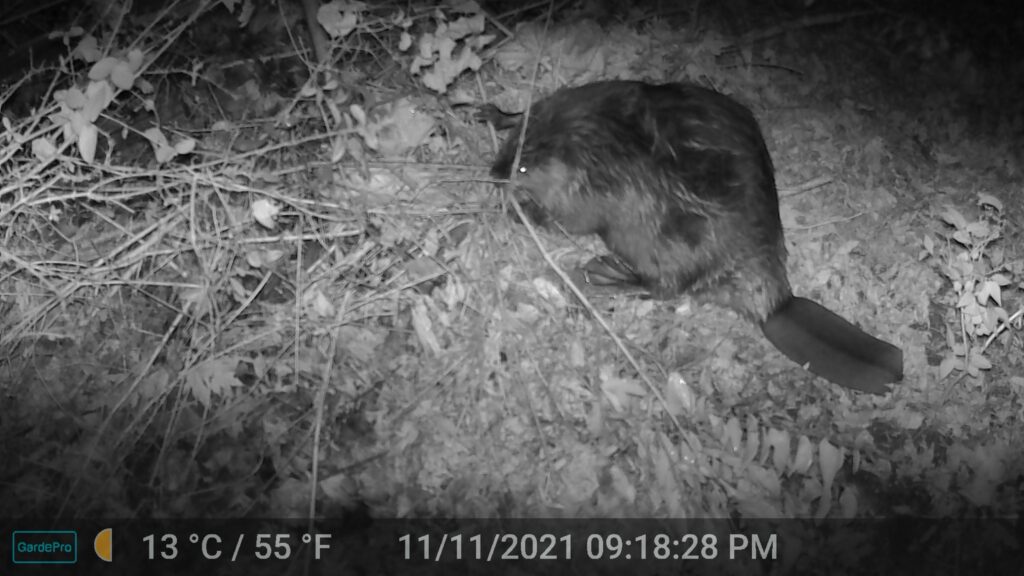
A beaver captured on the Trust’s game cam

Beyond supporting a biodiverse ecosystem, beavers and their dams improve local water quality. Beaver ponds trap and slow down water, reducing downstream flooding during major storm events. By slowing down the flow of water, beaver dams also allow more water to seep through the soil and replenish groundwater resources. As water passes through a beaver pond, fine sediment and pollutants are filtered out, resulting in cleaner water downstream of the dam. 

Beavers inhabitat a pond until they deplete all nearby food sources, usually after 20 to 30 years. At this point, they abandon their pond and lodge and move on to new habitat. Without constant maintenance, the dam slowly breaks down and eventually breaches. The pond drains, and the previously-submerged seed bank begins to germinate. Shrubs and trees re-establish in the area and, eventually, the open land turns back into a wooded valley. 

If you want to learn more about the history, biology and benefits of having beaver living in local streams, join us for our upcoming virtual Beaver Talk on February 2!

References

Beaver. (n.d.). Pennsylvania Game Commission. Retrieved May 27, 2021, from https://www.pgc.pa.gov:443/Education/WildlifeNotesIndex/Pages/Beaver.aspx

Beaver. (2016, April 25). Smithsonian’s National Zoo. https://nationalzoo.si.edu/animals/beaver
Beaver | National Geographic. (n.d.). Retrieved May 27, 2021, from https://www.nationalgeographic.com/animals/mammals/facts/beaver

Wohl, E. (2021). Legacy effects of loss of beavers in the continental United States. Environmental Research Letters, 16(2), 025010. https://doi.org/10.1088/1748-9326/abd34e

Filed Under: Nature Preserves, Science, Watershed

Wildflowers at our Nature Preserves

July 8, 2021 By CommIntern

Across all of our preserves and properties, Willistown Conservation Trust boasts unique habitat supporting a wide variety of native wildflowers. Each place has distinct characteristics, creating different experiences and diverse species everywhere you go. You can find wildflowers in bloom at our preserves throughout the seasons, peaking in mid-summer during Wildflower Week. Spend time at each one to appreciate the full palette of our native wildflowers!

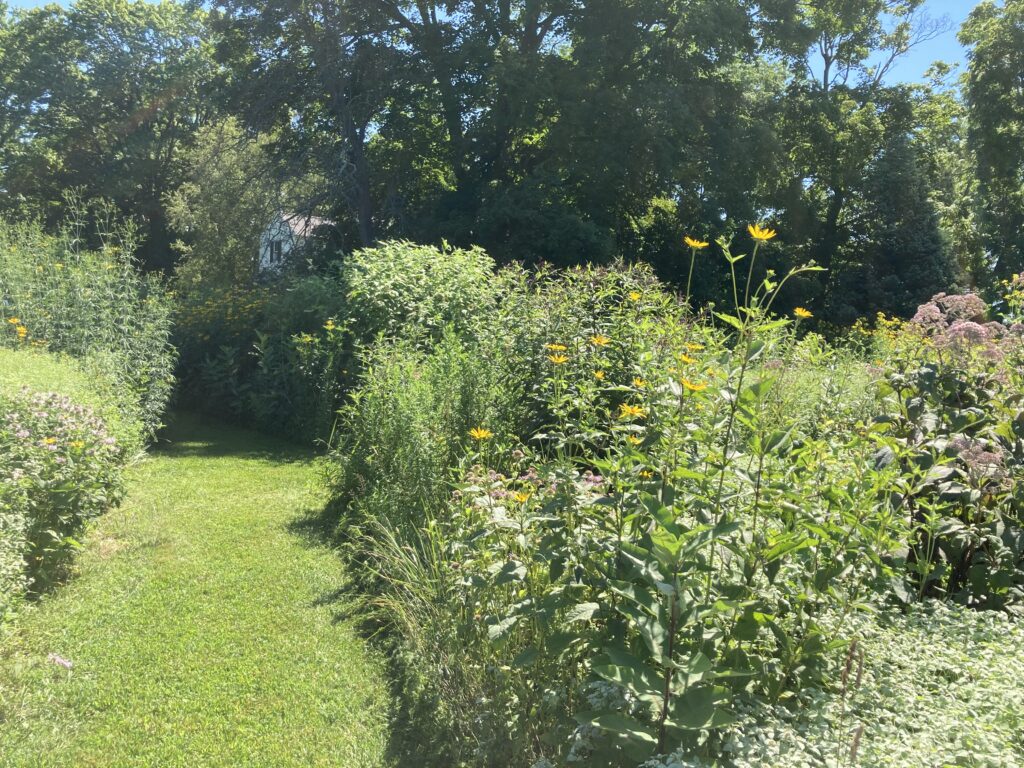
Rushton Woods Preserve is a great place to see a wide variety of wildflower species. The formal plantings and rain garden around the Rushton Conservation Center (RCC) are perfect inspiration for your own yard. Look especially during Wildflower Week for the purple coneflower, false sunflower, cutleaf coneflower, purple blazing star, and butterfly weed. Meadow strips also surround Rushton Farm, providing food and habitat for helpful insects, birds, and pollinators. These come to life in the summer and remain lush and colorful through the fall.

  • Hartman meadow
  • Hartman Meadow

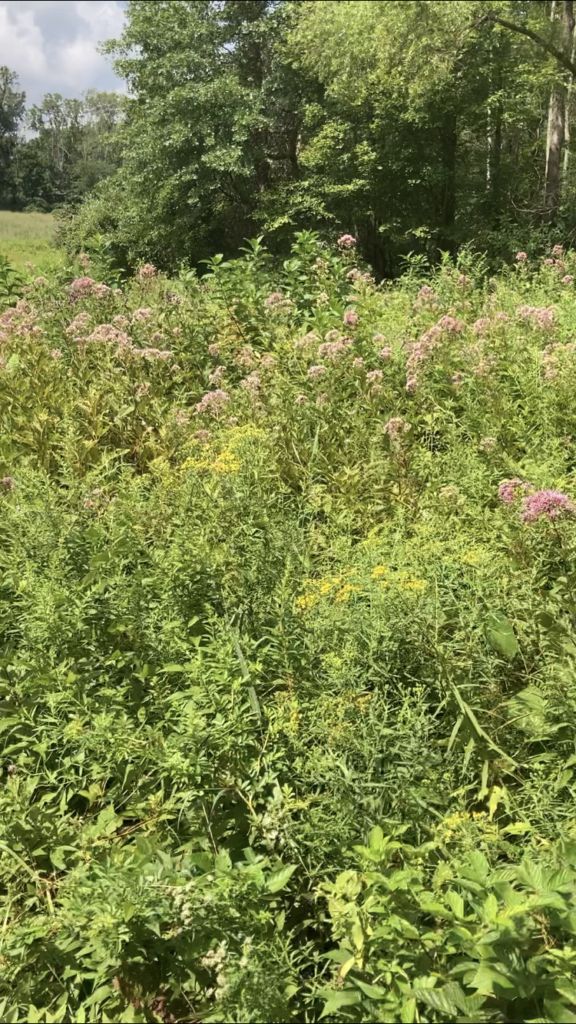
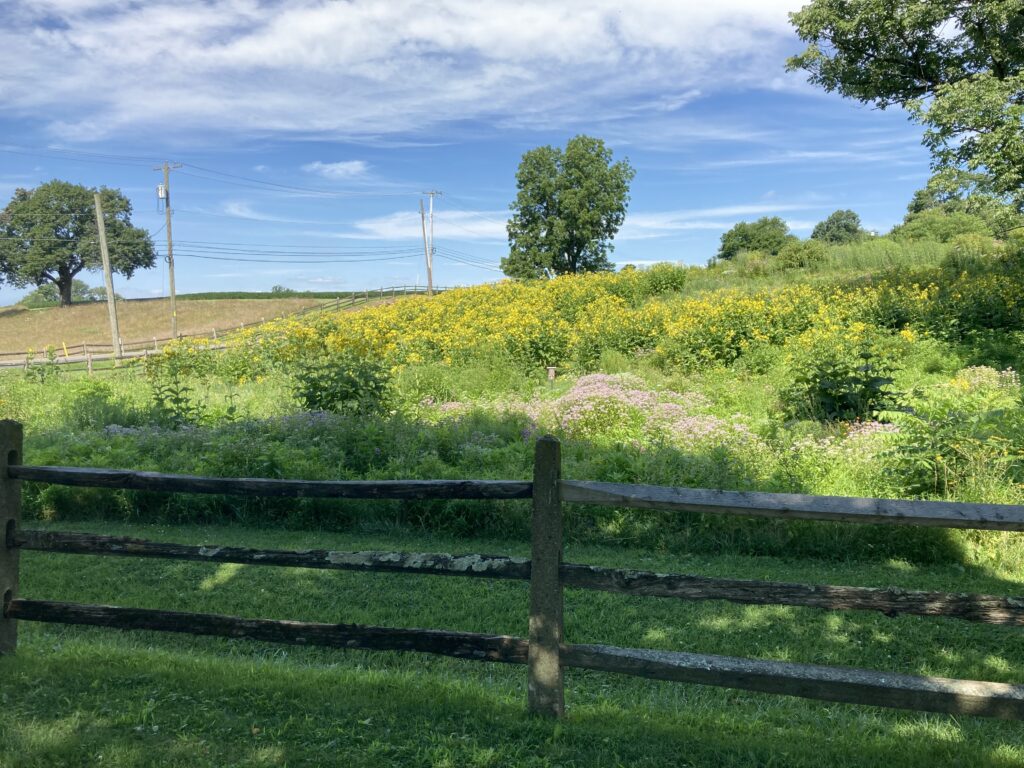
Down the road at Kirkwood Preserve, over 80 acres of grasses and wildflowers provide key habitat for picky bird species that will only nest in these large, open areas. Vast drifts of milkweed and dogbane give way to goldenrod and ironweed as summer moves into autumn, but don’t overlook the native grasses, such as big bluestem and Indian grass, which provide beautiful color and texture. Climbing the trail to the top of the hill will give you an awesome vantage point to look out over all of the colors below.

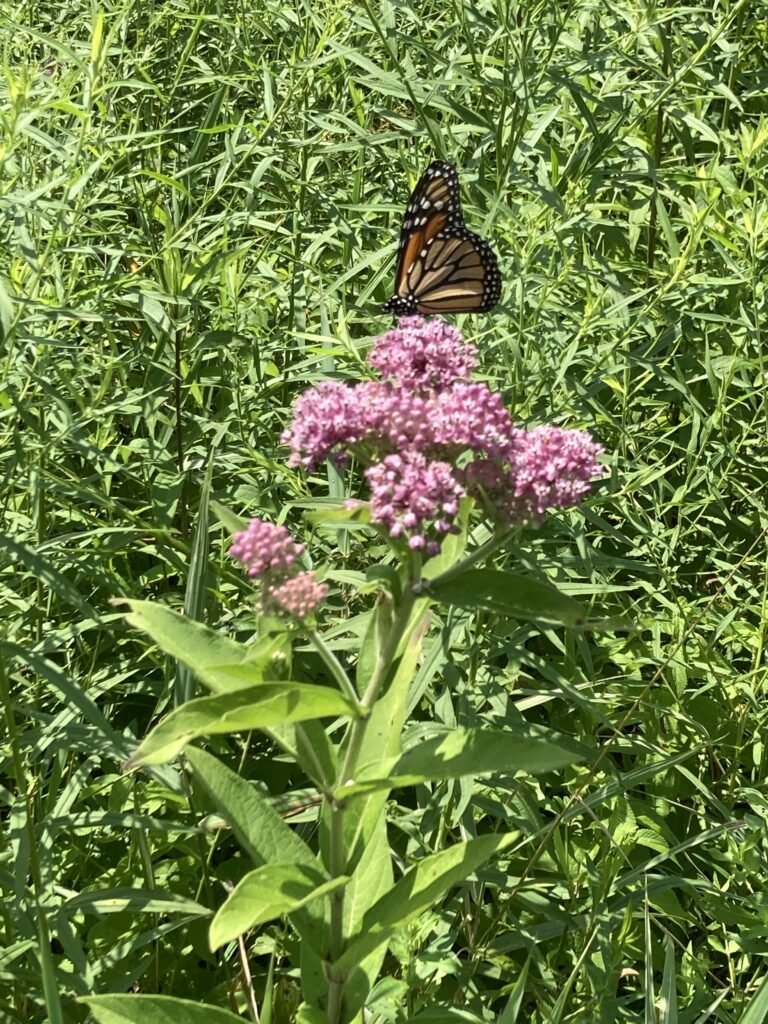
At Ashbridge Preserve, a gas line right-of-way ensures that a large strip of land remains unforested. This right-of way actually provides great meadow habitat, with beautiful views across Ridley Creek. Most of the preserve is part of the floodplain wetland, so you will find wildflowers that grow in moist soil, such as soft rush and swamp hibiscus. If you follow the trail past the first creek crossing and through the woods, you will be rewarded when you re-emerge into the meadow and see mixes of goldenrod, joe pye weed, milkweed, and ironweed.

  • Ashbridge Meadow
  • Milkweed

If you need a break from the sun, follow our trails into the woods at the preserves; you can find shade-loving wildflower varieties too! The forest floor looks brilliant in the spring, when ephemerals such as toothwort, bloodroot, spring beauty, mayapple, trout lily, and trillium emerge. It explodes with color again in the fall, when masses of snakeroot, white wood aster, big leaf aster, and jumpseed bloom. You can find some of these species in the garden at the Trust office, a great place to look for inspiration for a native shade garden of your own. While you’re there, be sure to walk through Hartman Meadow to see the gorgeous mixes of milkweed, joe pye, coneflowers, mountain mint, spiderwort, bergamot, and more.

There is interest and inspiration to be had all around WCT’s preserves, farm, and gardens any time of year. Our native wildflowers not only look beautiful, but also provide the habitat and food necessary to ensure a healthy ecosystem. Stop by all of our preserves during Wildflower Week and beyond — I hope to see you there!

Filed Under: native wildflower meadow, Nature, Nature Preserves, wildflower meadow

Nature at Night: Native Plants for Your Landscape

April 9, 2021 By Communications Team

What if you treated your backyard as a piece of the larger mosaic of a habitat and added native plants to your landscape? The Trust’s Preserve Manager, Mike Cranney, for an overview of native plants and why they’re important to birds and other wildlife.  Mike will be joined by Julie Snell and Lisa McDonald Hanes of Redbud Native Plant Nursery, located in Media, PA. Julie and Lisa will share their growing and sourcing practices, selecting the right plants for your space, and how to develop a thriving native plant landscape!

REDBUD NATIVE PLANT NURSERY

The mission of Redbud Native Plant Nursery is to be the primary source of sustainably raised native plants for retail buyers in Southeastern Pennsylvania. Building on the base established over the past seventeen years, the nursery will continue to provide unique stock at a location where customers can see, touch and smell native plants in person and interact with knowledgeable staff. 

To learn more about Julie and Lisa’s nursery, please visit Redbud Native Plant Nursery’s website: www.redbudnative.com

Filed Under: Native Plants, Nature, Nature at Night, Nature Education, Nature Preserves, Stewardship, Uncategorized

  • « Previous Page
  • 1
  • 2
  • 3
  • 4
  • Next Page »

CONTACT

925 Providence Road
Newtown Square, PA 19073
(610) 353-2562
land@wctrust.org

501(c)(3) EIN 23-2841453

JOIN OUR MAILING LIST

Copyright © 2026 · WCTRUST.ORG