WILLISTOWN CONSERVATION TRUST

  • Facebook
  • Instagram
  • LinkedIn
  • YouTube
DONATE
  • About
    • HOW WE WORK
    • WHERE WE WORK
    • OUR STAFF AND TRUSTEES
    • JOBS & INTERNSHIPS
    • RUSHTON CONSERVATION CENTER
    • STRATEGIC PLAN
    • INCLUSION, ACCESS, AND BELONGING
    • FAQs
  • LATEST
    • BLOG
    • IN THE NEWS
    • PUBLICATIONS
    • PHOTOS
  • EDUCATION
    • GROUP EDUCATION
    • LAND PROTECTION
    • STEWARDSHIP
    • BIRD CONSERVATION
    • COMMUNITY FARM
    • WATERSHED PROTECTION
    • RUSHTON NATURE KEEPERS (RNK)
  • NATURE PRESERVES
    • ASHBRIDGE PRESERVE
    • HARTMAN MEADOW
    • KESTREL HILL PRESERVE
    • KIRKWOOD PRESERVE
    • RUSHTON WOODS PRESERVE
  • EVENTS
    • EVENT CALENDAR
    • BARNS & BBQ
    • RUN-A-MUCK
    • WILDFLOWER WEEK
    • ACCESS Program
  • Support
    • WAYS TO GIVE
    • SPONSOR THE TRUST
    • CORPORATE PARTNERSHIP PROGRAM
    • JOIN THE SYCAMORE SOCIETY
    • LEGACY SOCIETY & PLANNED GIVING
    • VOLUNTEER
    • DELCO GIVES 2026

August Showers Bring September Flowers

August 27, 2026 By Adam Wolf

By Adam Wolf

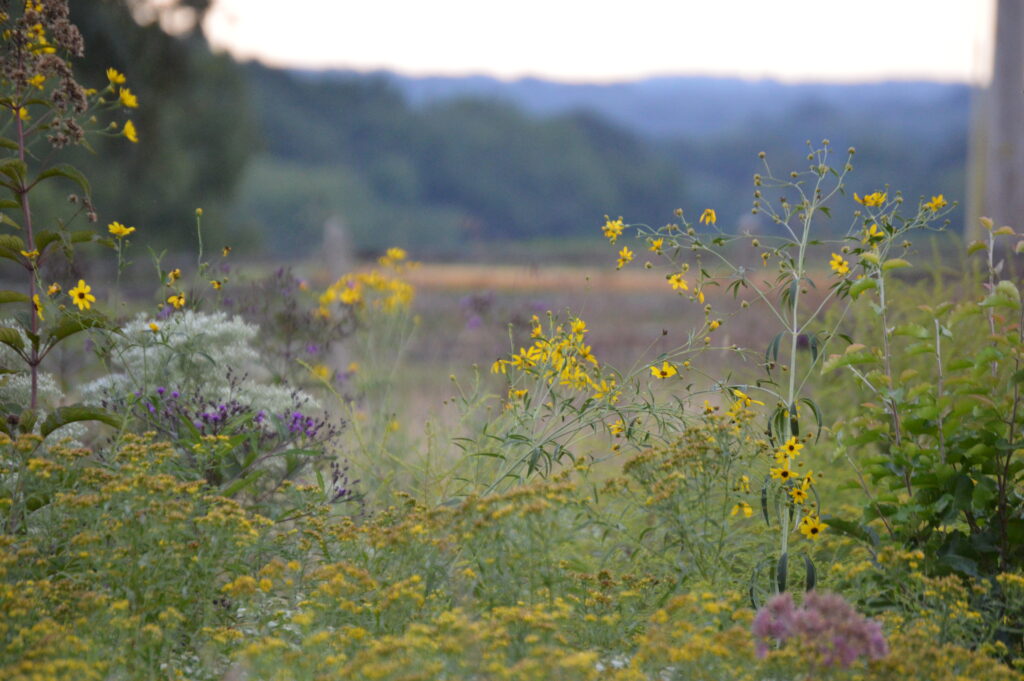
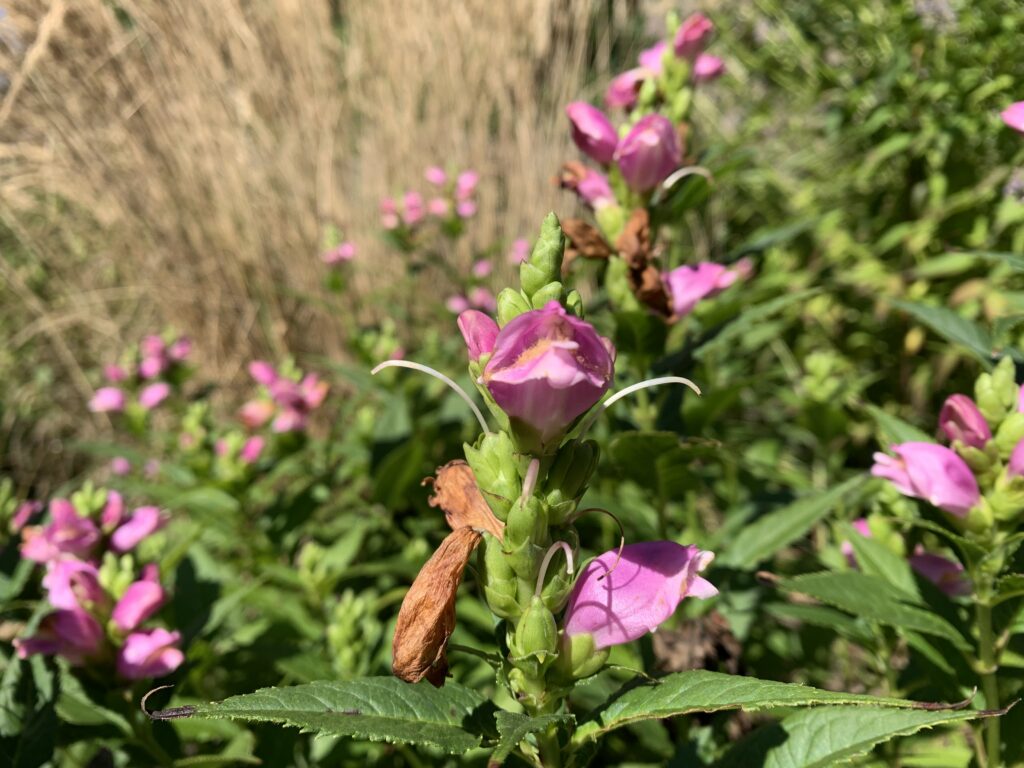
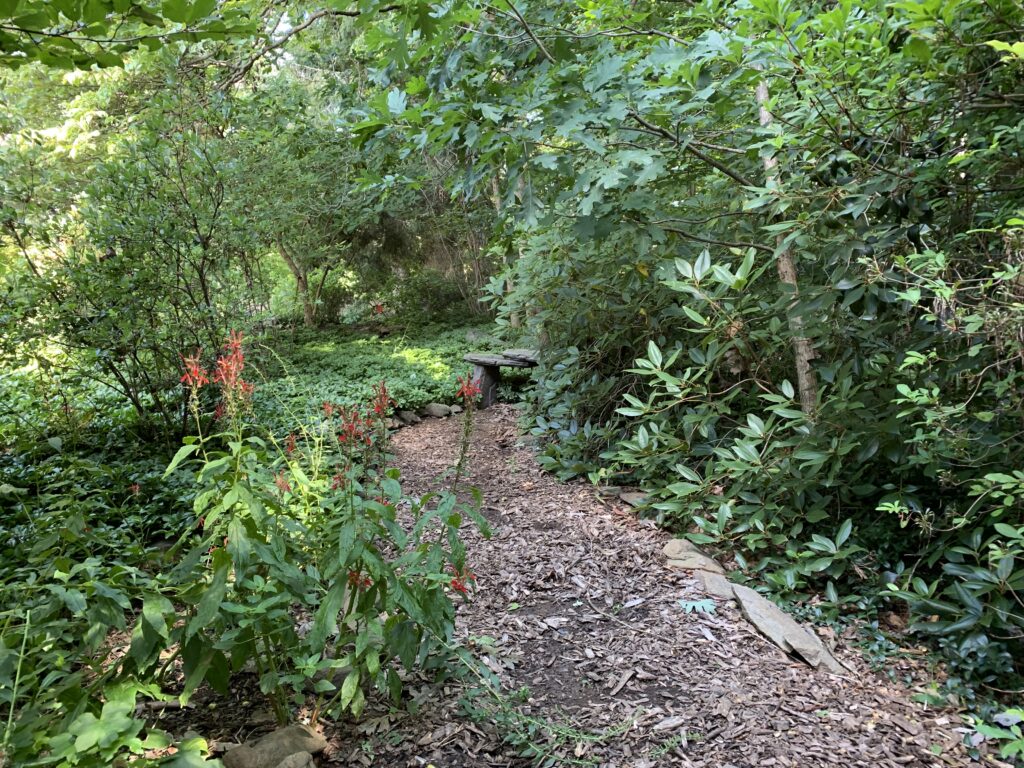
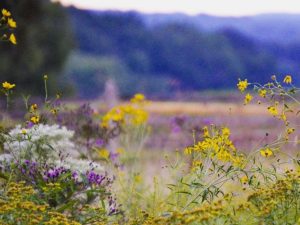
As August rolls to a close and we get ready to celebrate Labor Day, many of us have put summer in the rearview mirror. Thoughts of falling leaves and lower temperatures may come to mind, but what if I told you that many of our native wildflowers are just starting to bloom? If you came out to see some of our preserves during Wildflower Week, now is a great time to stop by again and see some new wildflowers in bloom.

Ironweed
Wild Senna
Canada Goldenrod | Romfh, Peggy
Ladybird Johnson Wildflower Center
Zig Zag Goldenrod | Smith, R.W.
Ladybird Johnson Wildflower Center
Cardinal Flower |  Smith, R.W.
Ladybird Johnson Wildflower Center
Boneset | Wasowski, Sally and Andy
Ladybird Johnson Wildflower Center
Joe-pye Weed | Muller, Thomas L.
Ladybird Johnson Wildflower Center
Grass-leaved Goldenrod | Brundage, Stephanie
Ladybird Johnson Wildflower Center
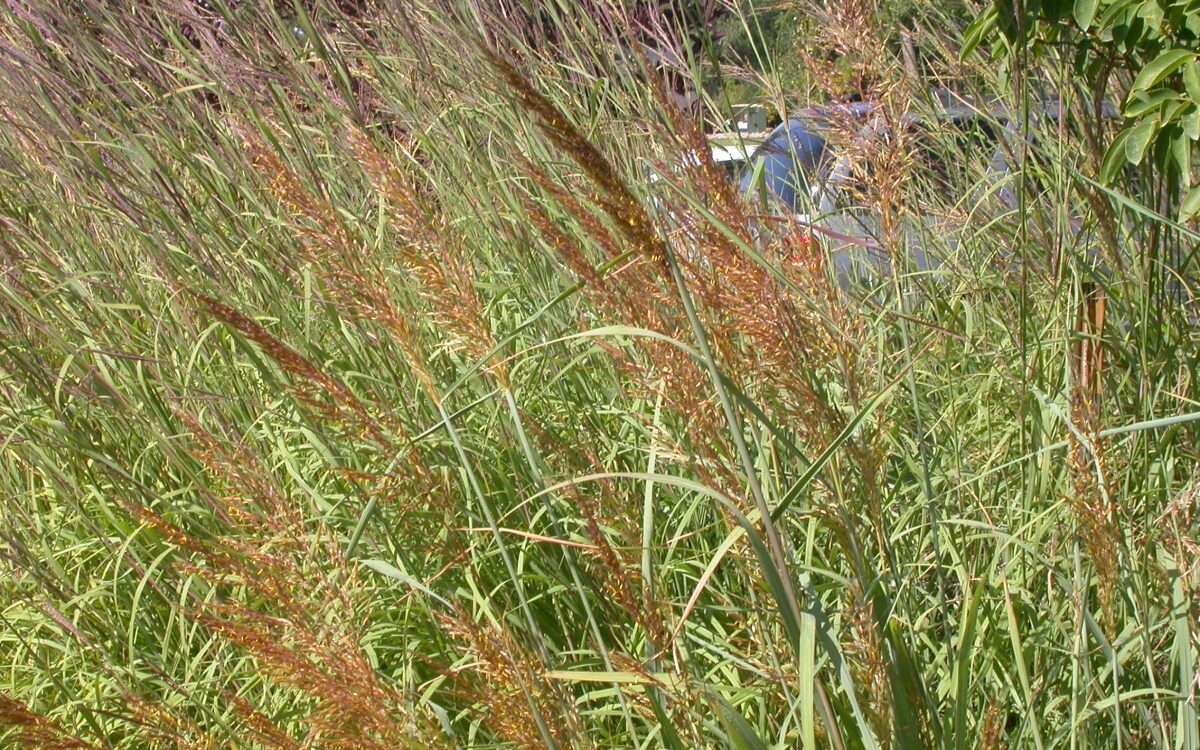
Big Blue Stem | Fannon, Carolyn
Ladybird Johnson Wildflower Center
Indiangrass | Hampton, Nat
Ladybird Johnson Wildflower Center

Filed Under: Native Plants, native wildflower meadow, Nature Preserves, Uncategorized

Growing the Base

July 30, 2026 By Adam Wolf

By Adam Wolf

When I first started working for Willistown Conservation Trust, I was most excited to see large-scale wildflower meadows in practice. I had long preached the importance of native plants and had planted some in my own yard, but I had yet to see a large-scale example of what could be done. I envisioned them as magical places that would be a birding gold mine. But the species I ended up appreciating were much smaller.

I had never been one to think much about insects. I saw the usual ants, flies, and the occasional moth at night. Occasionally, while out hiking, I would notice an interesting bug that caught my eye, but unless you’re a true nature nerd, you probably don’t go looking for insect species either. But maybe you should.

I went looking for answers at our Hartman Meadow to discover what was using our habitat and what role plantings like this play. Without any formal training or knowledge, I wasn’t expecting to find much, but I was pleasantly surprised. I soon found myself in a meadow buzzing, hopping, and jumping with life, full of new colors and insects I had never seen before.

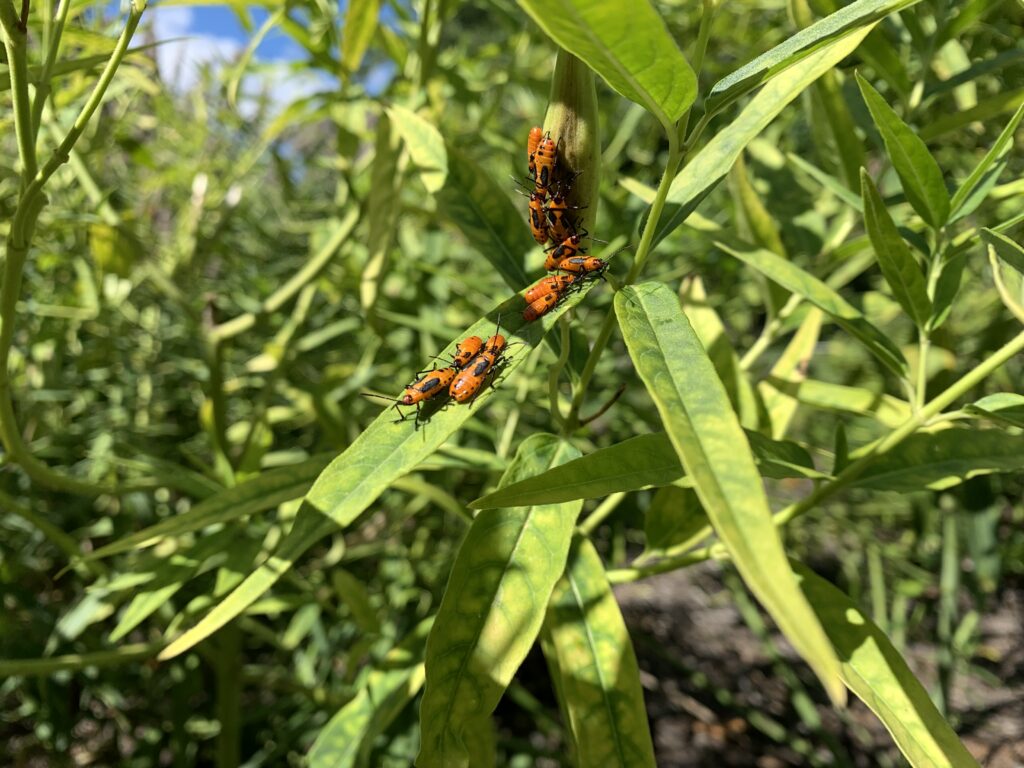
There were insects like the red milkweed beetle, a bright red, spotted crawler that relies on milkweed to survive, and larger species like the widow skimmer dragonfly, which feeds on mosquitoes, biting flies, and midges. I expected to find a few cool birds, but what I found instead was a complex food web built around insects, all relying on the specialist plants we had planted.

It’s easy to recognize the importance and value of our larger animals and birds; however, it is equally—if not more—important to protect the insects that form the foundation of the food web for all creatures. For those willing to look for these underappreciated insects, there are discoveries to be made every day.

Come visit Hartman Meadow for yourself—you may see something new.

Thank you to Celeste Sheehan (@celestial_images_photography) for sharing these great photos of insects from Hartman Meadow.

Filed Under: Native Plants, native wildflower meadow, Nature Preserves, Uncategorized

How to Make Your Own Native Terrarium

July 18, 2023 By Watershed Protection Team

By Sarah Barker

Terrariums are a fun and easy way to engage with the environment. It only takes one afternoon to gather your materials and scavenge for tiny creatures to include in your mini ecosystem! Terrariums are small indoor gardens that can be made from any kind of clear glass container with or without a lid. Most people use mason jars or bell jars for their terrariums, and if you would like to add some small bugs, we recommend choosing a jar with a lid so your little friends don’t run away! However, you can make one with just plants if you are a beginner or only have an open glass container handy.

Terrariums can be put together with only a few materials, most of which can be sourced from your backyard! Besides your glass jar, you’ll need some rocks to anchor the plant roots and provide a system to retain water, moss and/or other small plants, locally sourced soil, and plastic wrap. First, you will need to grab some stones ranging in size from small pebbles and gravel to larger rocks, depending on the size of your chosen container. Rocks from streams or on the banks of a pond are preferred because they come pre-loaded with nutrients from microalgae and fungi that can help your ecosystem to thrive. However, any rocks you can find around outside will work.

Next, you will want to look for clumps of moss from which to take a few pieces. When harvesting moss, it is best to pick from the middle of the colony as opposed to the edges so that the moss can grow back more quickly. To gather your moss, you can use a small spatula to slide underneath the rhizomes of the moss — their equivalent of roots — to keep the clumps from falling apart and to allow them to establish faster once placed in your terrarium. Only take a few pieces from any one colony and harvest sparingly, as moss is slow to grow!

If you want to include other small plants, choose little ferns, groundcover like clover or ground ivy, or even little wildflowers. During July, many wildflowers are in full bloom, making it the ideal time to find some lovely plants for your terrarium. However, moss should be the main member of your indoor plant community and you should try to pick plants that are found growing in the shade or partial sun, as these plants are more likely to do well in your terrarium. This is where an enclosed container can be especially helpful; the lid helps to keep moisture trapped in the system, and as sunlight heats up the inside of the jar, water condenses at the top of the jar.  Once it cools, the water drips back down into the rocks and soil, keeping the moss and plants hydrated without any additional input.
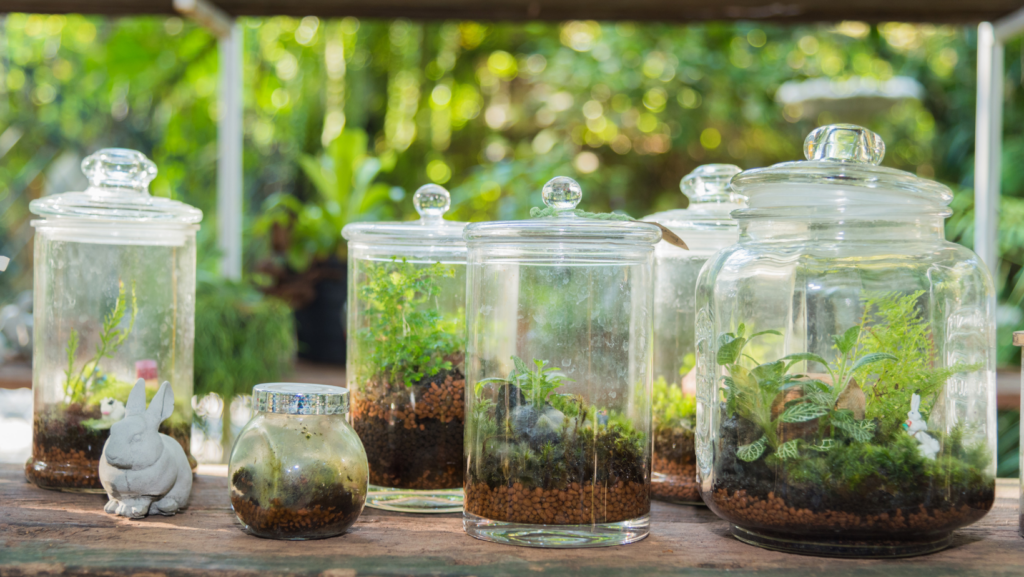
If you want to include a couple of bugs, look for small crawling critters found around moss patches or under rocks like roly-polys (aka pill bugs) or arthropods like springtails. If you are a more advanced terrarium keeper, millipedes are also a great option, though they are much larger and require a bit more care than their smaller counterparts. The reason for choosing these kinds of bugs is that they are all wonderful housekeepers! They are decomposers that are great at preventing algae and mold from building up inside your ecosystem by eating it all up. If you have a smaller terrarium, you may only want to grab a couple of roly-polys to make sure there is enough food for everyone.

To transport any chosen creatures, place them in a small, clean plastic container. Poke some holes in the lid to allow some air for your bugs to breathe and place a bit of dirt inside with a couple of pebbles and sticks for them to hang out on.

Once you’ve collected all of your materials, the first thing you should do when you get home is rinse off all of your moss and other plants, taking time to make sure any other insects you haven’t chosen to include are removed and placed back outside. You should also inspect the pebbles, gravel, and larger rocks you’ve collected and rinse away any clumps of dirt. At this point, you should also clean your glass container and remove any stickers or adhesive on the glass so that sunlight can reach the plants.

After cleaning your inclusions, the first step of assembly is to place your wet stones into the bottom of your jar; this layer will provide drainage for the soil and retain water to be cycled back into the ecosystem when heated up under sunlight. Next, cut out a piece of plastic wrap roughly the size and shape of your glass jar with some small holes poked in it. This layer prevents the soil from falling in between your pebbles, which can cause mold growth and prevent proper drainage. You could also add in activated charcoal or sphagnum moss in between the rock and soil layers to prevent mold buildup, keep your terrarium clean, and help it to last longer, but this is completely optional! These materials can be purchased online, at a pet shop, or in a garden store.

After positioning the plastic wrap, place the soil on top, though not too densely packed. Next, you can put in the moss and plants, and taking care to gently press them into the soil, you can create small depressions with your fingers for any plants with roots that need to be covered. You can also place a couple larger rocks in this layer and add moss to the top of them. At this point, you could add in any decorative elements you may have around the house like seashells, pieces of wood, figurines, etc. Get creative! 

Journalist Brandi D. Addison shares how to build a spooky terrarium.

A small open terrarium (Credit: Brandi D. Addison, source here)

After adding in any decorative items, you can put in any bugs that you may have collected while you were outside. Make sure the rocks and soil are moist, and screw on your lid if you have one, and then, voila! Your terrarium is ready to go. Pop the jar on a partially shady table or desk that gets some natural light, but not direct sunlight, as moss tends to do better in shadier spots. 

Now sit back to watch your terrarium grow and change, modeling a miniature temperate ecosystem right in your own home. These ecosystems require only a little occasional upkeep. If you put a lid on your terrarium, you will not need to water it because the water will naturally cycle through the system. However, if your terrarium is open, you should make sure the soil is moist with occasional watering. You should also be sure the clean the inside and outside of the glass whenever it gets cloudy to allow sunlight to reach the plants. Every once and a while, smell the air in your terrarium. If it smells earthy that means it is healthy; however, if it smells bad that means that the soil is probably harboring some mold and should be replaced. 
Filed Under: Native Plants, Nature, Plastic Free July

Restoring Rushton’s Shrub-Scrub for the Benefit of the Birds

March 27, 2023 By CommIntern

By Mike Cranney, Preserve and Facilities Manager

For over 13 years, Willistown Conservation Trust’s (WCT) Bird Conservation program has been researching migratory and breeding bird populations at Rushton Woods Preserve. A trained team of staff and volunteers utilize mist nets placed strategically throughout the Preserve’s hedgerows to monitor species, collect data, and band individual birds so they can be tracked throughout North and South America. This research has helped contribute to the understanding of what birds need to survive, while highlighting the importance of places like Rushton Woods Preserve for migrating species to use as respite where they can rest and refuel during their long journeys every spring and fall.

Simply preserving open space, however, is not sufficient for their survival; birds require certain types of plants for adequate food and shelter. They are especially attracted to what is known as “scrub-shrub” habitat, which consists of robust thickets of shrubs and small trees that provide essential cover from both predators and the elements. This habitat is also an important source of food, but sadly our ecosystems have become overrun with non-native, invasive plants whose fruit do not have the nutritional value that birds need.

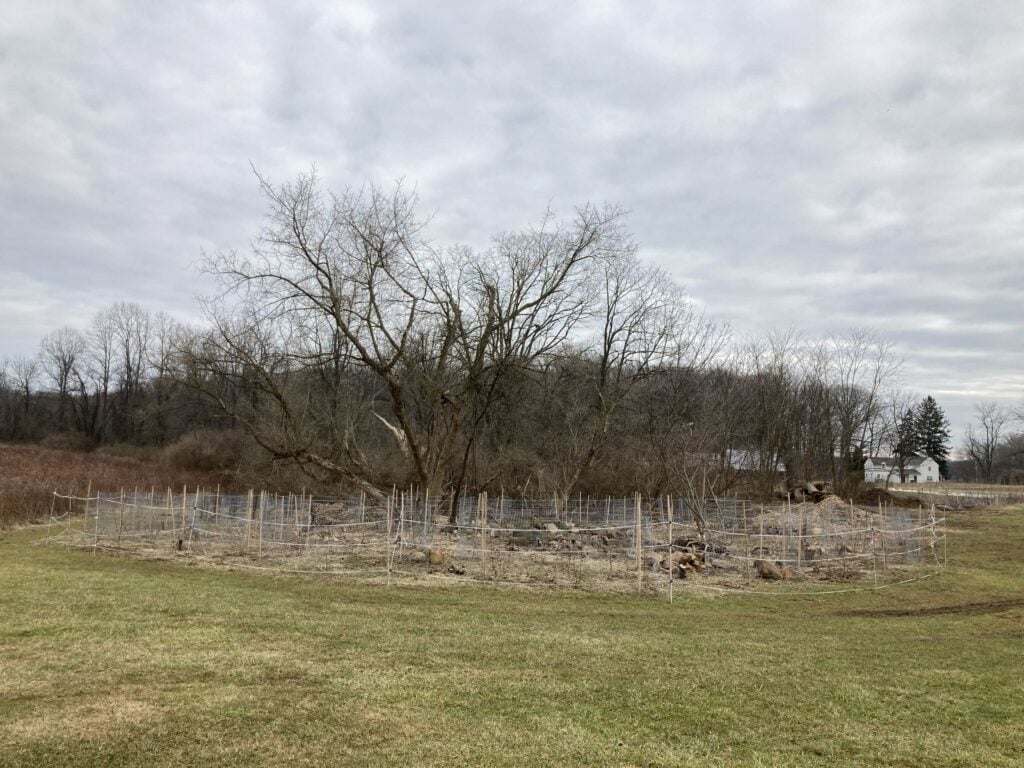
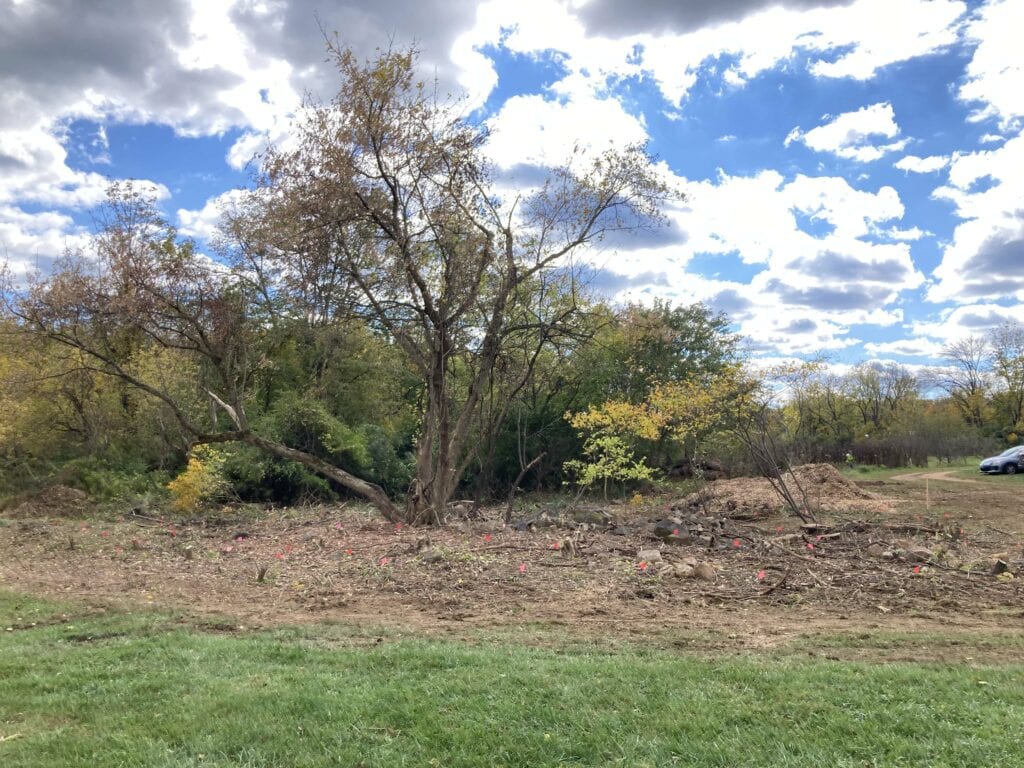
Prepping the area for new plantings.
Finished hedgerow. Now we watch it grow!

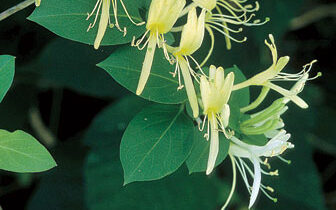
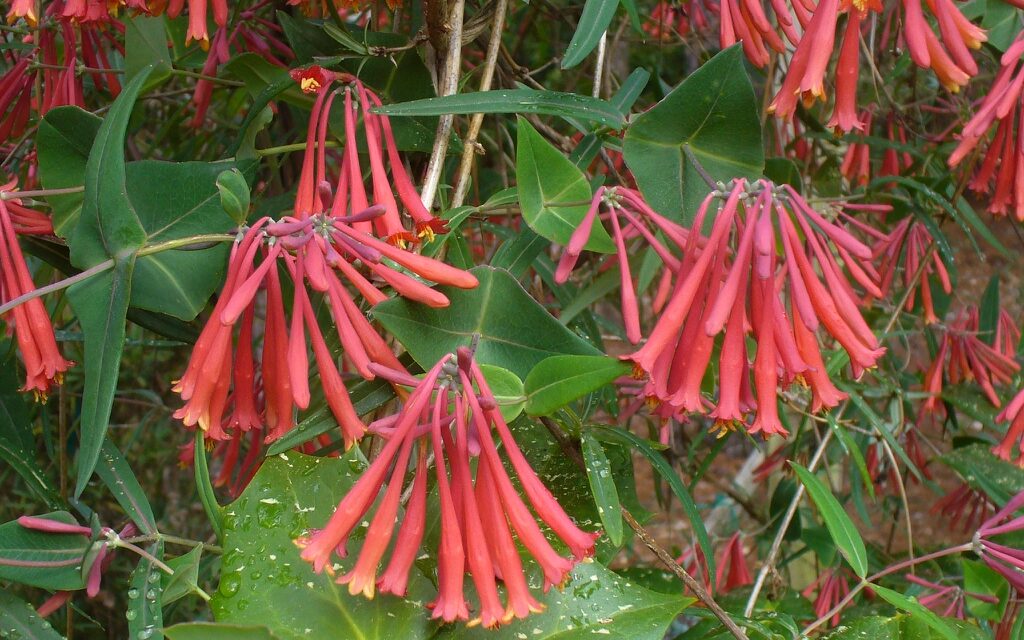
For example, one of the most common shrubs in the modern landscape is the Amur honeysuckle (Lonicera maackii), whose abundant berries are regularly eaten by fruit-loving bird species. However, these berries contain more sugar than fat, and therefore do not provide the fuel necessary to sustain migration. Birds depend on the insects and fruit found upon the native plants that have evolved in the landscape alongside them. In order to fully support bird populations, both the habitat structure and species composition need to be considered.

Unfortunately, the hedgerows at Rushton Woods Preserve have become heavily invaded by non-native species over the years. Both breeding and migrating birds still flock there, but they are not getting the nourishment that they need. A recent study conducted by a University of Pennsylvania graduate student found that birds stopping at the Preserve during migration were not gaining any fat, likely due to that fact that they were primarily eating fruit from Amur honeysuckle shrubs. The structure of the habitat is beneficial, but the plant species encompassing it are not.

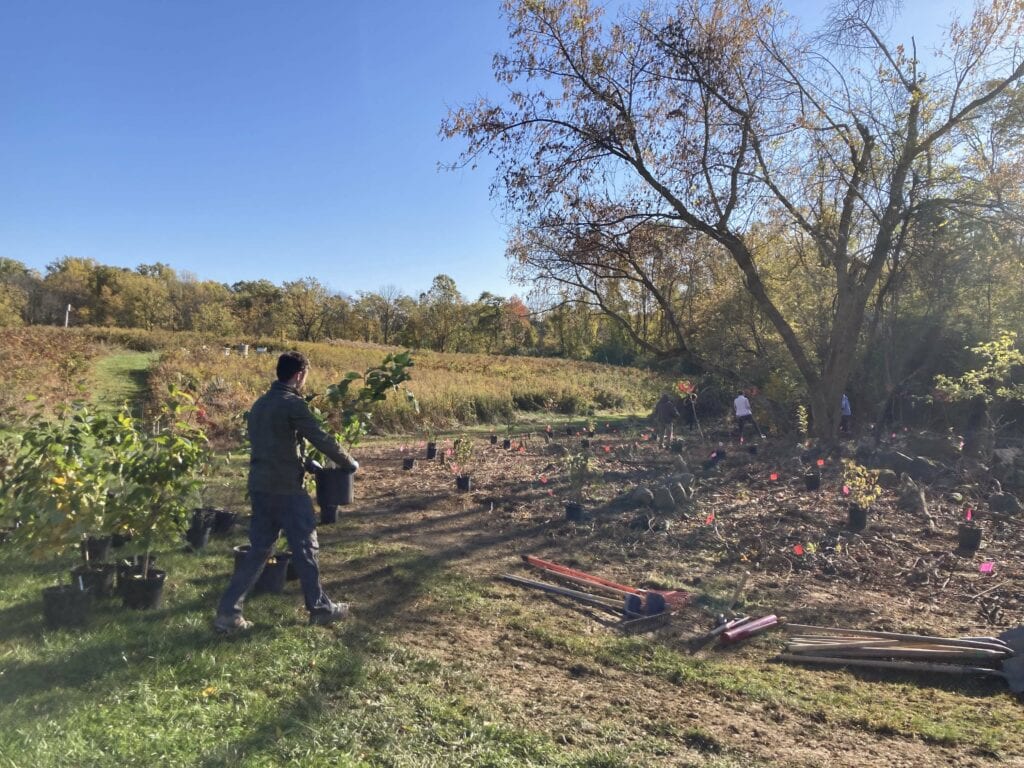
Now, thanks to a generous grant from the Pennsylvania Society for Ornithology (PSO), WCT has begun the process of restoring the expansive hedgerow to native scrub-shrub habitat. In the fall of 2022, a roughly 5,000 square ft. area of invasive thicket was removed and replanted with over 150 native shrubs and trees representing 25 different species. Bird friendly varieties such as viburnums and chokeberries were emphasized and placed closely together to ensure that they grow into dense habitat. Moving forward, the goal is to repeat this process in a different section of the hedgerow each year until it is entirely restored with beneficial native plants. By working through piece by piece, the overall structure of the habitat can be maintained for the birds while the new plants mature.

Mike and volunteers planting native shrub hedgerow.
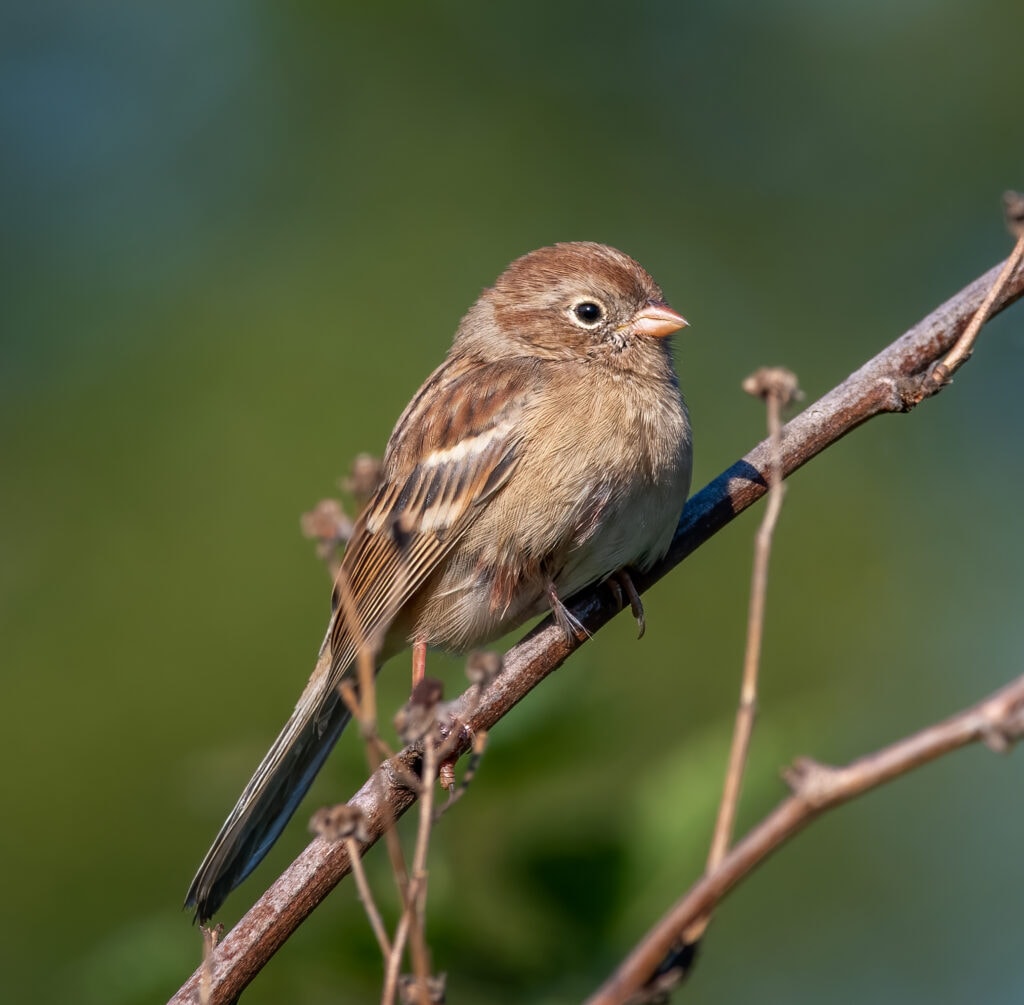
Sparrow in the shrub. Photo by Jennifer Mathes

The existing groups within the organization uniquely position WCT to make the best of this restoration project. The Land Stewardship team will handle the management of the planting site, while the Bird Conservation program’s ongoing research will be an excellent way to monitor the effect the improvements have on breeding and migratory birds. Additionally, the organization’s outreach and education departments will be able to capitalize on this endeavor as an opportunity for landowners to learn about the ecological value of habitat that is too often considered merely an eyesore. Above all, projects such as these are made possible through partnerships with groups like Pennsylvania Society for Ornithology that care about the environment and dedicate themselves to conservation.

To learn more about how you can plant native, stay tuned for this year’s Habitat at Home programming with our Stewardship Team!

Filed Under: Bird Conservation, Native Plants, Nature, Stewardship

Rethinking Lawns: Fighting Climate Change with Native Plants

February 28, 2022 By CommIntern

By Monica McQuail, Willistown Conservation Trust Communications Specialist

Photos by Blake Goll, Willistown Conservation Trust Education Programs Manager

With the arrival of March, many of us are eagerly awaiting the arrival of Spring and everything the season brings: the feeling of the warm sun on our skin, the taste of moisture in the air, the smell of damp soil after a brief rain, the stunning views of leafy trees and emerging flowers, and of course, the sounds of chirping birds…drowned out by the incessant drone of lawn mowers and weed-whackers.

Transitioning to working from home has meant that many of us have learned the strange truth of suburban life; that it’s neither peaceful nor quiet. According to Audubon, “A typical gas-powered push mower emits 85 to 90 decibels for the operator (90-95 decibels for riding lawnmowers). This scares away the birds, leads to hearing loss and detracts from the peace offered by the outdoors.” Not only are lawn mowers a nuisance to humans, but noise pollution leads to stressed out wildlife, especially for smaller animals that spend more time hiding than eating due to loud sounds, and birds that have been found to lay fewer eggs in noisy areas.

But what if I told you that a quiet future without lawnmowers and weed-whackers is not only possible, but even attainable right now? And that this future is filled with butterflies and helps prevent climate change? The solution is simple: rethink your lawn.

Lawns are a contradiction. They are the most grown crop in the United States, yet they produce food that humans and wildlife cannot eat. They’re a staple of American suburban life, yet they were imported from England (the most prized grass in our country  –  Kentucky bluegrass  –  is native to Europe and the Middle East, not Kentucky). They give off a sense of ease and leisure, yet they require an inordinate amount of work, time and money to maintain. Their lush green color evokes life, yet they are ecological deadscapes.

Now let’s look at the numbers. American homeowners dump about 80 million pounds of pesticides into their lawns each year – that’s about 10 times more than farms use per acre.  According to the EPA, Americans spill more than 17 million gallons of fuel each year when refueling lawn equipment, polluting our air and groundwaters along with those pesticides. Mowers and weed-whackers burn 800 million gallons of gasoline per year, which contributes to the greenhouse gases that drive climate change. And we can’t forget water – 3 trillion gallons of which are used on lawns annually, a number that is especially shocking in the wake of the recent droughts and some of the deadliest wildfires our country has experienced. With 40 to 50 million acres of lawn to maintain (a number that equals the country’s national parks combined), Americans spend a whopping $105 billion on lawncare.
With the climate and extinction crisis looming, maintaining these biologically barren landscapes is no longer a sustainable option, no matter how small your lawn may be. We need to start adding hardy plants that sequester carbon to our landscaping. We need to support insects that pollinate 80% of all plants (and 90% of flowering plants). We need to think about our watersheds and select plants that have long root systems that can absorb excess water and prevent polluted runoff into our storm drains and streams. We need to select plants that support our ecosystem and provide a viable food web and shelter for all organisms. In short, we need to plant native species. Not only do native plants possess all these benefits listed, but they also require less water, little to no herbicides or pesticides, and best of all – no noisy lawn mowers.

So this spring, as you begin prepping your grassy green lawn for the upcoming season, consider revamping some or all of it into a beautiful natural oasis that attracts birds and butterflies and requires little maintenance once it is established.
This innovative gardening concept goes by many names, including “Wildscaping,” “Meadowscaping” and “Ecosystem Gardening,” and its main tenants are to garden sustainably, conserve our natural resources and create a habitat that benefits wildlife, according to conservationist and author Doug Tallamy. Tallamay is behind the Homegrown National Park Movement (www.homegrownnationalpark.org), which aims to turn half (that’s about 20 million acres) of all privately-owned green lawns in the United States into native plantings.

“Now, for the first time in its history, gardening has taken on a role that transcends the needs of the gardener. Like it or not, gardeners have become important players in the management of our nation’s wildlife. It is now within the power of individual gardeners to do something that we all dream of doing: to ‘make a difference.’ In this case, the ‘difference’ will be to the future of biodiversity, to the native plants and animals of North America and the ecosystems that sustain them,” says Tallamy in his book, “Bringing Nature Home.”

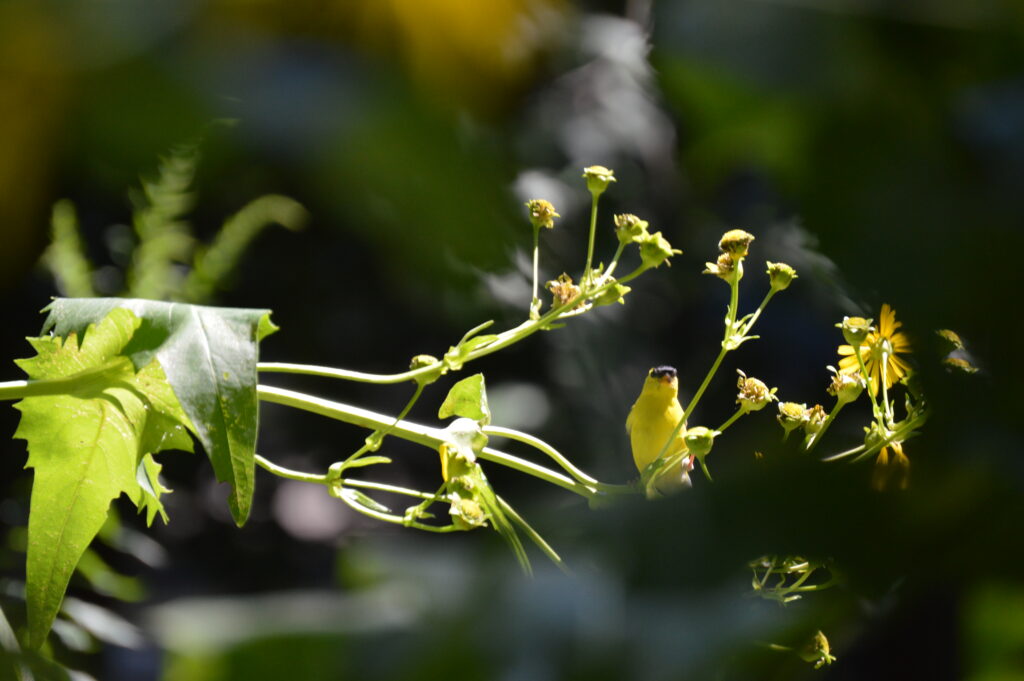
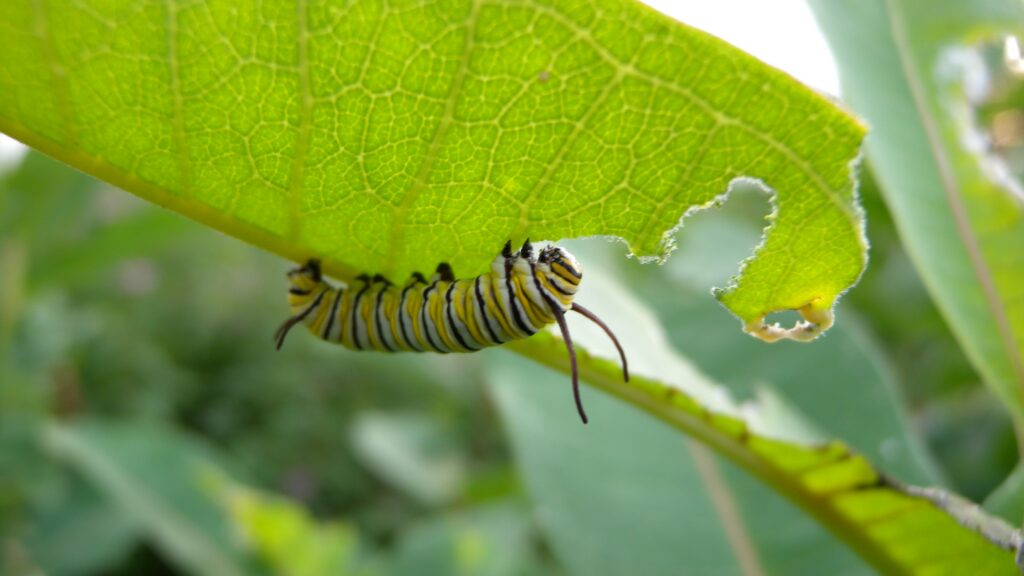
Lawns should not exist purely for “curb appeal.” They should provide joy, nourishment and life for all who inhabit them, from the Monarch caterpillar munching on milkweed and the goldfinch looking for seeds among some purple aster, to the child who stares with wonder at this incredible world. After all, if something is not eating your plants, then your garden is not part of the ecosystem.

What to plant for the birds:

  • Composite flowers, spruces, hemlocks and pine > House Finch, Purple Finch, Cassin’s finch, American Goldfinch, Lesser Goldfinch, Pine Siskin
  • Birches and sumacs > Black-Capped Chickadee, Carolina Chickadee, Mountain Chickadee, Tufted Titmouse, Juniper Titmouse, Oak Titmouse
  • Pines, hickories, oaks, cherries > Downy Woodpecker, Hairy Woodpecker, Red-Bellied Woodpecker, Ladder-Backed Woodpecker, White-Headed Woodpecker, Northern Flicker
  • Oaks and beeches > American Crow, Fish Crow, Northwestern Crow, Blue Jay, Carolina Scrub-Jay, Woodhouse Scrub-Jay, Florida Scrub-Jay
  • Sunflowers, elderberries, serviceberries > Northern Cardinal, Rose-Breasted Grosbeak, Black-Headed Grosbeak, Blue Grosbeak, Scarlet Tanager, Western Tanager
  • blackberries and wild grasses > Dark-Eyed Junco, White-Throated Sparrow, White-Crowned Sparrow, Song Sparrow, Lark Sparrow
  • columbine, jewelweed, bee balm > Hummingbirds

What to plant for the butterflies:

  • Native oak trees, willows, birches, maples; goldenrod, milkweed and sunflowers > Butterflies and caterpillars

If you want to learn more about native plants, follow Willistown Conservation Trust @wctrust on social media, head to wctrust.org to find more educational content, or join us for our many stewardship-focused events!

Filed Under: Native Plants, native wildflower meadow, Nature, Stewardship

  • 1
  • 2
  • 3
  • …
  • 5
  • Next Page »

CONTACT

925 Providence Road
Newtown Square, PA 19073
(610) 353-2562
land@wctrust.org

501(c)(3) EIN 23-2841453

JOIN OUR MAILING LIST

Copyright © 2026 · WCTRUST.ORG