WILLISTOWN CONSERVATION TRUST

  • Facebook
  • Instagram
  • LinkedIn
  • YouTube
DONATE
  • About
    • HOW WE WORK
    • WHERE WE WORK
    • OUR STAFF AND TRUSTEES
    • JOBS & INTERNSHIPS
    • RUSHTON CONSERVATION CENTER
    • STRATEGIC PLAN
    • INCLUSION, ACCESS, AND BELONGING
    • FAQs
  • LATEST
    • BLOG
    • IN THE NEWS
    • PUBLICATIONS
    • PHOTOS
  • EDUCATION
    • GROUP EDUCATION
    • LAND PROTECTION
    • STEWARDSHIP
    • BIRD CONSERVATION
    • COMMUNITY FARM
    • WATERSHED PROTECTION
    • RUSHTON NATURE KEEPERS (RNK)
  • NATURE PRESERVES
    • ASHBRIDGE PRESERVE
    • HARTMAN MEADOW
    • KESTREL HILL PRESERVE
    • KIRKWOOD PRESERVE
    • RUSHTON WOODS PRESERVE
  • EVENTS
    • EVENT CALENDAR
    • BARNS & BBQ
    • RUN-A-MUCK
    • WILDFLOWER WEEK
    • ACCESS Program
  • Support
    • WAYS TO GIVE
    • SPONSOR THE TRUST
    • CORPORATE PARTNERSHIP PROGRAM
    • JOIN THE SYCAMORE SOCIETY
    • LEGACY SOCIETY & PLANNED GIVING
    • VOLUNTEER
    • DELCO GIVES 2026

Riparian Buffer Planting – Step 1. Prepare

September 16, 2019 By Stewardship Team

This is the first in a series of 3 blog posts to help you plant native trees and shrubs in a riparian buffer (the land that borders streams and other waterways). While we will focus on planting in a riparian buffer, most of the tips provided in these posts also apply to planting trees or shrubs in other locations on your property. Read our post on why these riparian buffers are so important.

First, choose a location along your stream where a riparian buffer area is lacking or could be enhanced and measure the square footage of the area you intend to plant. If your project involves planting where no buffer exists, measure outward from where the bank drops off to the stream, and while there is no specific ideal buffer width, the wider the buffer area, the greater the environmental benefits. We suggest a minimum of a 25’ buffer width.

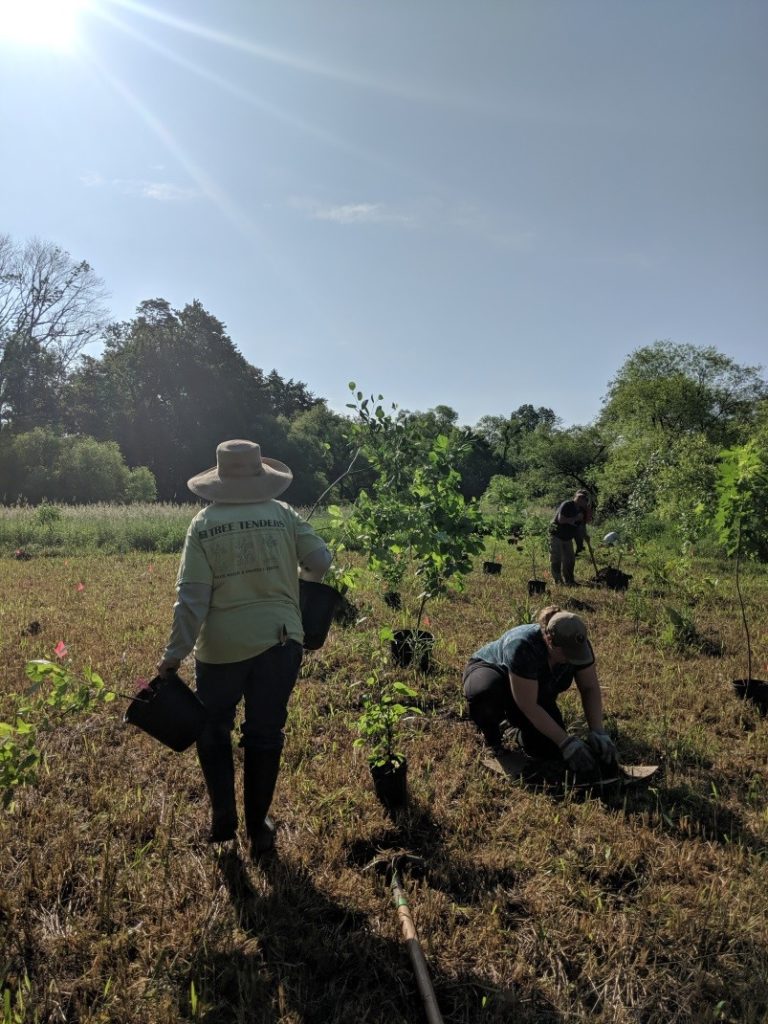
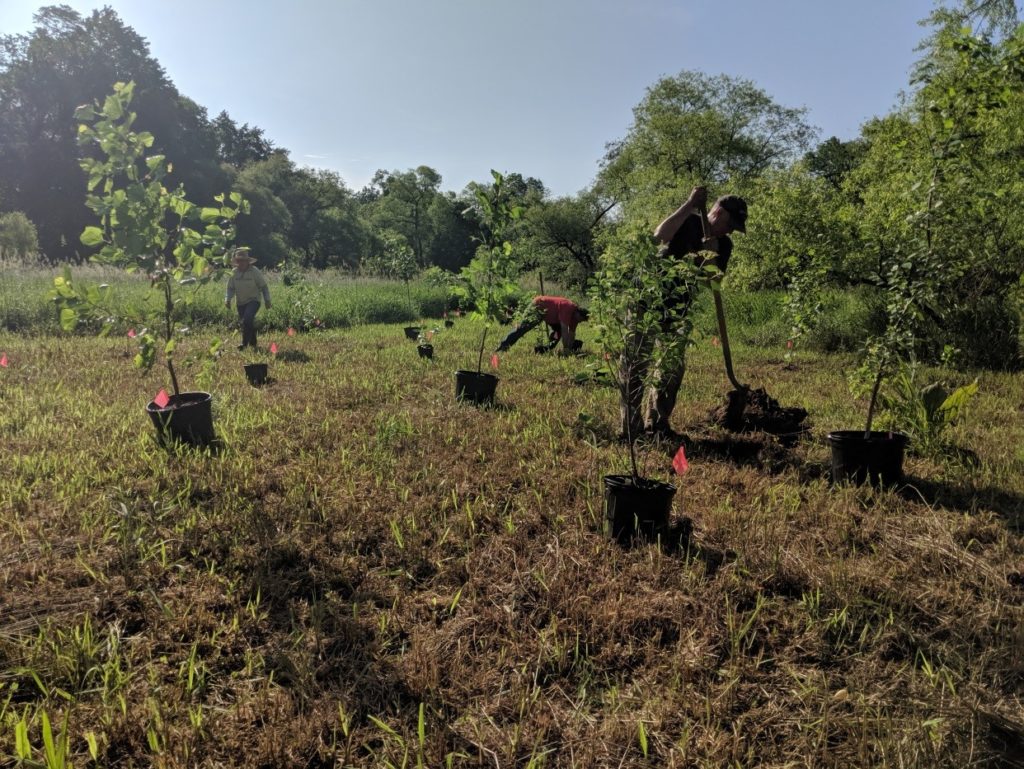
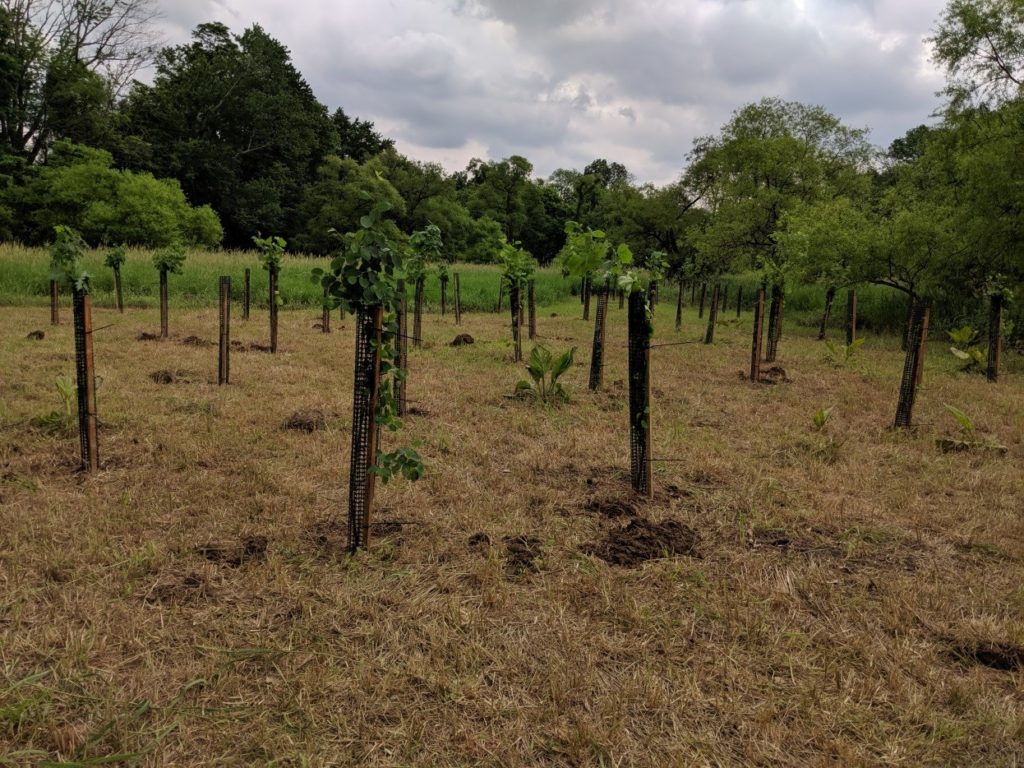
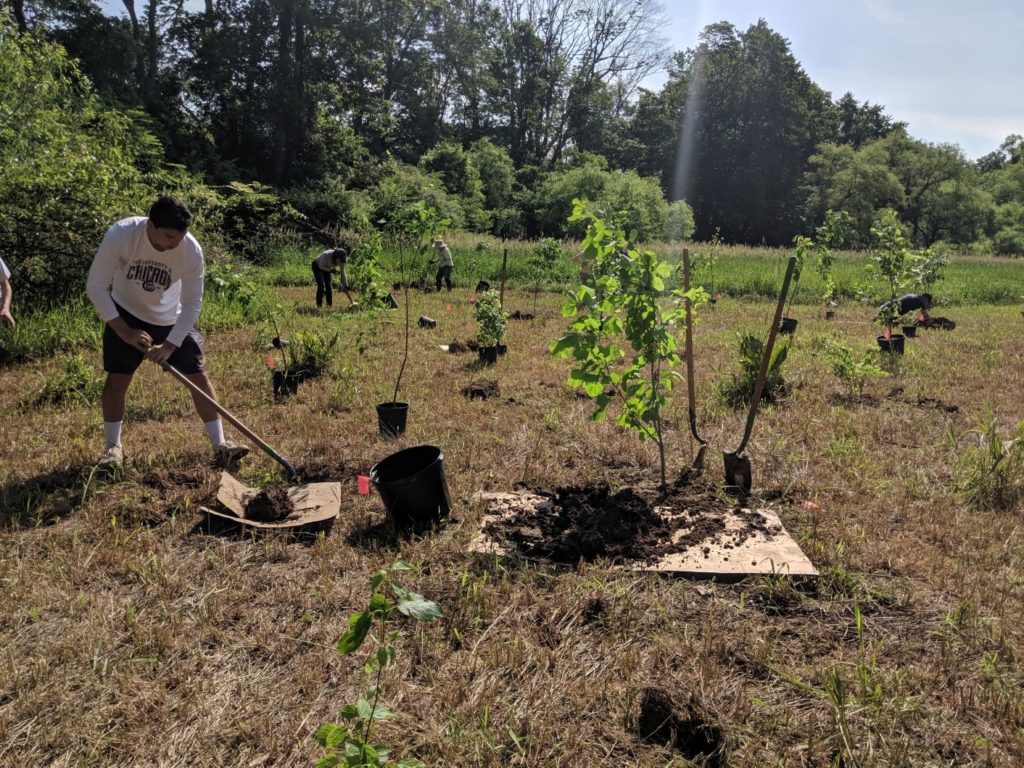
  • Example of a riparian buffer area prepared for planting. The grass was mowed prior to marking the plant locations and digging the holes.
  • Work with a reputable native plant nursery or a landscape professional to help select your plants and determine the quantity needed.

Once you know the size of the area you will be planting, you can work with a landscape professional or reputable nursery that specializes in native plants to estimate how many trees and shrubs should be ordered. Typically, plants are spaced 12-15 feet apart.

Prior to planting, you should prepare the project area by mowing it to facilitate digging the holes.

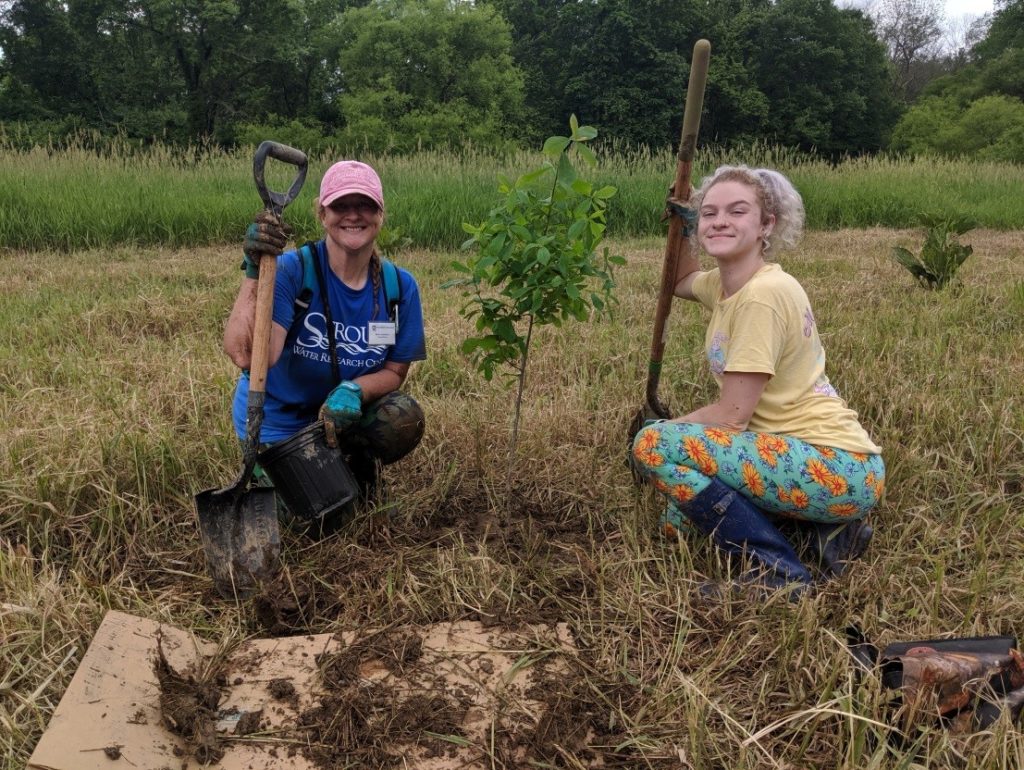
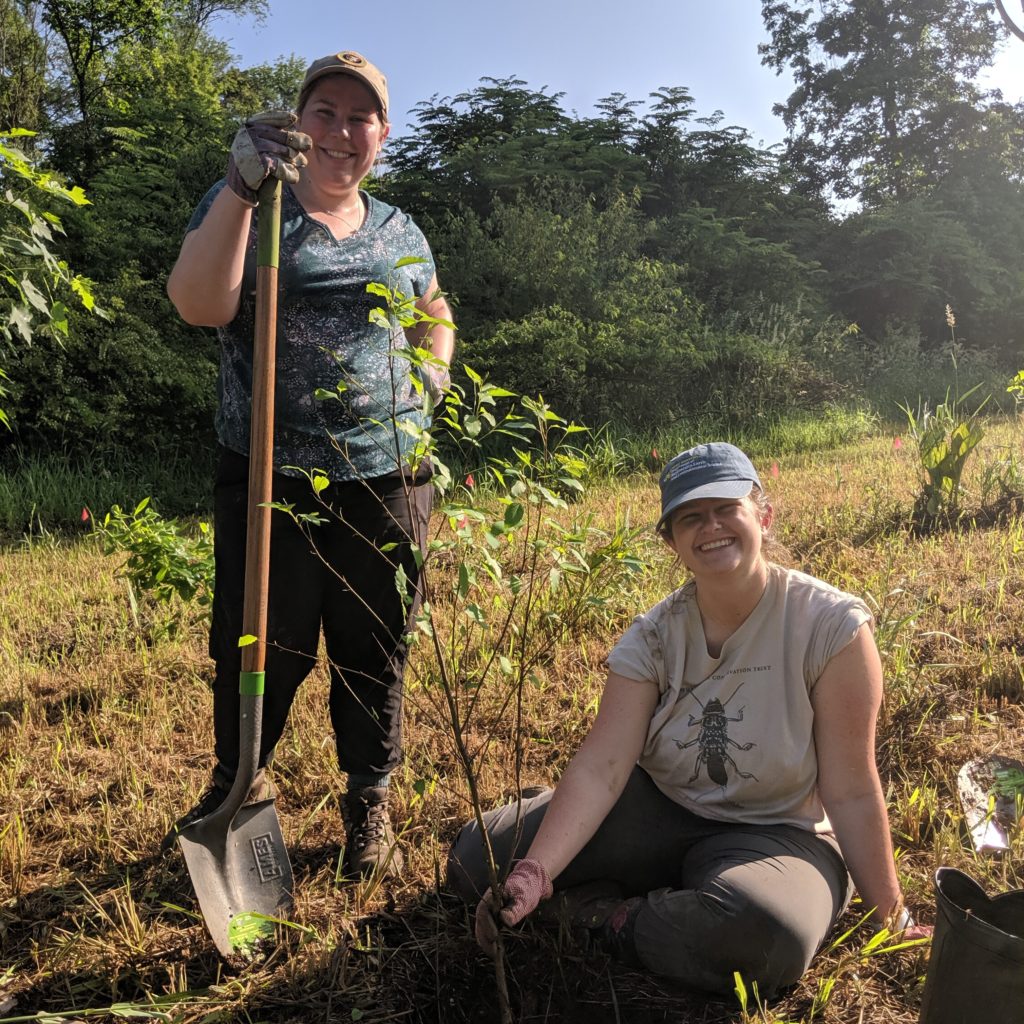
To get an up-close look at a riparian buffer area and gain some practical planting experience, join us for a one or more of our native tree planting days – May 29, 30 & 31 – at Ashbridge Preserve. More information and volunteer sign up for these upcoming plantings available soon!

Filed Under: Conservation, Native Plants, Stewardship, Watershed

Why Riparian Buffers are So Important & How You Can Help Them

September 13, 2019 By Stewardship Team

The areas surrounding streams, known as riparian buffers, are critical to the protection and health of these precious water resources. Intact riparian zones include vegetative buffers consisting of native trees and shrubs and  perform a variety of important functions such as stabilizing stream banks from erosion, shading stream waters to keep them cool and providing organic materials for insects, fish, and other wildlife. Over time, however, the development of our open spaces for housing, industry and conventional agriculture has led to a decline in the health of our streams, including significant reductions to the critically important riparian buffer zones surrounding them.

With help of community partners & volunteers, the Trust has added hundreds of trees and shrubs along the banks of the Crum and Ridley Creeks and their tributaries.

Depending on a property’s particular land use history, areas surrounding streams can look quite different. Some streams may still be protected by intact, dense forests while others may be lined with grassy banks and perhaps only a few trees and shrubs, if any. Given this variety, management strategies may range from preserving the existing woodland along a stream to the restoration and expansion of the buffer zones with additional plantings and the cessation of mowing along the stream banks.

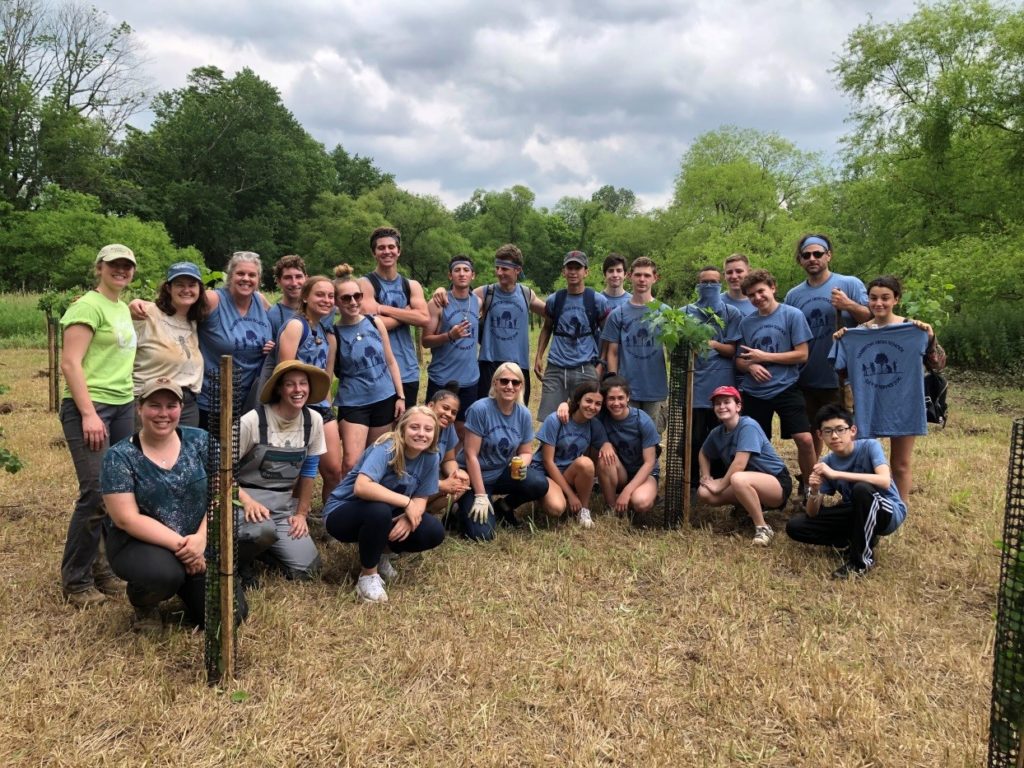
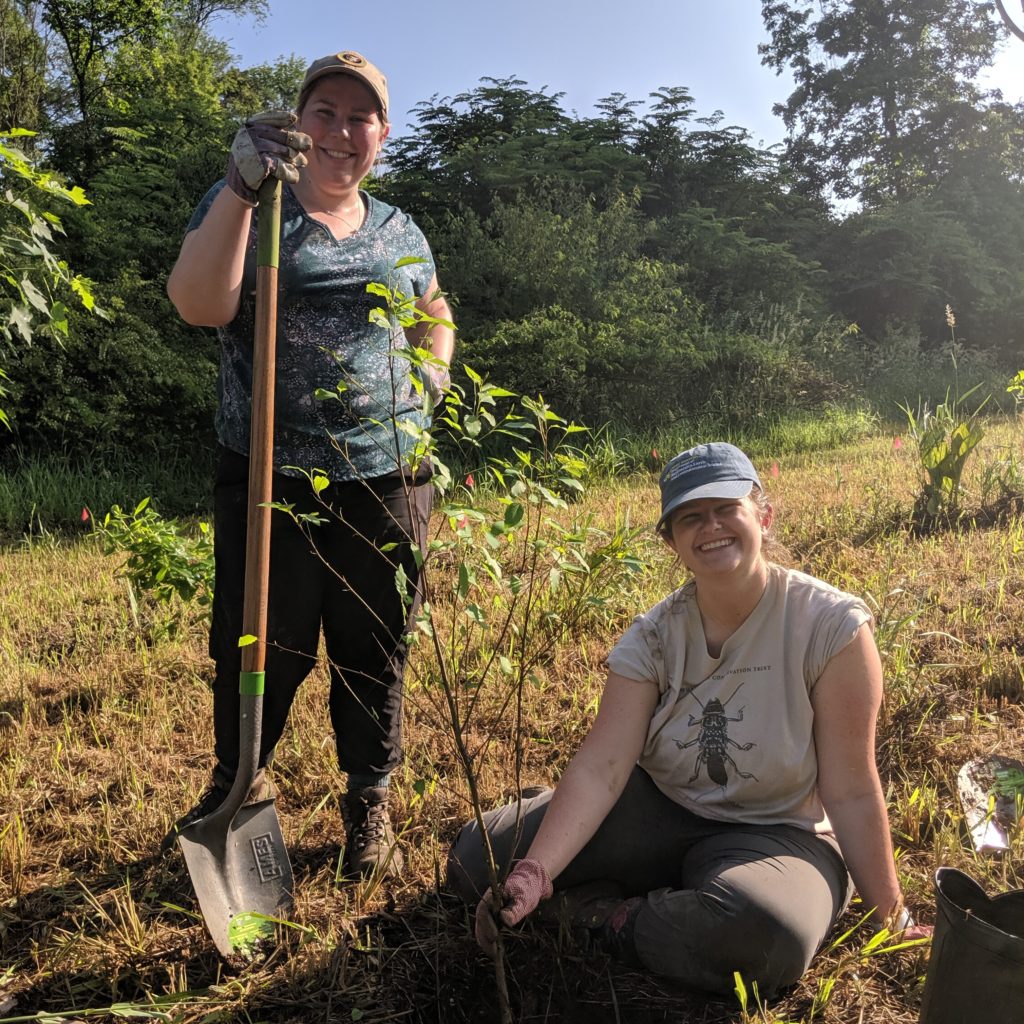
Over the years, the Trust has partnered with numerous local landowners, schools, and other conservation organizations to improve our community’s riparian zones, adding hundreds of trees and shrubs along the banks of Crum and Ridley Creeks and their tributaries. When it comes to planning and executing a riparian buffer enhancement or restoration project, one key element is the selection of a variety of native tree and shrub species to increase the ecological diversity of the riparian area.

In 3 upcoming blog posts will provide information about enhancing riparian areas through the addition of native trees and shrubs, including tips for planning, implementing and maintaining riparian zones.

If you would like to learn more about planting in a riparian buffer zone and gain some practical planting experience, join us for one or more native tree planting days – May 29, 30 & 31 – at Ashbridge Preserve. More information and volunteer sign up for these upcoming plantings available soon!

Filed Under: Conservation, Native Plants, Stewardship, Watershed

You Have Options

July 23, 2019 By Watershed Protection Team

Single-use cutlery, food containers, and straws are used for a few minutes and discarded to remain in the environment forever. Even compostable options have limitations. By choosing to refuse these single-use plastics, you can help set a precedent for sustainable alternatives and show others how easy it can be.

When dining out, try bringing your own straw for beverages and reusable containers for your leftovers. If you like getting takeout, try bringing a set of reusable cutlery with you. You can let the restaurant know that you don’t need plastic cutlery or straws.

At the grocery store, avoid plastic packaging when you can by bringing your own container to buy in bulk and refusing to buy products that are unnecessarily wrapped in plastic, like fruit. You can also avoid pre-packaged meat and deli products that are sold in plastic or on polystyrene trays by going to the counter or finding a local butcher that sells unpackaged items. Just remember to bring your own reusable container when you go shopping.

Even though Plastic Free July is coming to an end, saying no to single-use plastic is something we should consider doing every day. If we all pick a few plastic items to eliminate from our daily lives, together we can create a Plastic Free Watershed!

Home

Filed Under: Conservation, Nature, Stewardship, Watershed

Choose to refuse single-use coffee cups

July 16, 2019 By Watershed Protection Team

Plastic and paper coffee cups are not recyclable in most locations. Even ‘compostable’ cups are rarely composted as they require very specific facilities and conditions. 

Get your coffee in a refillable cup instead

You can easily avoid single-use coffee cups by bringing your own reusable alternative. There are many reusable coffee cups available on the market. Keep it in your bag or on your desk at work; wherever you’ll remember to use it. Bringing your own cup shows others how easy it is to reduce their waste and can create a new trend.

You don’t even need to purchase a special cup. You can bring a mug or jar from home – just be conscious of using items that can heat up or don’t travel well if you’re going far. Bring yours to your barista to fill with your morning caffeine. Some places will even give you a discount for bringing your own cup! If you forget your reusable cup and don’t have time to dine-in, consider going without. It might not be easy, but will probably mean you never forget again!

Take the the #PlasticFreeJuly challenge at https://www.plasticfreejuly.org/ and say no to single-use plastics. 

If you’re interested in other ways to help, keep an eye out for local stream cleanups to help create a plastic free watershed!

Filed Under: Conservation, Nature, Stewardship, Watershed

BYOB – Bring your own BAG

July 9, 2019 By Watershed Protection Team

The average family accumulates about 60 plastic bags in only four trips to the grocery store. The majority of these bags are not bio-degradable and can take 700 to 1,000 years to break down. A plastic bag from your neighborhood store might blow from a trash can into a storm drain before traveling through pipes into the Delaware River or a tributary.
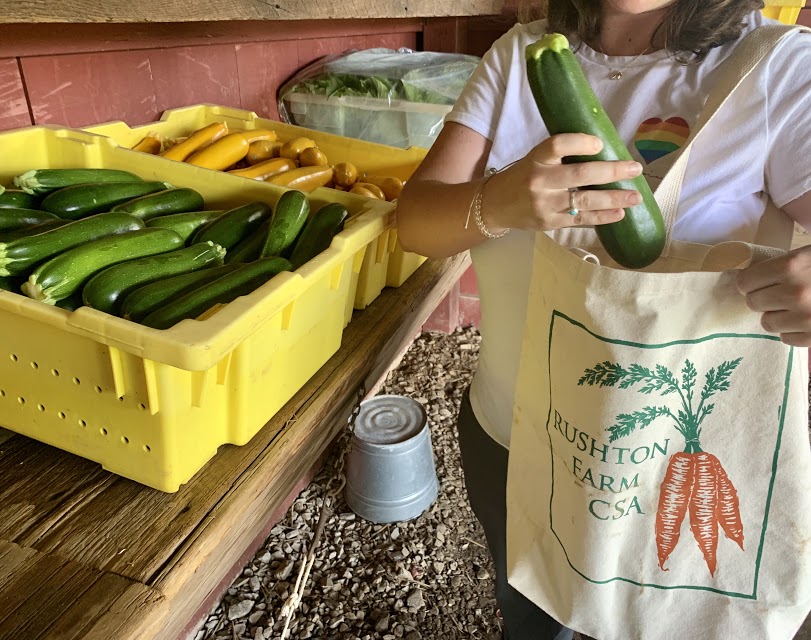
Bringing your own shopping bags to the grocery store is a great way to reduce single-use plastics. But did you know there are alternatives to those plastic produce bags?

At our Rushton Farm we’ve even switched to biodegradable produce bags for our pickup days. Reusable mesh or cotton bags are a small investment and are available from many retailers.

This July, ditch plastic bags and bring your own reusable bags instead. Stash them in places where you’ll remember them like by your front door, in your purse, and trunk. 

Declare your independence from single-use plastic by participating in the Plastic Free July Challenge at https://www.plasticfreejuly.org/ Together we can create a Plastic Free Watershed!
Filed Under: Conservation, Farm, Nature, Rushton Conservation Center, Watershed

  • « Previous Page
  • 1
  • …
  • 11
  • 12
  • 13
  • 14
  • Next Page »

CONTACT

925 Providence Road
Newtown Square, PA 19073
(610) 353-2562
land@wctrust.org

501(c)(3) EIN 23-2841453

JOIN OUR MAILING LIST

Copyright © 2026 · WCTRUST.ORG