WILLISTOWN CONSERVATION TRUST

  • Facebook
  • Instagram
  • LinkedIn
  • YouTube
DONATE
  • About
    • HOW WE WORK
    • WHERE WE WORK
    • OUR STAFF AND TRUSTEES
    • JOBS & INTERNSHIPS
    • RUSHTON CONSERVATION CENTER
    • STRATEGIC PLAN
    • INCLUSION, ACCESS, AND BELONGING
    • FAQs
  • LATEST
    • BLOG
    • IN THE NEWS
    • PUBLICATIONS
    • PHOTOS
  • EDUCATION
    • GROUP EDUCATION
    • LAND PROTECTION
    • STEWARDSHIP
    • BIRD CONSERVATION
    • COMMUNITY FARM
    • WATERSHED PROTECTION
    • ECOCENTRIC EXPERIENCE
    • RUSHTON NATURE KEEPERS (RNK)
  • NATURE PRESERVES
    • ASHBRIDGE PRESERVE
    • HARTMAN MEADOW
    • KESTREL HILL PRESERVE
    • KIRKWOOD PRESERVE
    • RUSHTON WOODS PRESERVE
  • EVENTS
    • EVENT CALENDAR
    • BARNS & BBQ
    • RUN-A-MUCK
    • WILDFLOWER WEEK
    • ACCESS Program
  • Support
    • WAYS TO GIVE
    • SPONSOR THE TRUST
    • CORPORATE PARTNERSHIP PROGRAM
    • JOIN THE SYCAMORE SOCIETY
    • LEGACY SOCIETY & PLANNED GIVING
    • VOLUNTEER
    • DELCO GIVES 2026
  • OUR NEWEST PRESERVE
    • OUR NEWEST PRESERVE- KESTREL HILL

Native Alternatives to Invasive Plants

July 6, 2021 By Andrew Kirkpatrick

Every time I walk into a nursery or big box store I feel a great temptation to purchase the prettiest plants. However, sometimes the prettiest plants and the ones that stand up to deer are not the best selections available for local pollinators and wildlife. Native plants support local species better than exotic ones because they have evolved in the ecosystems where we live. 

And while you will see bees and butterflies at non-native plants, these do not offer the same amount of nutritional content as their native alternatives. A blueberry is far more nutritious for a bird than a barberry. Birds have to eat more of the invasive species to get the same amount of benefits which in turn increases the spread of the invasive seeds in their poop.

With a little research and careful selection we can easily move away from invasive garden species to more beneficial native ones. Here’s a list to get started derived from the excellent book from the Brooklyn Botanical Garden, Native Alternatives to Invasive Species.

Invasive Shrub: Japanese Barberry (Berberis thunbergii)

  • Escapes into the wild and invades forests where it pushes out native shrub species plus it is a vector for ticks.

Replace With: Witch Alder (Fothergilla gardenii), New Jersey Tea (Ceanothus americanus) or Bush honeysuckle (Diervilla lonicera)

  • Witch Alder
  • New Jersey Tea Plant
  • Bush Honeysuckle
  • Small shrub with rounded to mounding form
  • 3-5 ft tall and wide
  • Fuzzy white terminal flower clusters in early spring
  • Oval scalloped foliage
  • Orange to burgundy fall color
  • Mounding to spreading form.
  • 1-3 ft tall and 2-4 ft wide
  • Terminal white flower clusters in late spring and summer
  • Deep green foliage
  • Yellow autumn color
  • Small shrub with arching vase like form.
  • 2-4 ft tall and 3-5 ft wide
  • Yellow flowers all summer
  • Yellow to burgundy autumn color.
  • See it at the RCC by the front door!

Invasive Shrub: Butterfly Bush (Buddleja davidii)

  • Despite the name, butterfly bush only supports adult butterflies with its abundant nectar but fails to provide for all of the other stages of life.

Replace With: Buttonbush (Cephalanthus occidentalis) or Summersweet (Clethra alnifolia)

  • Buttonbush (Cephalanthus occidentalis)
  • Summersweet (Clethra alnifolia)
  • Rounded, irregular form
  • 6-10 ft tall and wide
  • Attractive winter silhouette
  • Fuzzy white summertime flowers
  • Deep glossy green foliage
  • Yellow autumn color.
  • Upright to irregular form
  • 4-8 ft tall and wide
  • Tawny to chestnut-colored bark
  • Deep green quilted foliage
  • Spikes of sweet-scented white flowers in summer
  • Yellow autumn foliage color

Invasive Groundcover: Japanese Pachysandra (Pachysandra terminalis)

  • Aggressive spreader, easily escapes into adjacent natural areas.

Replace With: Allegheny spurge (Pachysandra procumbens), Virginia creeper (Parthenocissus quinquefolia) or Blue-eyed grass (Sisyrinchium angustifolium)

  • Allegheny spurge (Pachysandra procumbens)
  • Virginia creeper (Parthenocissus quinquefolia)
  • Blue-eyed grass (Sisyrinchium angustifolium)
  • Dense, slow-spreading groundcover
  • Paddle-shaped evergreen leaves
  • Fuzzy spring flowers
  • Rich winter foliage
  • Not deer resistant!
  • Climbing vine with holdfasts
  • Palmate leaves with five leaflets
  • Smoky-blue berries on red stalks
  • Flaming autumn color
  • Deer resistant
  • Delicate blue star shaped spring flowers
  • Grass like foliage
  • Grows in dense, tufted clumps

Invasive Vine: Japanese Honeysuckle
(Lonicera japonica) 

  • Aggressive vine that will smother trees and shrubs.

Replace With: Trumpet Honeysuckle
(Lonicera sempervirens)

  • Well-behaved deciduous vine
  • Scarlet flowers that attract butterflies and hummingbirds
  • Small red berries
  • Gray-green leaves
  • Exfoliating winter bark

Invasive Grass: Chinese Silvergrass
(Miscanthus sinensis Anderss.)

  • very aggressive and deep rooted ornamental grass that is sold as sterile but tends to reproduce anyway.
  • A serious threat to meadows and natural grassy areas.

Replace With: Indiangrass
(Sorghastrum nutans)

  • Clumping grass with ascending, tufted foliage
  • Silky golden plumes
  • Red to russet autumn color

Invasive Grass: Fountain Grass
(Pennisetum)

  • Escapes into natural areas forming dense stands, prolific seeder spreads by wind.

Replace With: Pink Hair Grass
(Muhlenbergia capillaris)

  • Clumping grass with a rounded crown
  • Low tufts of arching blades
  • Airy red plumes
  • Russet to tawny autumn color

Filed Under: Native Plants, native wildflower meadow, Nature, wildflower meadow

Nature at Night: Native Plants for Your Landscape

April 9, 2021 By Communications Team

What if you treated your backyard as a piece of the larger mosaic of a habitat and added native plants to your landscape? The Trust’s Preserve Manager, Mike Cranney, for an overview of native plants and why they’re important to birds and other wildlife.  Mike will be joined by Julie Snell and Lisa McDonald Hanes of Redbud Native Plant Nursery, located in Media, PA. Julie and Lisa will share their growing and sourcing practices, selecting the right plants for your space, and how to develop a thriving native plant landscape!

REDBUD NATIVE PLANT NURSERY

The mission of Redbud Native Plant Nursery is to be the primary source of sustainably raised native plants for retail buyers in Southeastern Pennsylvania. Building on the base established over the past seventeen years, the nursery will continue to provide unique stock at a location where customers can see, touch and smell native plants in person and interact with knowledgeable staff. 

To learn more about Julie and Lisa’s nursery, please visit Redbud Native Plant Nursery’s website: www.redbudnative.com
Filed Under: Native Plants, Nature, Nature at Night, Nature Education, Nature Preserves, Stewardship, Uncategorized

The Bees of Rushton Farm: A Pollinator Perspective on Willistown Conservation Trust & Environmental Education

February 13, 2021 By Communications Team

One Sunny midsummer day in 2012 on Rushton Farm, the bees decided to swarm. Noah, a certified apiarist–and the sustainable gardening manager teaching our cohort agro-ecology best practices–knew exactly what to do, and quickly sprang into action. He was able to quickly and safely locate the queen bee and remove the correct branch the swarm had formed on. It was a quick and mesmerizing event that created a lasting memory for all us interns and students who were there for the swarm…and then it was back to tending the row crops we were growing for the community supported agriculture (CSA) and food donations. It was a unique and fun way to work and learn, and an experience that would only have been possible due to the efforts of the Trust to not only create and restore the 6-acre sustainable farm but to make it accessible to us city dwellers and students that would have otherwise never known what existed beyond the hedgerows.

This experience reminded me of a time growing up in the Midwest. While playing outside in my backyard on a south facing slope, I discovered bees entering and exiting a nickel sized hole in the ground. Curious to see what they were doing, I went inside and got a jar. Then I put the jar over the hole, and for about 5 stings worth of time, or 20 minutes or so, I could study the bees. This event, like the swarm at Rushton, created an indelible and memorable window of observation that I would forever remember. As the interns and I worked with the staff and hosted student groups at the farm, I could not help but be reminded how such events can make a lasting and meaningful impact on young people as they begin to explore their natural world and make ecological connections. 

As my internship progressed as part of the Penn MES program, the opportunity to study bees, and specifically native pollinators, arose. Working with Lisa Kiziuk and Fred de Long, I was able to reach out to bee expert Sam Droege from the Beltsville, MD bee lab. He assisted me with designing a baseline pollinator survey, told me where to get the glycol for the pan traps (painted yellow, blue and white solo cups with PVC holders) I would hand make and deploy in three areas around the farm, and even where to get the specimen collection bags and how to store the specimens for later ID (which Sam’s lab and interns there performed). 

I would soon conclude my field research at Rushton after collecting the specimens from the pan traps throughout the summer and sending them to the Bee lab for ID. Thanks to the sustainable farming practices, focus on native plantings and abundant open space, we were able to identify 49 unique species of bees at Rushton Farm.

My capstone project at Penn would focus on deadly and pervasive insecticides and crop protection products called Neonicotinoids–which are used as seed treatments on over 95% of corn and soy planted in the U.S–and which were not used anywhere on Rushton Farm. At the end of 2012, after all the Rushton farm crops had been sustainably grown and harvested, I published “The Producer Pollinator Dilemma: Neonicotinoids and Honeybee Colony Collapse.” This project was the most in-depth project I’d taken on to date, and it began with “The Bees of Rushton Farm, A Pollinator Perspective on Sustainable Agriculture,” which was the independent project preceding the capstone, and where we published our baseline pollinator survey with the native pollinators we observed and collected in and around the farm that summer.

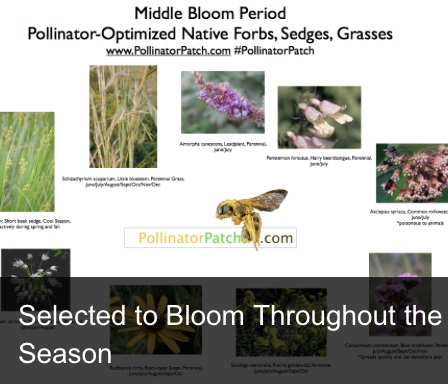
What began as a summer internship spurred a lifelong academic and ecological interest in native bees, agro-ecology, and how we can all work together to restore our land with an optimal mix of wildflowers, native grasses, and sedges. This is how the PollinatorPatch nonprofit campaign to restore One Million Acres, One Backyard Patch at a time, soon evolved from my new job with Applied Ecological Services as part of the large scale Restoration Field Crew in the Midwest, and then Project Manager for the Wetland Reserve Program in Iowa, in conjunction with the NRCS and State DNR.

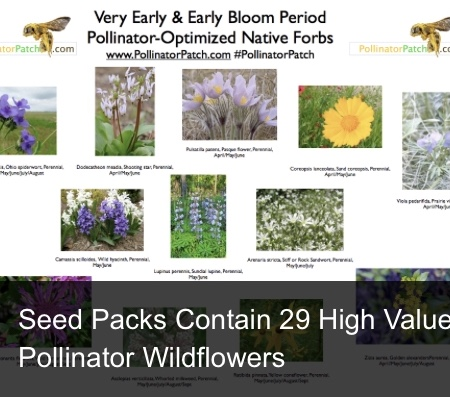
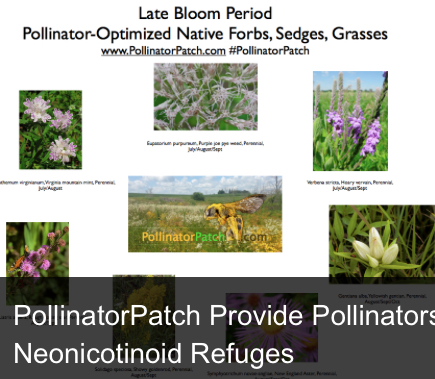
It was during these projects and assignments that I realized a pollinator optimized seed mix was needed, by eco-region, and bloom period, and with more than the CP42 standard of 9 forbs (3 in each bloom period). On Earth Day in 2015 PollinatorPatch.com was launched to offer folks the best available 30+ species seed mix for their backyard and to show them why it’s important to help the bees, just like Noah did that one sunny midsummer day on Rushton Farm when the bees swarmed. 

This past summer the entire experience came full circle when Monarch Joint Venture conducted a vegetation survey to see what native plants and wildflowers particularly were in bloom from a pollinator-optimized seed mix in the 3rd year of maturation.

“Everything is everything,” and we are all connected on our planet and by our collective actions. Small events can lead to bigger learning experiences and the unique and memorable outdoor education offered at Rushton is invaluable and makes bigger impacts in time thanks to the work of the Willistown Conservation Trust and its dedicated team.


Ben Reynard | was an Intern at Willistown Conservation Trust’s Rushton Farm in 2012. After earning a Masters’s degree in Environmental Studies at Penn, Ben went on to work for Applied Ecological Services as an Ecosystem Restoration Supervisor. Additionally, he has launched the nonprofit, Pollinator Patch to restore backyard habitat. Ben is father to a three year old son and is restoring a 3-acre goat prairie and an 1850’s pioneer cabin he hopes to make into an eco-home for his son to learn eco-homesteading and ecological restoration. To learn more about Ben and his path visit: https://www.linkedin.com/in/benjamin-reynard-03a4b358/ or https://www.lps.upenn.edu/degree-programs/mes/community/0514.

Filed Under: agroecology, Farm, Native Plants, Nature, Science

Planting in Fall

August 27, 2020 By CommIntern

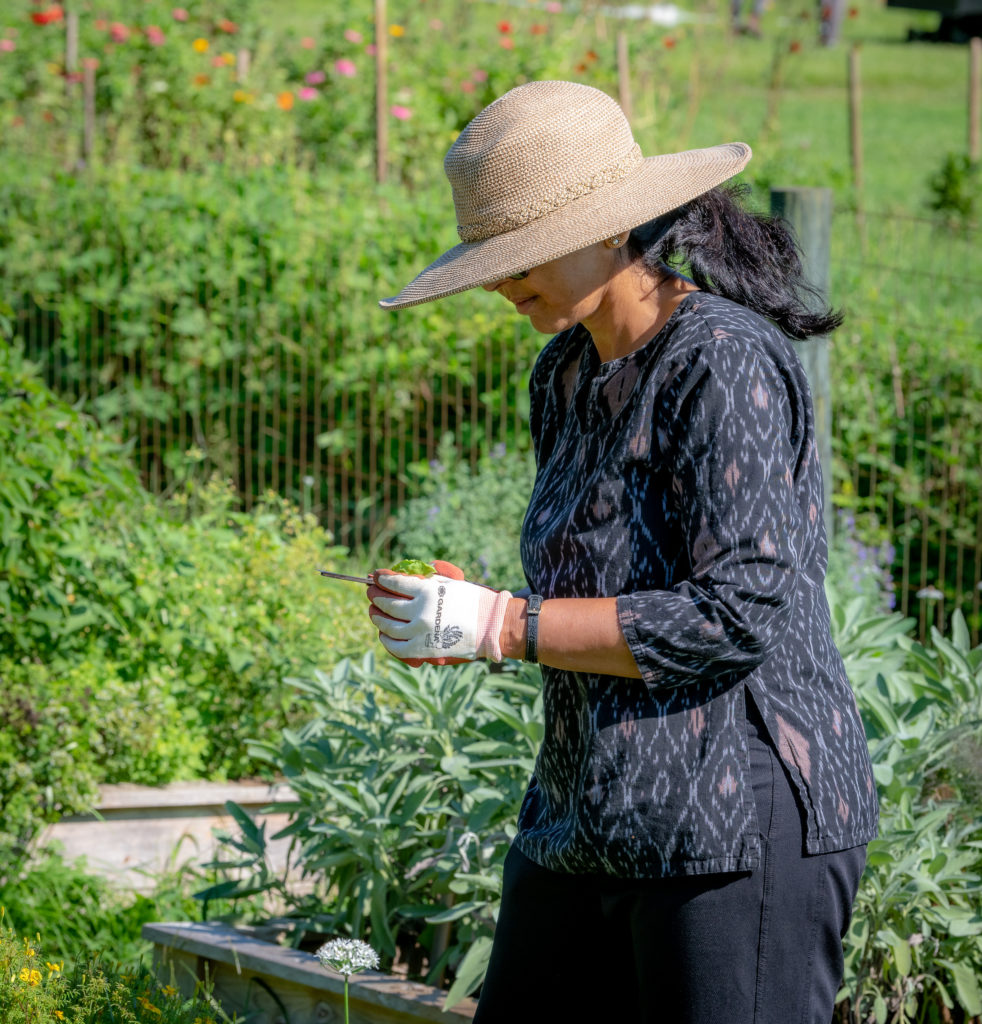
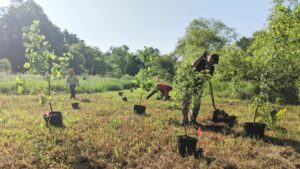
A volunteer gardener at Rushton Farm this August. Photo by Jennifer Mathes

              Although fall is when most things begin to die back, there is no better time to put new life into the ground! It is obviously a beautiful season to get outside, but it also presents the perfect conditions for a young plant to thrive. Getting your planting done now will make both your and your plants’ lives a whole lot easier come next spring.

The most significant benefit of planting in the fall is the jump-start it gives plants to get their roots established. Because they are not battling the heat and drought of the summer, the plants are able to focus their energy on growing a strong root system. This gives them more time to gain strength before they emerge in the spring and take on the summer heat. In addition, the cooler autumn weather means less watering, and fewer hungry pests. There are also practical reasons to plant in the fall. Having just gone through the spring and summer, you know exactly what additions your garden may need, and when everything is busy next spring, you’ll be thrilled with the time you have saved.

Fall is a great time to add herbaceous perennials to your garden so that they are ready to emerge come spring, but it is an especially ideal time to plant trees and shrubs. These woody species depend on a strong root base, and require more time to get established, so getting them started now puts them at an advantage. Maples and oaks fare particularly well planted this time of year. Fall is also the time to plant spring blooming bulbs, as they need to go through winter in the ground in order to break their dormancy.

As always, we recommend using native plants in your yard for the benefit of our birds, pollinators, and other wildlife. Luckily, there are wonderful local nurseries nearby where you can find natives, such as Redbud, Mostardi, and Octararo. We also have a variety of resources on our website that explain the benefits of native plants and offer suggestions for which ones to use, including our recent virtual presentation on native plants in your landscape, and our Homeowner Resource Guide. And of course, you can always come out to visit our office and preserves for inspiration. Happy planting and enjoy the fall!

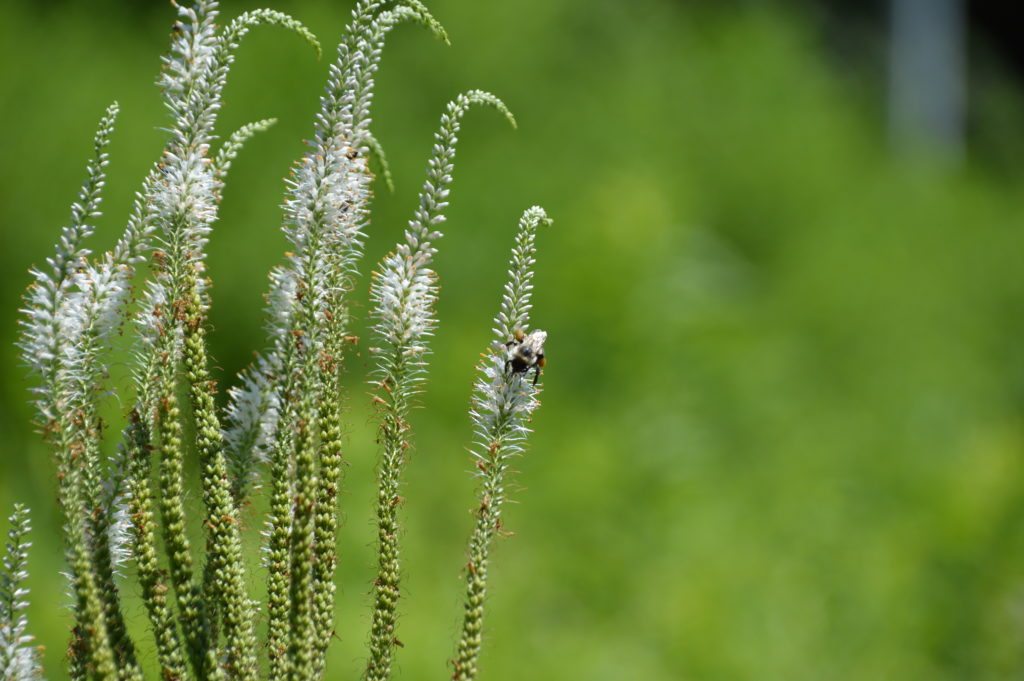
Bumble bee on Culver’s Root. Photo by Blake Goll/Staff

Fall Planting Tips:

  • It is best to plant once the weather is somewhat cooler, but plants will still need 4-6 weeks to get established before the ground freezes. Mid-September through the end of October is generally the best time to do your planting.
  • Dig your holes only as deep as the container the plant is in, and twice as wide. Loosen any tangled or circling roots by hand before placing the plant in the ground.
  • Bury your plants so that the root flare (where the roots start to spread from the trunk/stem) is just above ground level, and tamp the soil in firmly.
  • Adding mulch will help the soil hold moisture, and provide insulation for the roots over the winter (be sure not to pile mulch over the root flare).
  • With cooler fall temperatures, new plants won’t need quite as much water as they would in the summer, but it is still important for their establishment to keep them hydrated. Always thoroughly water in after planting, and as needed depending on the weather and soil moisture.
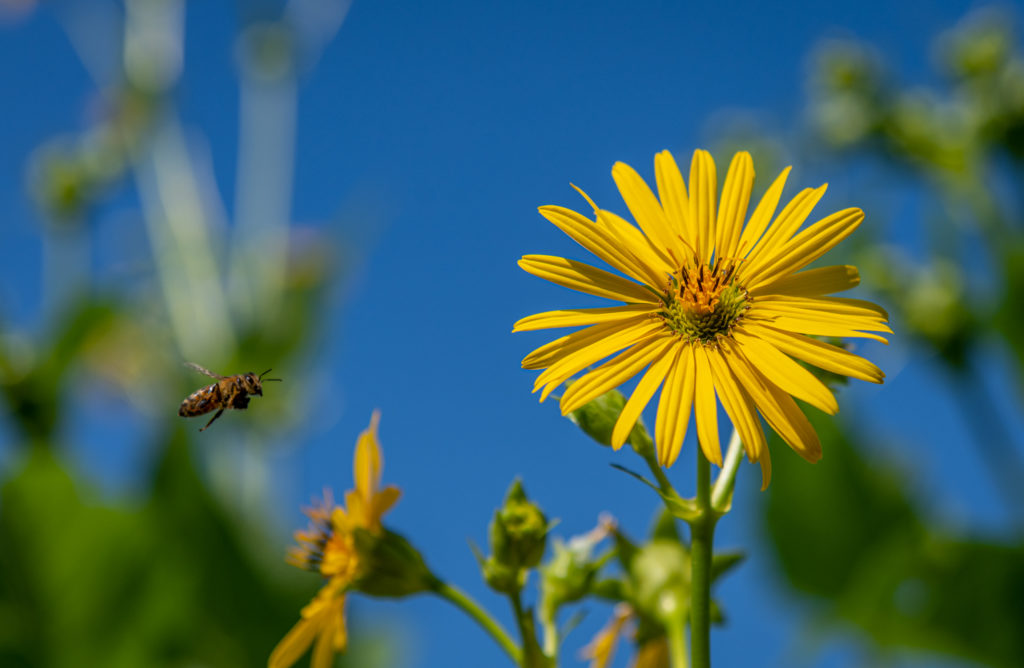
Native bee and Virginia cup plant. Photo by Jennifer Mathes

Filed Under: Native Plants, native wildflower meadow, Stewardship Tagged With: Fall planting, Native Plants

Native Plants for Your Landscape

June 19, 2020 By Blake Goll

Learn what native plants will thrive in your garden. Whether it’s a meadow, a rain garden, a woodland shade garden or anything in between, you’ll learn what plants need to succeed and which ones will help support the most wildlife, like birds and pollinating insects. Presenters Blake Goll, Education Programs Manager and Mike Cranney, Preserve Manager.

Filed Under: Native Plants

  • « Previous Page
  • 1
  • 2
  • 3
  • 4
  • 5
  • Next Page »

CONTACT

925 Providence Road
Newtown Square, PA 19073
(610) 353-2562
land@wctrust.org

501(c)(3) EIN 23-2841453

JOIN OUR MAILING LIST

Copyright © 2026 · WCTRUST.ORG