WILLISTOWN CONSERVATION TRUST

  • Facebook
  • Instagram
  • LinkedIn
  • YouTube
DONATE
  • About
    • HOW WE WORK
    • WHERE WE WORK
    • OUR STAFF AND TRUSTEES
    • JOBS & INTERNSHIPS
    • RUSHTON CONSERVATION CENTER
    • STRATEGIC PLAN
    • INCLUSION, ACCESS, AND BELONGING
    • FAQs
  • LATEST
    • BLOG
    • IN THE NEWS
    • PUBLICATIONS
    • PHOTOS
  • EDUCATION
    • GROUPS
    • LAND PROTECTION
    • STEWARDSHIP
    • BIRD CONSERVATION
    • COMMUNITY FARM
    • WATERSHED PROTECTION
    • ECOCENTRIC EXPERIENCE
    • RUSHTON NATURE KEEPERS (RNK)
  • NATURE PRESERVES
    • ASHBRIDGE PRESERVE
    • HARTMAN MEADOW
    • KESTREL HILL PRESERVE
    • KIRKWOOD PRESERVE
    • RUSHTON WOODS PRESERVE
  • EVENTS
    • EVENT CALENDAR
    • BARNS & BBQ
    • RUN-A-MUCK
    • WILDFLOWER WEEK
    • ACCESS Program
  • Support
    • WAYS TO GIVE
    • SPONSOR THE TRUST
    • CORPORATE PARTNERSHIP PROGRAM
    • JOIN THE SYCAMORE SOCIETY
    • LEGACY SOCIETY & PLANNED GIVING
    • VOLUNTEER
  • OUR NEWEST PRESERVE
    • OUR NEWEST PRESERVE- KESTREL HILL

A Love Letter to the American River Otter

June 14, 2025 By Watershed Protection Team

By: Lauren McGrath

American river otters (Lontra canadensis) are a highly sensitive and beautiful stream resident. Known for their charismatic personality and cartoonishly adorable faces, these adorable predators play an important role in managing aquatic ecosystems as well as showcasing ecosystem health.


River otters range from about 2.5 to 5 feet in length, and can reach weights up to 33 pounds. In the weasel family, (scientifically known as the mustelid family), otters have a long, muscular body, streamlined for swimming, with short legs and webbed feet and are apex predators in stream ecosystems. With a rapid metabolism, river otters need to eat frequently and their small, square skull is heavily muscled, allowing them to rapidly snap their jaws around their fast moving prey while underwater.

An adorable wet North American river otter wandering in shallow water

River otters are highly sensitive to changes in water chemistry, making it a valuable indicator species for aquatic ecosystem health. As a top predator in freshwater environments, river otters depend on clean, well-oxygenated water to support their diverse diet, which includes fish, mussels, clams, crayfish, crabs, frogs, birds’ eggs, birds and reptiles such as turtles. Changes in pH, dissolved oxygen, and nutrient levels can affect prey availability and disrupt the delicate balance of the aquatic ecosystems otters inhabit. Additionally, pollutants, such as heavy metals, pesticides, and industrial runoff, can bioaccumulate in their bodies through the food chain, leading to health issues including reproductive problems and organ damage leading to population declines. Because of their dependence on high-quality water, even subtle chemical shifts can impact otter populations, highlighting the importance of restoring and maintaining clean waterways for their survival. 

In addition to being indicators of healthy ecosystems, river otters play an important role in the environment. River otters are a keystone species in aquatic ecosystems: as a predator, they regulate prey populations, their foraging and den building behaviors modify habitat structure for other wildlife, and their presence in the ecosystem influences community dynamics. Most importantly, they serve as indicators of ecosystem health, and contribute to overall biodiversity and ecosystem resilience. Protecting and conserving otter populations and their habitats is essential for maintaining the ecological balance and functioning of freshwater ecosystems.

These incredible animals were present in most waterways across North America prior to the arrival of European settlers. As a result of trapping for their valuable pelts, habitat destruction, and widespread declines in healthy ecosystems due to human development, river otters disappeared from waterways across most of Pennsylvania by the early 1900’s, however focused reintroduction efforts in the 1980s led to a population rebound in northern Pennsylvania. Currently, river otters are protected in Pennsylvania.

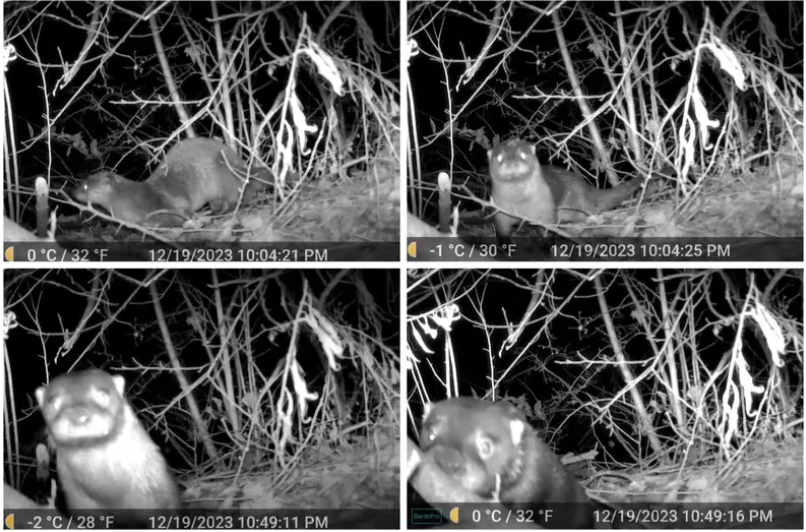
In 2023, river otters were documented in the headwaters of Ridley Creek in southeastern Chester County. It was the first time they had been documented in this waterway in over 100 years. There are known populations further west in Chester County, notably in the Brandywine watershed. The arrival of these highly sensitive animals is an indication that the work of Willistown Conservation Trust and other local conservation and watershed organizations throughout the region has provided space for sensitive wildlife, such as otters, to return. Continued monitoring of water quality will ensure that we maintain the high standards that these incredible animals need to thrive!

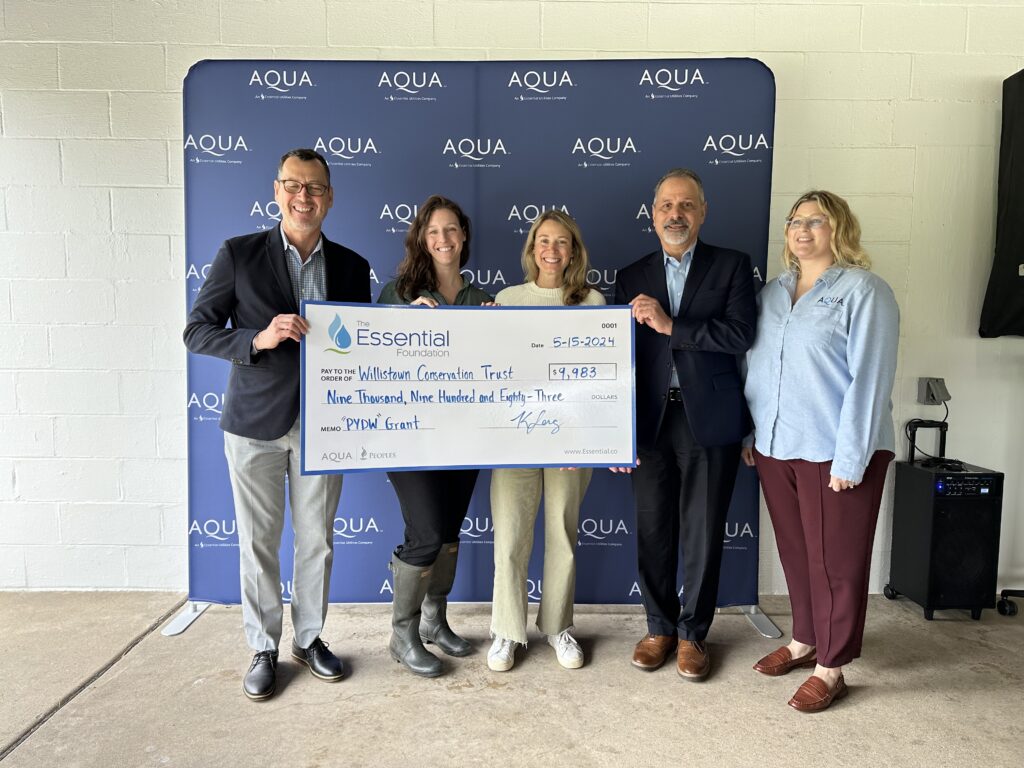
Funding for this project was awarded through the “Protect Your Drinking Water” grant program, administered by the Pennsylvania Environmental Council with funding from Aqua, an Essential Utilities company.

Filed Under: Uncategorized

Testing the Waters (Literally!) of a Water Chemistry Career

June 13, 2025 By Watershed Protection Team

By: Lauren Carroll

Hello and happy Creek Week! My name is Lauren Carroll, and I am a senior at Conestoga High School. During May of our senior year, we are given the opportunity to intern at an external non-profit or company in a field of interest/our major in college. I am lucky enough to be doing my internship with the Watershed Department here at the Willistown Conservation Trust! During this month I have learned so much about work after graduating high school, as well as our earth. I have been able to learn so much so fast, partially because of how much time we spend out in the field. 

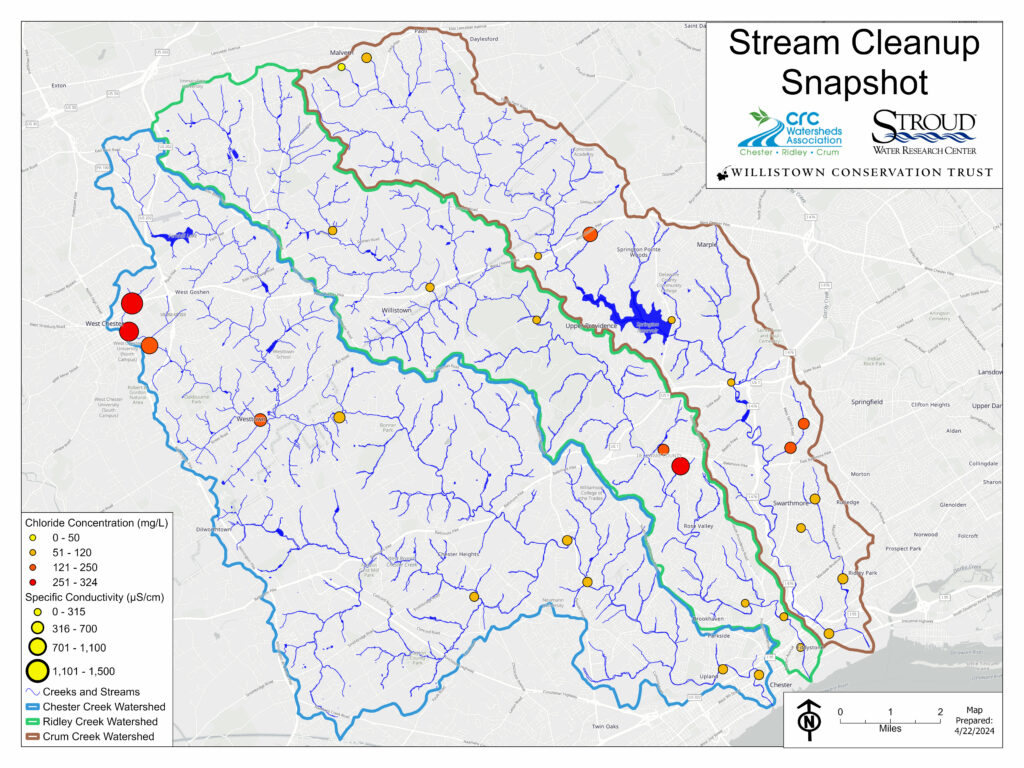
For example, I, along with a fellow intern, Clare, and our supervisor, Anna, performed a mini-stream study on the upstream Ashbridge sensor area. This study was conducted in hopes of finding out why the sensor station located in Ridley Creek was reading high levels of conductivity. Conductivity is the measure of how easily electricity can move through water. To begin the mini-study, we first made a map (Map 1) and chose 13 sites of interest to sample. We made sure to choose sites in the mainstream of Ridley Creek, in the outflow of the wastewater tributary, where these waterways meet, downstream, and on the various parts of the left and right stream banks. At each of these sites we collected 125 mL bottles of water and also recorded the temperature of the water, the time we took the sample and the conductivity of the water in that specific location. 

Later, in the lab, we tested chloride levels, which relate to conductivity, as well as nutrient levels such as nitrates and nitrites at select sites.  This is because there is a wastewater treatment plant that deposits water into this stream from a tributary, and we know wastewater typically contains high levels of nutrients and has higher conductivity as well. These nutrients are harmful to the overall health of our streams in abundance.  The word nutrients may sound positive, but it actually is not. They cause, in excess, an event called eutrophication, which is extreme plant growth, most often algae. This causes dissolved oxygen levels to decrease, which harms aquatic life. Mass fish die-offs can occur because they are suffocated. Interestingly, while we were in the creek taking samples, we could see the difference between the right bank and the left bank’s algae growth due to the nutrients carried by the wastewater tributary. The right bank was brown, and the left bank was a vibrant green which shows this difference in algae growth. 

Learning how to take water samples properly, measure conductivity in the field, record data, perform tests for chloride and nutrients in the lab and interpret the data has been such a beneficial experience. Throughout my internship, I have also been able to learn about other fascinating things going on in our waterways that are less chemistry-focused, such as taking a look at our Freshwater Mussel population and seeing their effect on water quality as well as their use as an indicator species. Another animal that can be used as an indicator species is the River Otter. When you see freshwater mussels and otters in a stream, you know it is happy and healthy! 

Overall, I have loved looking at our waterways through all the different lenses, from things as small as a molecule of NO3 to as large as an Otter! I have learned so much about how everything interacts and balances each other out, as well as how to help our waterways to be healthier and happier. I hope you learn just as much this week as I have and can help us keep our waterways healthy and happy!

Funding for this project was awarded through the “Protect Your Drinking Water” grant program, administered by the Pennsylvania Environmental Council with funding from Aqua, an Essential Utilities company.

Map 1. Sample site locations 
Sample sites 2 and 3 are in the wastewater tributary, and 4 is at the confluence of Ridley creek and the tributary. Sample sites 5 and 8 are on the right bank. Sample sites 6 and 8 are in the center of the stream. Sample site 7 is on the left bank and is our PURC1S sensor.

Filed Under: Uncategorized

Secrets of a Photosynthetic Powerhouse: Diatoms in Detail

June 11, 2025 By Watershed Protection Team

As a continuation of our previous blog post all about the wonderful world of microalgae, this piece will provide a more in-depth profile on the most important member of freshwater algal communities, diatoms. If you have not had a chance to read the first part of this series, it may be helpful in providing background information and context for this post.

It takes a whole lot of energy to satisfy all the wildlife in aquatic and marine ecosystems. While the most well known photosynthesizers may be terrestrial plants like trees and shrubs, some of the most significant and unusual primary producers on the planet are thriving in local creeks! These underrepresented microbes are called diatoms, a kind of photosynthetic microscopic algae. 

When it comes to photosynthesis diatoms are the heavy-weight aquatic champions! Whether they are floating blissfully through the Pacific Ocean, stuck to the leaf of a cattail within a wetland or covering large rocks on the bottom of a riverbed, diatoms are the most proficient primary producers in our waters. They provide between 20-40% of the oxygen available on earth and are the most important member of the base of the freshwater food chain, making up the vast majority of plant matter for grazing animals to feed on from zooplankton to large fish. 

Diatoms occupy a very unique position among microalgae, they are the most recently evolved group of algae and therefore, benefit from specialized traits that are not present in other taxa. Diatoms, like all microalgae, are incredibly sensitive to shifts in water chemistry or weather events. However, they have evolved tough cell walls made out of silica (the same material used to make glass) called frustules. This adaptation makes diatoms much more physically resilient than their neighbors and allows them to literally “weather the storm” while other algal cells comprised of cellulose and pectin may be destroyed; this also makes them better armored against infection and predation.

In addition, diatoms employ several different strategies for movement and reproduction depending on the species – as a rule of thumb more diversity within a group provides a greater likelihood of someone succeeding even if it isn’t the whole community. If one strategy fails, another may be more environmentally advantageous; in nature it often pays off to hedge your bets.

Some species of diatom like this Gomphonema form colonies attached to a substrate even though they also have two raphes.

Depending on just how recently a species of diatom has evolved, there are several different life paths they can take. The most ancient or ancestral species are planktonic, meaning they cannot move independently of the water’s current. The most newly evolved species (called novel or derived species) can permanently attach themselves to a surface using an excreted glue-like mucus and/or use one or two specialized openings in their frustule called raphes to propel themselves through the water.

The photo to the left shows an ancient, planktonic species of diatom called Stephanocyclus meneghinianus while the photo to the right shows several more novel, raphe-equipped species including Gyrosigma reimeri in the center and a few Planothidium frequentissimum cells. (Photo credit: https://diatoms.org/species/48640/stephanocyclus_meneghinianus)

Another strange superpower of diatoms is their ability to “hibernate” for prolonged periods of time while buried in sediment. If environmental conditions become unbearable, or high flow blasts diatoms off of their substrate they can simply settle into the stream bed where they become inactive until another forceful current comes along to disturb them from their slumber or conditions become more favorable. This ability is moreso an adaptation as a consequence of their silica cell walls, as they are quite heavy and can cause the entire cell to sink.

In a very vampiric twist, some diatoms can remain inactive in this dormant state for as long as 7,000 years while still being able to resume function according to one 2025 study (Bolius et al., 2025). Diatom reproductive strategy only adds to the immortality rumors – they almost exclusively reproduce asexually, but because of the rigid silica of their cell walls each daughter cell is smaller than the parent. Therefore, the older the diatom, the smaller the cell. Each daughter receives one half of their frustule from the parent and grows one half itself, leaving the parent to grow another half as well, with each resulting cell being both genetically and physically identical.

These tiny plants are generous and full of fascinating mysteries, the depths of which we are only now starting to unearth. Thanks to all their eclectic adaptations diatoms have certainly earned MVP status for habitats worldwide! 

Funding for this project was awarded through the “Protect Your Drinking Water” grant program, administered by the Pennsylvania Environmental Council with funding from Aqua, an Essential Utilities company.

References:
Behrenfeld, M. J., Halsey, K. H., Boss, E., Karp‐Boss, L., Milligan, A. J., & Peers, G. (2021). 
Thoughts on the evolution and ecological niche of diatoms. Ecological Monographs, 
91(3). https://doi.org/10.1002/ecm.1457 

Bolius, S., Schmidt, A., Kaiser, J., Arz, H. W., Dellwig, O., Karsten, U., Epp, L. S., & Kremp, A. 
(2025). Resurrection of a diatom after 7000 years from anoxic Baltic Sea Sediment. The 
ISME Journal, 19(1). https://doi.org/10.1093/ismejo/wrae252 

Stevenson, R. J., Bothwell, M. L., & Lowe, R. L. (2008). Algal ecology: Freshwater benthic 
ecosystems. Academic Press.

Filed Under: Uncategorized

Welcome to Creek Week 2025!

June 8, 2025 By Watershed Protection Team

By: Lauren McGrath

WCT’s Creek Week is a week-long celebration of the amazing water resources in our region and the incredible life that calls the Ridley, Crum, and Darby Creeks home. Over the next several days, Watershed staff will be posting daily on social media and the WCT blog to share their favorite aspects of water related research.  We start small and get bigger over the course of the week!

The week kicks off with an investigation into one of the most concerning recent contaminants of concern: microplastics. Drexel University Co-op Dejenae Smith is working with WCT and PolyGone Systems to study and remove microplastics from the environment. 

Tuesday and Wednesday bring the fascinating world of biofilms into focus! Sarah Barker, WCT’s Watershed Technician, shares her love of the slimy microscopic world that coats the rocks and floats in the water column beginning with microalgae and diatoms.  This is a two part series that you do not want to miss!

Thursday zooms back out to look at the larger and more easily identified photosynthesizing community that lines waterways: Riparian trees! Dejenae shares what she has been learning through her co-op on how to read the landscape along a waterway and the role that these beautiful native plants play in keeping streams and rivers healthy.

Friday’s blog post features Lauren Carroll, a high school senior from Conestoga High School, who shadowed the Watershed Protection Program over the month of May. Lauren is interested in a career in chemistry, and had the opportunity to help WCT understand how water chemistry changes in a stream, and how that experience may have changed her view of future careers in a positive way!

Creek Week wraps up with a love letter to one of the rarest stream residents in Ridley Creek: the American river otter. An otter was spotted in Ridley Creek in December 2023, and this blog looks into why seeing this elusive watershed resident is such big news that we are still excited about it. 

Along with all of the virtual education this week, the Watershed Protection Program team is also excited to get into Ridley Creek with you! Join us on Wednesday, June 11 at Ashbridge Preserve to Uncover Living Clues to Stream Health! On Thursday, June 12, you can spend the morning working side by side with Watershed and Stewardship staff for Stewardship Thursday, also at Ashbridge Preserve.  If a weekday morning does not work for your schedule, never fear! Watershed will also be out at Ashbridge Preserve on Saturday, June 14.

Thank you for joining WCT this week and wherever you are joining us from, we hope that you can take some time to connect with the incredible and resilient natural world!

Funding for this project was awarded through the “Protect Your Drinking Water” grant program, administered by the Pennsylvania Environmental Council with funding from Aqua, an Essential Utilities company.

Filed Under: Uncategorized

Rushton Woods Banding Station – 2024 Year in Review

May 16, 2025 By Bird Conservation Team

The Fruits of Our Labors

By: Bird Program Staff

It’s hard to believe that fifteen years have passed since we first began studying the birds of Rushton Woods Preserve. Only a few years prior, Rushton Farm had been established by Fred de Long as one of the region’s first regenerative farms within a nature preserve owned by a land trust. At that time, most of the Willistown Conservation Trust’s board members were opposed to adding the farm to the heart of this 86-acre nature preserve. They believed farming occurs at the expense of wildlife; however, they soon discovered Fred was an organic farmer committed to proving that agriculture can serve as the baseline for wildlife conservation. Today Rushton Farm is not only the heart of the organization but also a nationwide model of regenerative agriculture on conserved land.

The bird banding data we have collected over the years has allowed us to demonstrate the mutually beneficial relationship between regenerative farming and the surrounding ecosystem. We have now banded 20,830 individual birds of 104 species since 2010. These include songbirds using Rushton as a stopover habitat during migration, as breeding territory, as a year-round residence, or as wintering grounds.

With so many years of data gathered, we can now begin focusing on trends. We notice that spring and fall migrations look as if these bird populations are in decline, but our breeding bird populations (studied within the national MAPS program: Monitoring Avian Productivity and Survivorship) are increasing. This year, we focused on our birds returning with bands from previous years, a parameter that—while often overlooked—is becoming more prevalent in our long-term dataset.

Spring 2024

Spring started cold and quiet, with the bulk of our capture finally occurring in May. Capture rates remained similar to last spring, but overall they were the two lowest capture rates in station history. Diversity was also similarly low to the previous spring of 33 species. The species that continue to show significant declines are the Gray Catbirds and warbler species. We did capture our 20,000th bird this spring, which happened to be a Gray Catbird—still our most common species despite the declines.

The decline in warblers is mainly in the number of individuals rather than the diversity. For example, in 2022, we had the highest diversity of species, but the third lowest capture rate for warblers. The succession of our hedgerow habitat (i.e., trees growing taller and replacing shrubs) could contribute to catching fewer individuals as the canopy is getting higher; the canopy is where many warblers love to forage!

Focusing on the birds returning between years, the outlook is brighter. About 26% of all birds captured during spring migration 2024 were returning from previous years! In April alone, two White-throated Sparrows were our own recaptures — one from spring of 2022 and another from spring of 2023 — indicating that these individuals loyally return to Rushton each winter or use it as a reliable refueling site on their northbound journeys.

In terms of returning breeding birds, 16% of the Gray Catbirds and 36% of Common Yellowthroats sported bands from previous years. One of the catbirds was a recapture from 2018, making it about seven years old. Meanwhile, of the three Baltimore Orioles we caught, two already had their bracelets! Orioles in particular, love the edge habitat that the farm creates, and they can often be seen gregariously chasing each other across the airspace directly over the farm fields. In winter, they seek similar open habitat on shade-grown coffee farms in the tropics.

And let’s not forget the year-round residents of Rushton! Between-year recaptures included 50% of Tufted Titmice, 75% of Northern Cardinals, and 100% of Carolina Chickadees.

Spring banding ended with a warm spell that brought the highest diversity of the season, including an old Indigo Bunting originally banded in 2019, and a surprise Yellow-breasted Chat! Normally fairly flamboyant with an odd series of croaks, whistles, and short repeated phrases, this chat wasn’t chatting at all. If we had not caught the bird in a net, most likely we never would have known it was there. As one of our “life is messy” species, early successional shrub habitat (often perceived as messy) is its preference, which we embrace wholeheartedly at Rushton.

MAPS 2024

When we report the total number of birds each year, we often only report the total number of new birds, excluding recaptures. During migration, the recaptured birds are most often the same birds we banded within that season. The data we are acquiring from such recaptures is mostly how long the bird stayed at Rushton, or if it gained weight for its migratory journey, which can both be indicators of habitat quality. For example, one voracious Veery was determined to have gained 13% of its body weight in seven days of dining from the Rushton all-you-can-eat buffet! However, recaptures can be broken down into two categories: birds that we banded within that same season or year, and banded birds that are returning to Rushton from a previous year.

During the breeding season, songbirds often show high site fidelity, meaning that they will return to the same site from year to year to breed. They are more likely to do this if they were successful at breeding the previous year. This year, after 14 years of MAPS banding at Rushton Woods, we became concerned that some of our most common breeding birds were declining, like the Veery. However, after a closer look at the data, we can see that numbers of most of our birds are stable or showing normal fluctuations; we just had to take into account the birds that are returning each year!

Nearly 30% of our MAPS birds return each year to breed at Rushton Woods. Our top five most common birds captured are Gray Catbird, Common Yellowthroat, Ovenbird, Veery, and Wood Thrush (accounting for 75% of all birds banded). While it varies from year to year, we see a similar average rate of 30% returning birds of our top five species. Figure 1 shows the percent of return birds for each of the top five species each year. You can see that Common Yellowthroat, Ovenbird, and Veery are consistently returning at the highest rates; in some years as high as 66% of the birds of these three species are returning! Interestingly, Ovenbird and Veery are the only two ground nesters in this group, and both have high return rates. In particular, after thirteen years, an average of 42.5% of our total Veery population have returned to breed at Rushton!   

Fall 2024

This fall was truly surreal. Typically our busiest banding season, we look forward to the waves of species groups coming in from week to week (Figure 2). This season started out slow and never really picked up like it normally does in September. We were seeing the usual suspects, but not the usual numbers of individuals. Where did all the catbirds go? We had the lowest capture rates ever documented of Gray Catbirds in spring and fall. This particularly concerning fall saw a 72% decrease in catbirds from last fall and a 75% decrease from our 14-year average.

Filed Under: Uncategorized

  • « Previous Page
  • 1
  • 2
  • 3
  • 4
  • 5
  • …
  • 17
  • Next Page »

CONTACT

925 Providence Road
Newtown Square, PA 19073
(610) 353-2562
land@wctrust.org

501(c)(3) EIN 23-2841453

JOIN OUR MAILING LIST

Copyright © 2026 · WCTRUST.ORG