WILLISTOWN CONSERVATION TRUST

  • Facebook
  • Instagram
  • LinkedIn
  • YouTube
DONATE
  • About
    • HOW WE WORK
    • WHERE WE WORK
    • OUR STAFF AND TRUSTEES
    • JOBS & INTERNSHIPS
    • RUSHTON CONSERVATION CENTER
    • STRATEGIC PLAN
    • INCLUSION, ACCESS, AND BELONGING
    • FAQs
  • LATEST
    • BLOG
    • IN THE NEWS
    • PUBLICATIONS
    • PHOTOS
  • EDUCATION
    • GROUP EDUCATION
    • LAND PROTECTION
    • STEWARDSHIP
    • BIRD CONSERVATION
    • COMMUNITY FARM
    • WATERSHED PROTECTION
    • ECOCENTRIC EXPERIENCE
    • RUSHTON NATURE KEEPERS (RNK)
  • NATURE PRESERVES
    • ASHBRIDGE PRESERVE
    • HARTMAN MEADOW
    • KESTREL HILL PRESERVE
    • KIRKWOOD PRESERVE
    • RUSHTON WOODS PRESERVE
  • EVENTS
    • EVENT CALENDAR
    • BARNS & BBQ
    • RUN-A-MUCK
    • WILDFLOWER WEEK
    • ACCESS Program
  • Support
    • WAYS TO GIVE
    • SPONSOR THE TRUST
    • CORPORATE PARTNERSHIP PROGRAM
    • JOIN THE SYCAMORE SOCIETY
    • LEGACY SOCIETY & PLANNED GIVING
    • VOLUNTEER
    • DELCO GIVES 2026
  • OUR NEWEST PRESERVE
    • OUR NEWEST PRESERVE- KESTREL HILL

Small Stakes Can Make a Big Difference

March 17, 2026 By Stewardship Team

By Nicole DeLizzio

Spring is almost here, and with it will come bursts of green everywhere! While we are all counting down the days before we see spring ephemerals waking up from their long winter nap, there are still a few things we can be doing this dormant season. One of those activities is live staking, a simple but effective restoration technique that uses living plant material to help control streambank erosion and stabilize waterways.

Live staking is a low-cost soil bioengineering method that uses dormant woody cuttings that are about 12-36 inches in length and 0.5-1.5 inches in diameter from native plants, such as willow or dogwood, that are planted directly into areas like streambanks. These cuttings develop roots and grow into new vegetation, which helps stabilize banks, reduce erosion, and restore riparian buffers. As the plants mature, their root systems secure the soil and enhance water quality by limiting sediment runoff into nearby waterways. It is a simple process that almost anyone can do!

The first step is finding the right tree species that have evolved in areas of high disturbance and easily flooded areas. Some of these species include our native willows (Salix spp.), stemmed dogwoods (Swida sericea), boxelder (Acer negundo), and winterberry (Ilex verticiliata). Most of these plants that get commonly exposed to disruptions, such as beaver damage and constant flooding, cannot simply get up and run away. So instead, they found ways to evolve to be able to survive in these scenarios. Plants such as willows and elderberries have intense root systems and are capable of rooting very quickly into streambanks. The next time you are taking a hike at our Ashbridge Preserve, you will start to notice many areas along the path where larger willow trees have fallen right next to the streambank. What happens then is that branches will snap off and float downstream. When they land on a streambank, they quickly shoot out roots and grow where they end up!

Last Thursday, the Stewardship Team and a group of our wonderful volunteers spent the day working in Ashbridge Preserve. Together, we harvested more than 200 cuttings that will be used as live stakes to stabilize a severely eroding streambank at the preserve along Shugart Run that connects with Ridley Creek. By planting these stakes now, while the plants are dormant, we give them the best chance to root and establish before the growing season begins.

Projects like this are a great reminder that restoration doesn’t always require heavy equipment or complex technology. Sometimes, the most effective solutions come from working with natural processes. By using living plant material and mimicking the way plants naturally spread along waterways, live staking allows us to restore streambanks in a sustainable and ecologically beneficial way.

We are incredibly grateful to our volunteers who helped make this work possible. Their efforts are helping ensure that the streams at Ashbridge Preserve remain healthy, stable, and full of life for years to come.

Filed Under: Uncategorized

Building a Native Plant Nursery

November 4, 2024 By Stewardship Team

By: John Holback, Stewardship Manager

One of our recent initiatives at Willistown Conservation Trust was the establishment of a small native plant nursery, designed to support our restoration projects and promote local biodiversity. Having our own nursery allows us to preserve the genetic diversity of local native plants through seed collection and propagation while saving a little money from purchasing plants (a small, yet significant benefit). Additionally, the nursery provides new and fun tasks for volunteers, who helped tremendously with construction, maintenance, and eventual planting. Being able to see the whole cycle – harvesting and sowing seeds, watching them sprout, caring for the plants, and finally planting them – is quite a rewarding experience for volunteers and staff alike. “Running” a nursery also served as a learning opportunity for staff who had to decide what plants to grow, how to grow them, how to propagate collected seeds, and how to deal with the impacts of environmental stressors like pests and drought.

Students adding nursery pots to the plug flats
Germinated seedlings filling out the flats

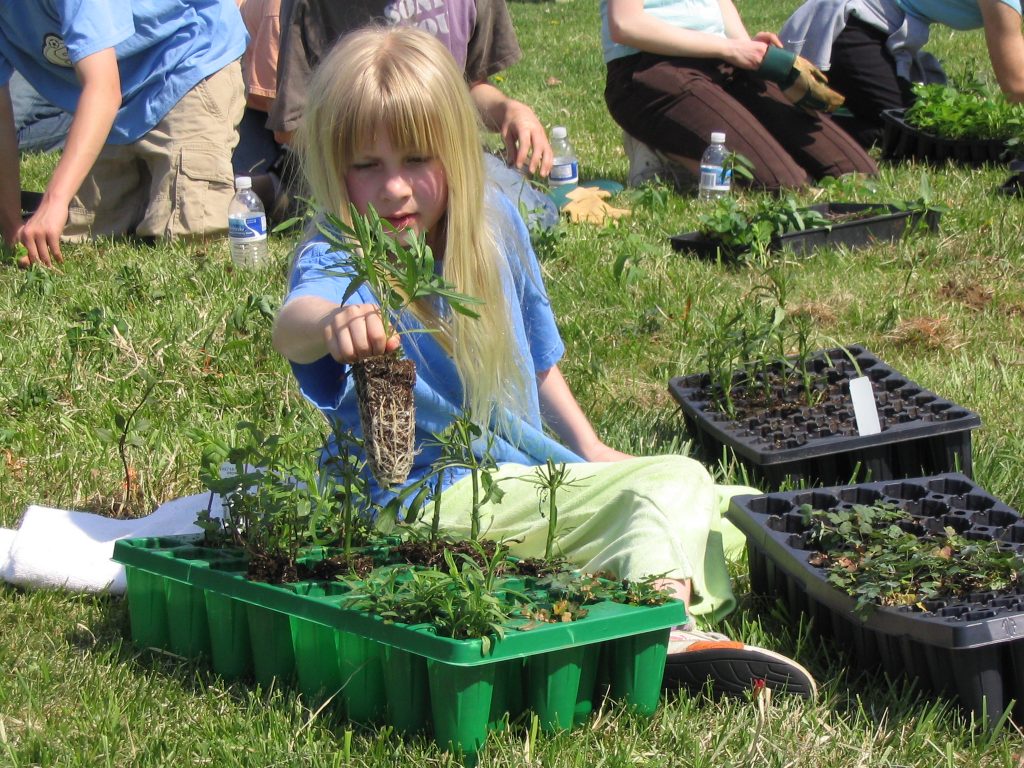
This past winter, several volunteers came out to help construct our nursery tables with lumber that Beatty Lumber & Millwork Company generously donated. Four tables were built to accommodate about 3,000 small plugs (narrow but deep cone-shaped tubes allowing herbaceous plant root growth) and 600 small trees and shrubs. In late April two groups of students – one from Delaware County Friends School and one from The Episcopal Academy – came out to help fill the individual plugs and tree containers with potting mix, which they mixed by hand with sand for better drainage and root development. In May, staff planted each of the 3,000 plugs with native grass and forb seeds. Several species were planted including Indiangrass, Little blue-stem, Butterfly Weed, and Buttonbush. Between June and July, we had 2,500 seeds germinate into vigorous seedlings.

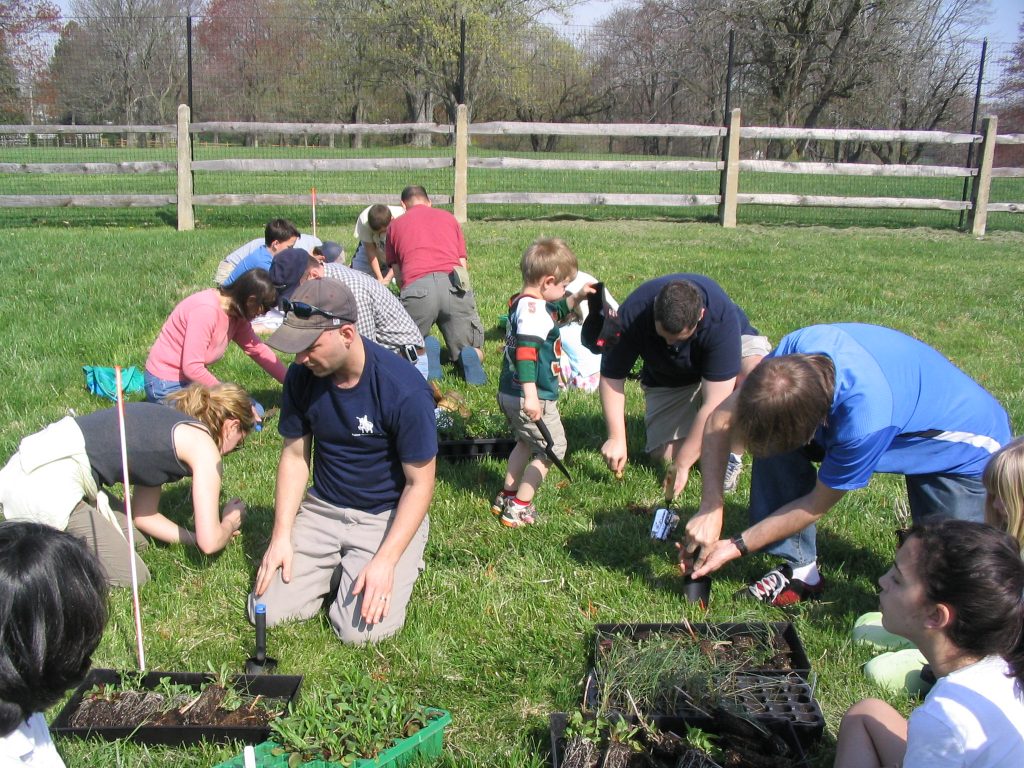
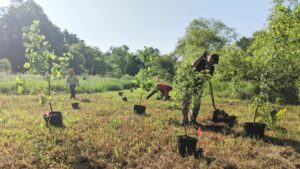
By August, the heat and dry weather began roasting the still small and vulnerable plants. It became difficult to keep up an effective watering schedule and some of the seedlings did not survive. A shade cloth was installed halfway through the summer to keep further sun damage to a minimum. Thankfully, the seedlings didn’t have long to wait, as September was our target planting month. Throughout several volunteer events, 1,500 seedlings were planted and watered in. The hard, dry ground made digging very difficult so a variety of hole-digging methods were tested. What worked best was using a small auger on a corded drill to dig the 2” wide holes necessary for the plugs. All of the grass seedlings were planted in Kirkwood Preserve and many of the perennial flowers were planted at the Rushton Conservation Center and in the meadow at our main office. 

In October, we collected acorns, viburnum fruits, persimmons, and buckeyes to grow in the tree containers. A previous group of volunteers from the Young Men’s Service League, collected and planted close to a hundred White Oak acorns which will germinate and grow outdoors this winter and be planted next fall. Once the rest of the tree containers are planted, we can put the nursery to sleep for the winter. In the early spring, we will repeat the process, making changes where necessary, in anticipation of another successful and fun year of growing our own native plants.

Volunteers planting grown out plugs at Kirkwood Preserve

Filed Under: Uncategorized

Kestrel Hill Preserve Update: Native Meadow Conversion

May 29, 2024 By Stewardship Team

John Holback | Stewardship Manager

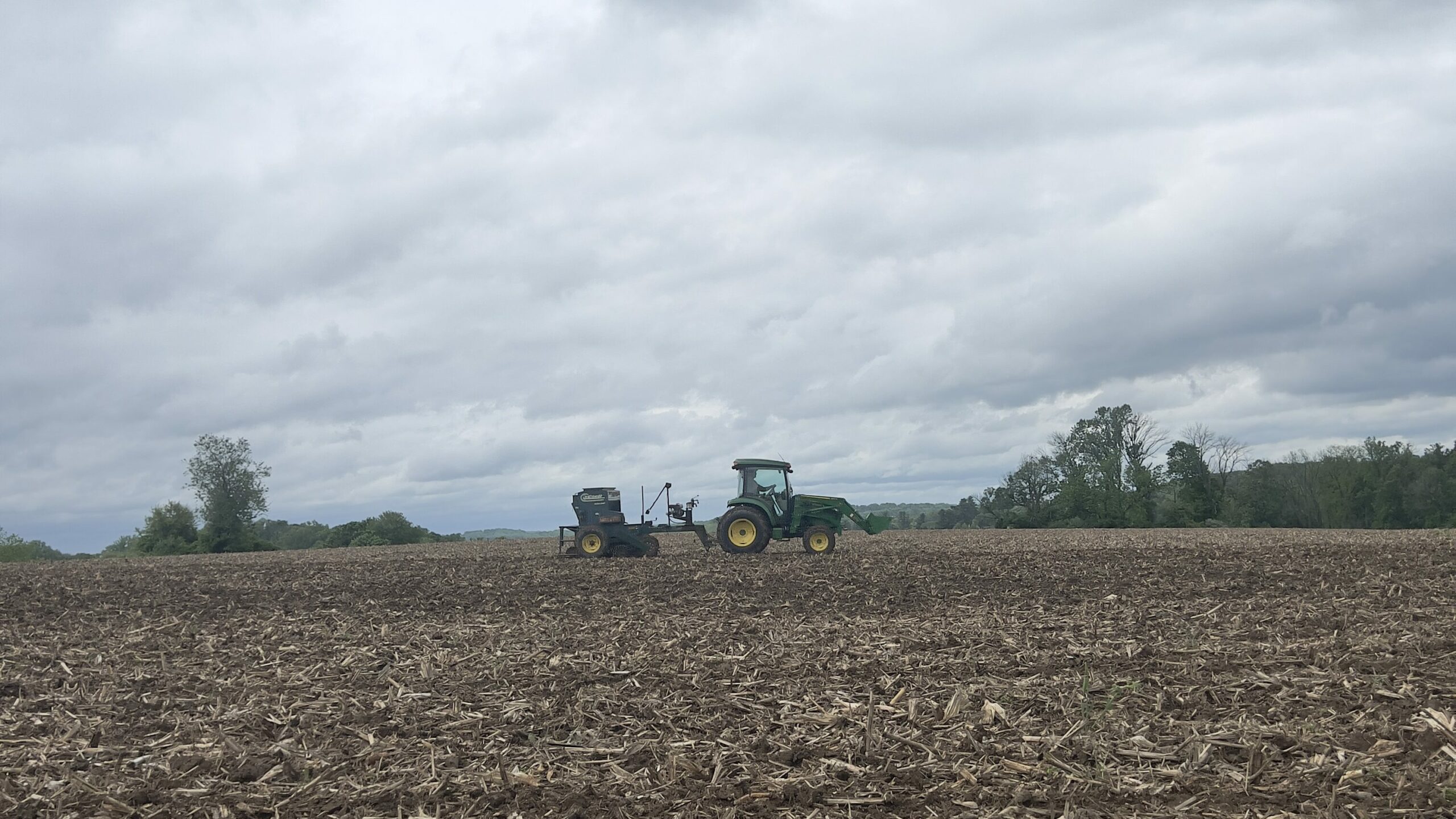
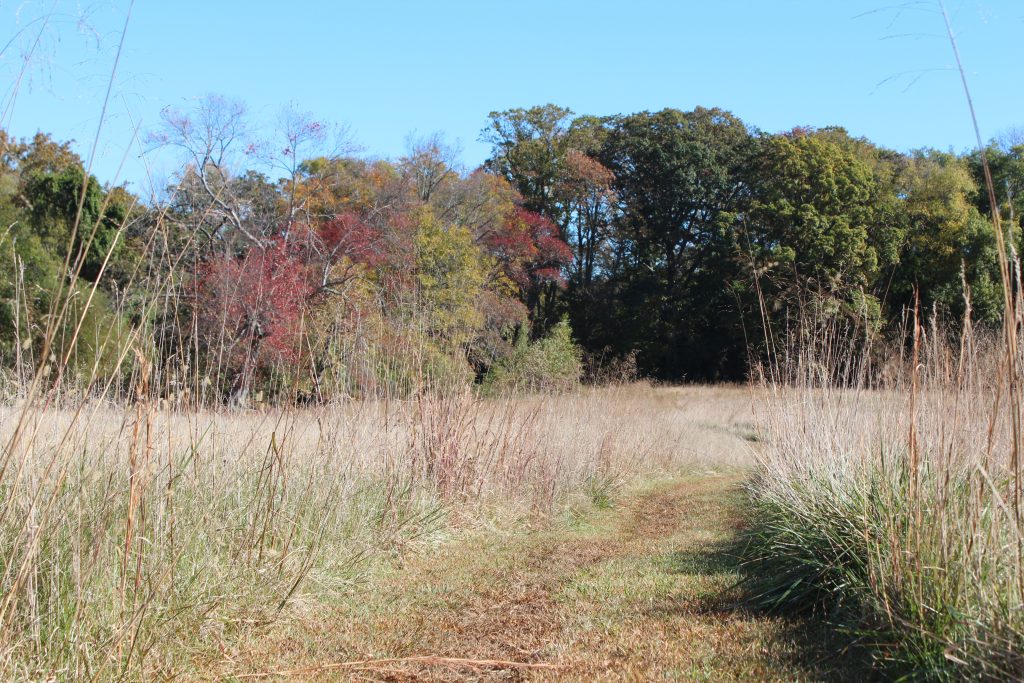
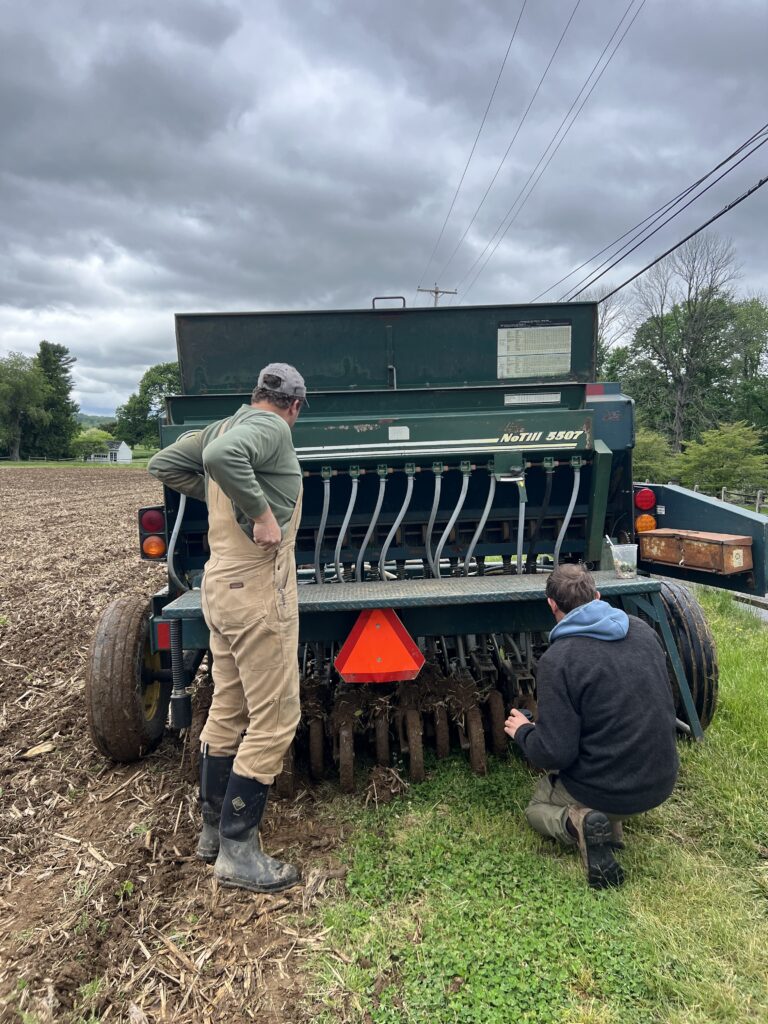
Our new 90 acre Kestrel Hill Preserve (KHP) contains about 25 acres of what were agricultural fields, historically used to farm corn and soybeans. After acquiring the property, we’ve begun the process of converting the field from agriculture to a warm season grassland. This is no small feat- a ‘no-till-drill’ was used to plant a variety of native grasses and forbs which will germinate over the next 12 months and begin to fill the fields. In the meantime, an annual cover crop of oats was sown to keep out unwanted weeds and help hold the loose topsoil in place. By replacing the old ag fields with a warm season grassland meadow, we can expect healthier soil, increased carbon sequestration, and more biodiversity.

On May 17th, John Holback completed the meadow seeding at KHP. Over the next couple weeks we can expect a flush of growth from the annual oats which will need to be mowed every so often to help the perennials get established. We may see some Black Eyed Susans and other flowering perennials this year, but they will be mowed along with the oats. Mowing is crucial for proper meadow establishment as it prevents weeds from going to seed while perennial plants establish healthy root systems. Agriculture to meadow conversion is a multi-year process in which our current work will be rewarded by lush growth in the long-run.
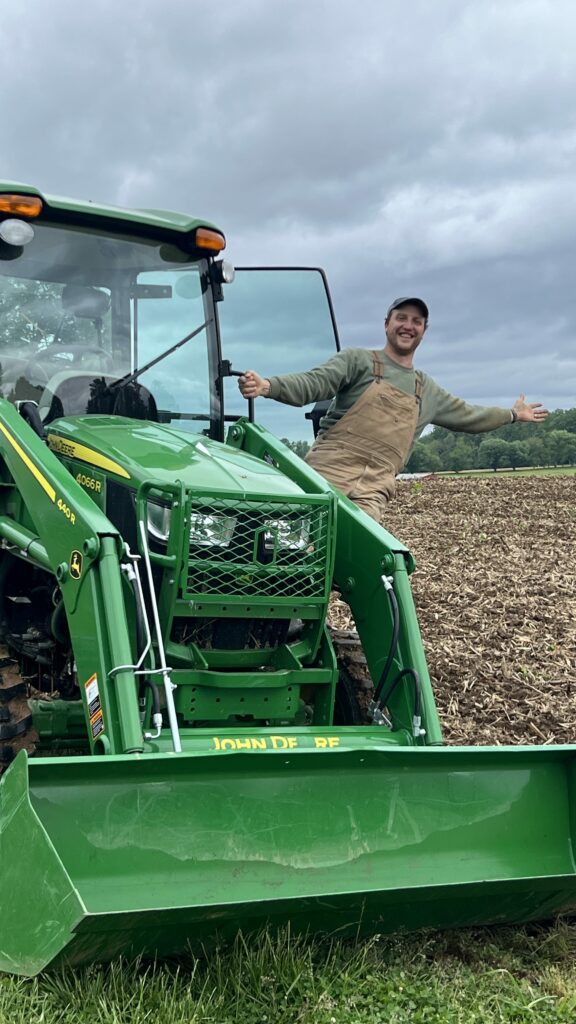
John posing with the Tractor!
John and Aaron inspecting the tractor
The tractor rigged and running

Filed Under: Uncategorized

A Stinky Sign of Spring: Eastern Skunk Cabbage

April 29, 2024 By Stewardship Team

By John Holback, Stewardship Manager

When I think back on the springs of my youth in southern Chester County, I think of muddy boots and dirty pant legs. I think of those relished lingering snow patches that disappeared slowly in the lowlands and the heavy snowballs that could be made from them. I think of prying free ice sheets from the edge of creek side gravel beds and throwing rocks to break the bergs as they floated down stream. I think of the crocuses coming up and later seeing sprouting daffodils, marking where my dad once made my brother and me “help” bury the bulbs. Spring was, and is still, good in southern Chester County. Now, with several decades of life lived, I have new thoughts of spring; spring cleaning, days getting longer, work getting busier, and taxes. Still, childhood memories endure, and one that perennially returns, especially during muddy lowland hikes, is that of trying to find an uninitiated victim to sniff some freshly sprouted skunk cabbage. I thought I was very clever then and sometimes still do, as I now try to get my nieces and nephews to take a whiff.

I know I am not the only one to opine on this interesting and charismatic plant, but I hope to offer something of a fresh perspective. A little background: Eastern Skunk Cabbage (Symplocarpus foetidus) is a member of the Aroid family, Araceae, and is endemic to eastern Canada down to Tennessee and North Carolina. It is an obligate wetland species, meaning that you will only find this plant growing in wetland conditions. Starting in late winter you will first see the plant’s flowering parts poking up like purple and green alien growths through often still frozen mud and snow due to its thermogenic properties (it creates its own heat). The hood like spathe opens to reveal the spadix – a spike covered by tiny crowded flowers. Sound familiar? That’s because you are likely familiar with other Aroids like Peace Lilly, Jack-in-the-Pulpit, and the new social media favorite, the Corpse Flower. Like many other Aroids, the plant is reasonably toxic. Should you taste it (please don’t), you will learn that the calcium oxalate crystals present in the plant have prominent tasting notes of hot needles and broken glass.

Though there is plenty of skunk cabbage in our region, in Tennessee, it is considered endangered. It might seem strange that a plant that is so abundant here can be considered endangered just several hundred miles away but because many of Tennessee’s lowlands are being destroyed for development, skunk cabbage is now at risk of disappearing there. Our lowlands are at risk too. Development, landscape degradation, and fragmentation cause harm to our natural areas and ecosystems. Excess runoff leads to soil erosion that can fill in and alter the soil chemistry of low areas, making it hard for the plants and animals that have evolved there to survive. According to The Chesapeake Bay Foundation, The Bay’s watershed continues to lose forest land at a rate of 70 acres a day, and while not all of that is skunk cabbage habitat, the impacts trickle down. Next door in the 13,539 square mile Delaware River basin, where we are located, nearly 15 million people and the region’s diverse flora and fauna, require access to clean water – something healthy, intact wetland ecosystems play a critical role in providing.

Perhaps you do not have the attachment to skunk cabbage that I do but I bet you do have a favorite plant, bird, or insect. “Charismatic megafauna” (yes that’s a thing) like the blue whale, gorilla, or bald eagle have served as a rallying point for conservationists everywhere and for good reason. My argument is that “regular ol’ flora and fauna” can be just as charismatic and serve as a rallying point too. I hope this spring, when you find yourself in the wetland areas at Ashbridge Preserve, Rushton Woods, or in your backyard gully, you take a moment to convince someone to sniff the skunk cabbage and remember that it and the wetland ecosystem it depends on are charismatic and important too.

Filed Under: Uncategorized

Create Your Own Meadow – Step 3: Preserve

March 19, 2020 By Stewardship Team

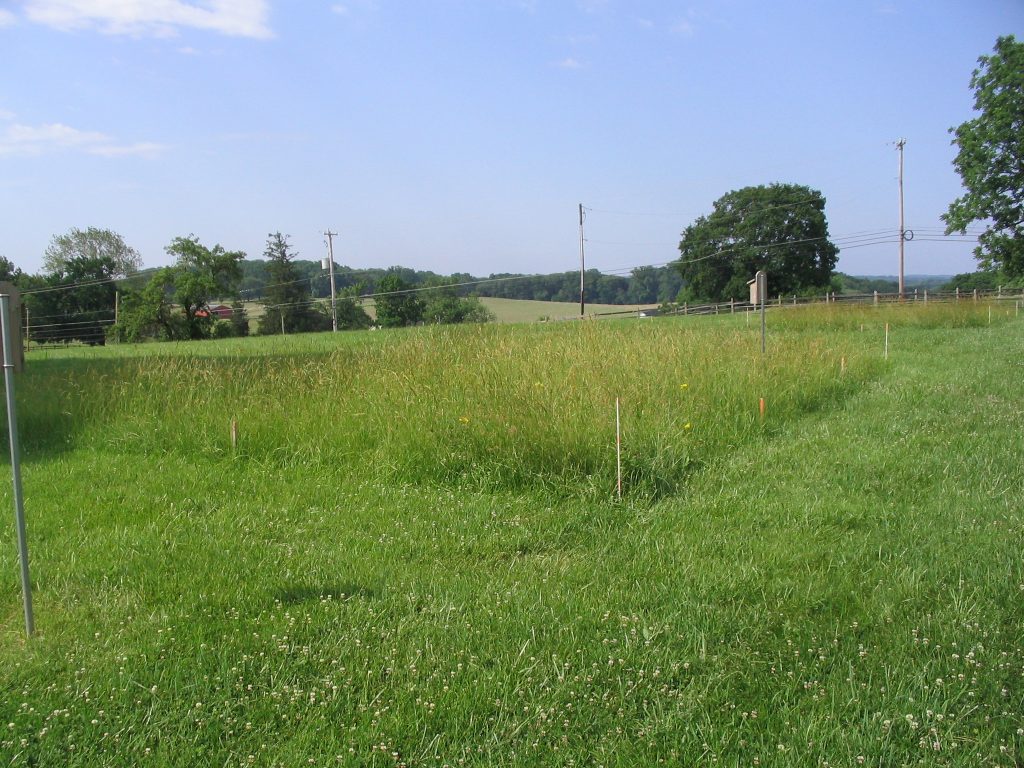
Early May – Early October: Once your wildflowers are planted, regularly inspect your meadow to ensure that invasive weeds are not colonizing the space. Hand pulling or cutting weeds below the height of native species should help to manage any invasives that may creep into your meadow.

Year Two and Beyond: Mow the entire meadow once a year in late March to early April to a height of about 6 inches — before the young wildflowers start pushing through the grass. Although some landscape professionals recommend mowing meadows in the fall as well, leaving plants unmowed over the winter provides important food and shelter for wildlife during the harsh winter months. Should you decide to mow a second time in the fall, wait until the year following installation to give the young wildflowers a chance to establish.

Wildflower plugs generally take three years to fully mature, so patience is required, but the result is well worth the wait!

Filed Under: Native Plants, native wildflower meadow, Stewardship, wildflower meadow

  • 1
  • 2
  • 3
  • Next Page »

CONTACT

925 Providence Road
Newtown Square, PA 19073
(610) 353-2562
land@wctrust.org

501(c)(3) EIN 23-2841453

JOIN OUR MAILING LIST

Copyright © 2026 · WCTRUST.ORG