WILLISTOWN CONSERVATION TRUST

  • Facebook
  • Instagram
  • LinkedIn
  • YouTube
DONATE
  • About
    • HOW WE WORK
    • WHERE WE WORK
    • OUR STAFF AND TRUSTEES
    • JOBS & INTERNSHIPS
    • RUSHTON CONSERVATION CENTER
    • STRATEGIC PLAN
    • INCLUSION, ACCESS, AND BELONGING
    • FAQs
  • LATEST
    • BLOG
    • IN THE NEWS
    • PUBLICATIONS
    • PHOTOS
  • EDUCATION
    • GROUP EDUCATION
    • LAND PROTECTION
    • STEWARDSHIP
    • BIRD CONSERVATION
    • COMMUNITY FARM
    • WATERSHED PROTECTION
    • ECOCENTRIC EXPERIENCE
    • RUSHTON NATURE KEEPERS (RNK)
  • NATURE PRESERVES
    • ASHBRIDGE PRESERVE
    • HARTMAN MEADOW
    • KESTREL HILL PRESERVE
    • KIRKWOOD PRESERVE
    • RUSHTON WOODS PRESERVE
  • EVENTS
    • EVENT CALENDAR
    • BARNS & BBQ
    • RUN-A-MUCK
    • WILDFLOWER WEEK
    • ACCESS Program
  • Support
    • WAYS TO GIVE
    • SPONSOR THE TRUST
    • CORPORATE PARTNERSHIP PROGRAM
    • JOIN THE SYCAMORE SOCIETY
    • LEGACY SOCIETY & PLANNED GIVING
    • VOLUNTEER
    • DELCO GIVES 2026
  • OUR NEWEST PRESERVE
    • OUR NEWEST PRESERVE- KESTREL HILL

Community Supported Avifauna

October 22, 2019 By Blake Goll

Volunteer, Kelly Johnson, in awe of a Blue Jay banded October 10th. Photo by Blake Goll

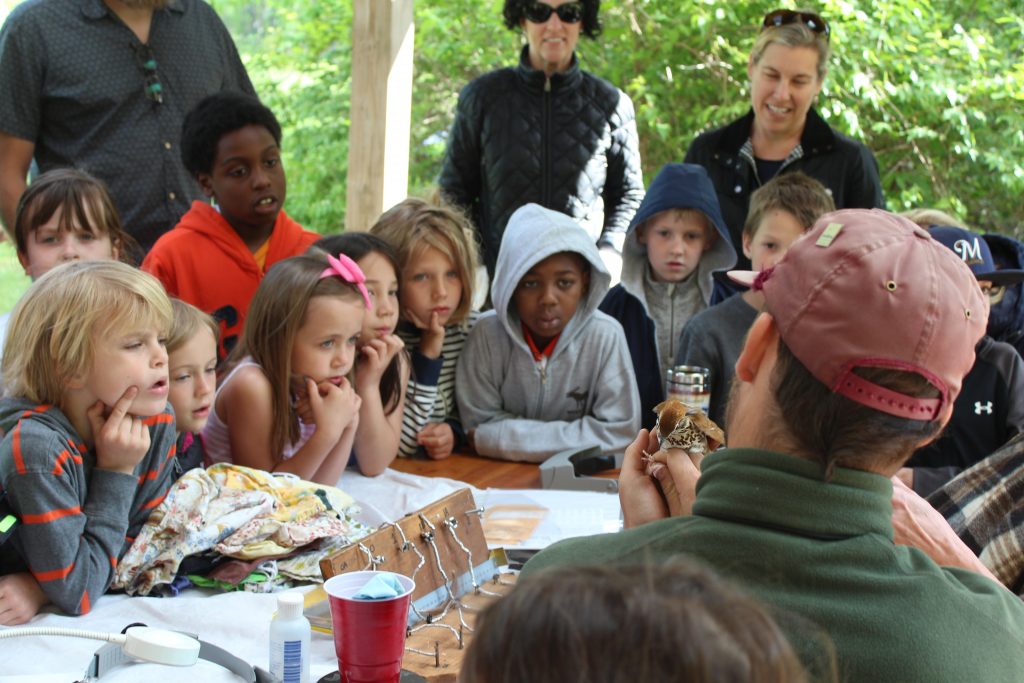
Rushton Woods Preserve is a place where people gather in celebration of abundance. Community Supported Agriculture (CSA) members gather for their share of the soil’s bounty each week, and myriad groups from the community, schools, and universities gather at the songbird banding station to witness the bounty of the sky. Much like the agricultural harvest, our bird catch follows seasonal patterns that can help a visitor (or bird bander) develop a deep connection to the rhythm set forth by Earth’s 23.5 degree tilt.

View of Rushton Farm in Fall from Fred’s wagon. Photo by Blake Goll

As this was my first year participating in the Rushton Farm CSA, I noticed some interesting correlations between the harvest and the catch. My favorite crisp spring vegetables like kale, radishes, turnips, broccoli, leeks, and little gem lettuces have all made an encore appearance now that the cool fall weather is here. These I liken to our butterflies of the bird world, the “special” warblers, that we can only expect to see during spring and fall migration: Black-throated Blue Warblers, Chestnut-sided Warblers, Magnolia Warblers, Northern Parulas, Black-and-white Warblers, and American Redstarts.

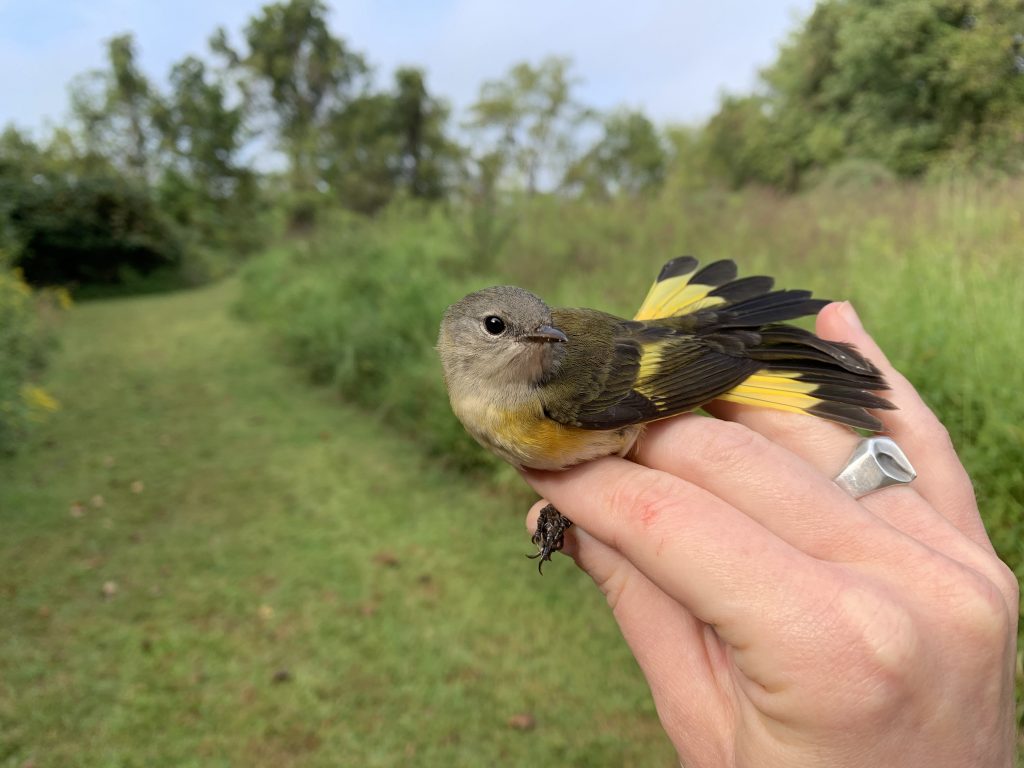
  • American Redstart banded in September. Photo by Blake Goll
  • Black-and-white Warbler banded in October. Photo by Celeste Sheehan
  • Male Chestnut-sided Warbler banded in September. Photo by Blake Goll
  • Northern Parula banded in September. Photo by Jim Moffett
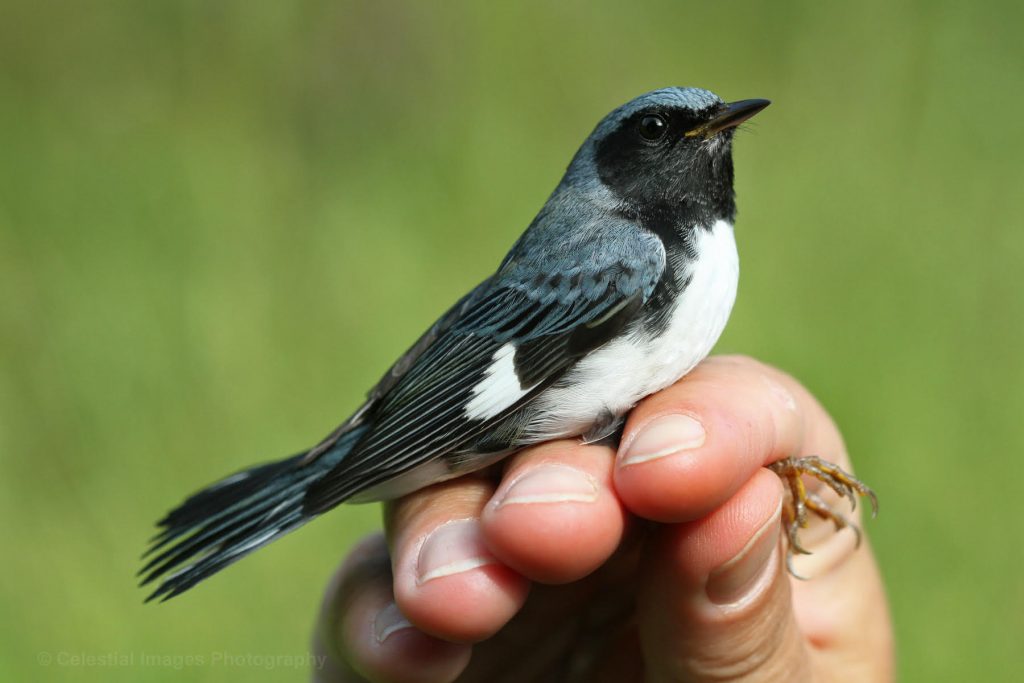
  • Black-throated Blue Warbler banded in September. Photo by Jim Moffett

Throughout the summer, I was overwhelmed with tomatoes and zucchini. These prolific crops mirror our common birds that breed at Rushton all summer long like Gray Catbirds and Common Yellowthroats. Catbirds are a bander’s tomatoes making up the bulk of our catch August through September; they even ironically dwindled in numbers at about the same time as the tomato harvest finally ended a couple of weeks ago. And just like the tomatoes, we miss them when they’re gone.

Rushton Nature Keeper releasing a banded Gray Catbird October 10th. Photo by Blake Goll

Now CSA members are enjoying the hardy winter produce like squash and sweet potatoes, while our avifauna has shifted to tough winter birds from the north like White-throated Sparrows, kinglets, and Hermit Thrush.

  • First White-throated Sparrow of the season (10/1) Photo by Celeste Sheehan
  • Golden-crowned Kinglet Oct 16th. Photo by Celeste Sheehan

Recent highlights include a young male Rose-breasted Grosbeak on October 10th, our third Yellow-breasted Chat on October 1st (thanks to our new reduced mowing regime), a couple of young female Sharp-shinned Hawks in September, and a young male Scarlet Tanager on September 23rd.

  • Rose-breasted Grosbeak banded October 10th. Photo by Blake Goll
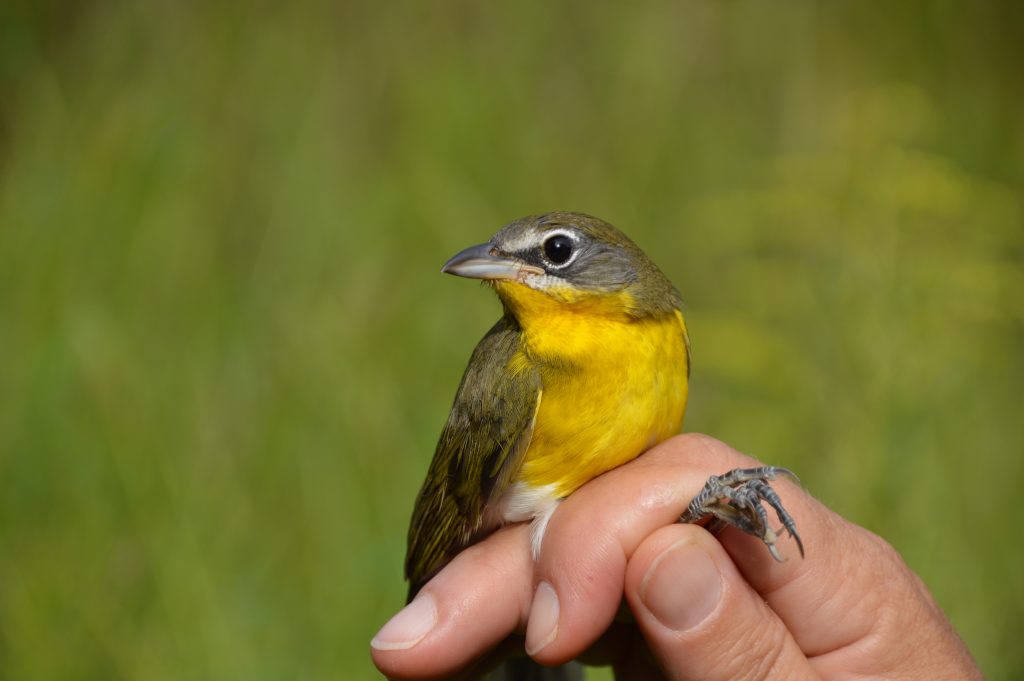
  • Yellow-breasted Chat (third of the season!) banded October 1. Photo by Jim Moffett.
Young female Sharp-shinned Hawk banded September 17. Photo by Jessica Shahan.
Young male Scarlet Tanager banded September 23. Photo by Blake Goll

Black-throated Blue Warbler numbers are back up this year from our previous year’s alarming slump. One little female got our silverware on October 1st and decadently dined for five days, increasing her body weight by 22%. A handsome male Black-throated Blue checked in on October 10th as our one-thousandth bird of the season, making this fall our most productive yet by almost double our past records.

Our 1,000th bird banded of the season on October 10th: a Black-throated Blue Warbler. Photo by Jodi Spragins

This local boom may seem peculiar in the wake of the recent article in Science, citing the devastating loss of 3 billion birds in the past 50 years as a result of habitat loss, pesticides, climate change, and other human threats. However, the majority of our birds are hatch year birds that have yet to complete the most perilous journey of their lives: their first migration in the Anthropocene. Thank goodness we can offer them temporary sanctuary within a community of people who care about open space and the abundance it supports.

There’s a lot going on in the woods,

Blake

The Rushton banding crew with No.1,000 (a Black-throated Blue Warbler). Photo by Jodi Spragins

Filed Under: Bird Banding, Bird Conservation, Farm Tagged With: Bird banding, Black-throated Blue warbler, Community supported agriculture, CSA, fall migration, Scarlet Tanager, Sustainable Agriculture

Shocking Report Illustrates the Importance of Land Protection

September 20, 2019 By Communications Team

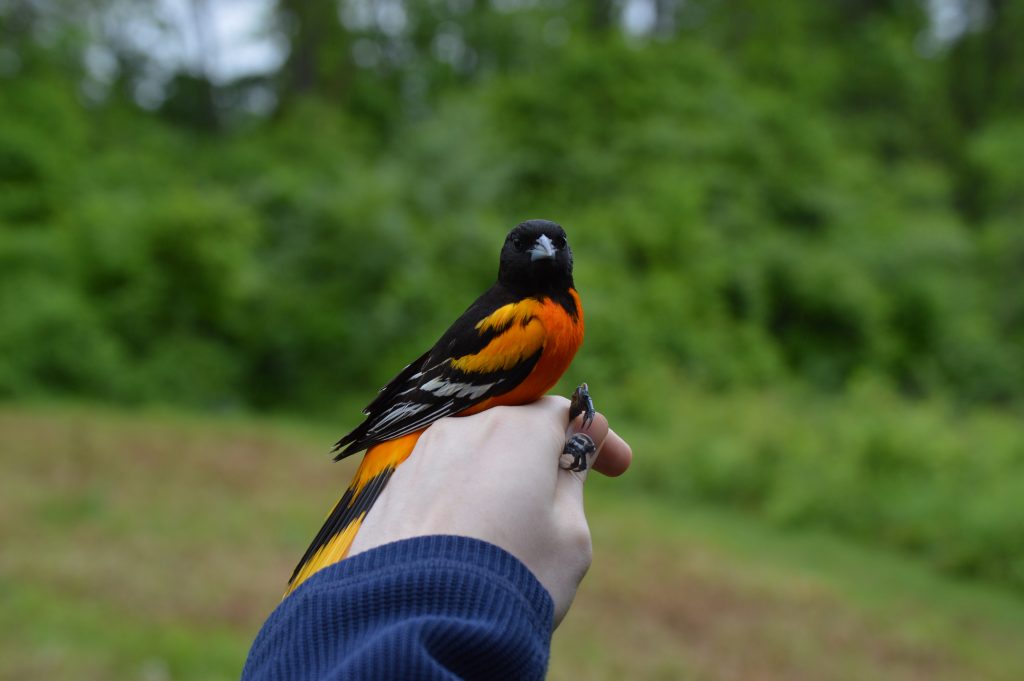
Yesterday an alarming study in the journal Science was released, which detailed the dramatic and shocking decline of birds in North America. Three billion birds have been lost in the last 50 years. This staggering drop includes not only threatened species, but also common ones like Eastern Meadowlark, Wood Thrush, Barn Swallow, Blue Jay and even Baltimore Oriole (like the one pictured here, banded this year at Rushton Woods Preserve).
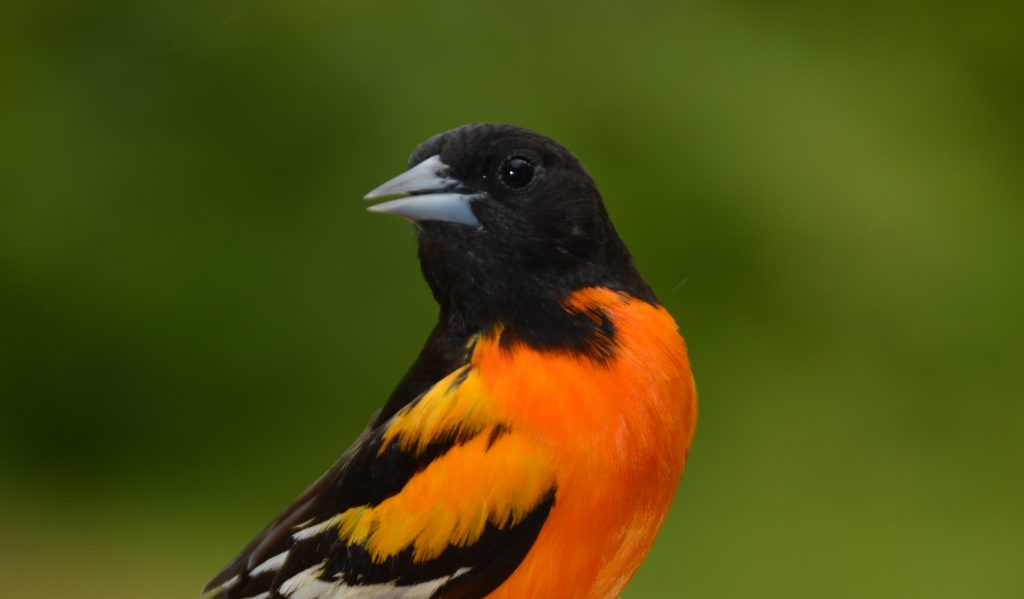
For every 10 Baltimore Orioles in 1970,
4 have been lost since.

Meadowlarks rely on healthy grasslands for habitat, which have been disappearing as human development and agriculture spreads across the land. Making matters worse without those grasslands, which are also needed to filter stormwater runoff, waterways that birds also rely on are being contaminated.

For 40 years, Willistown Conservation Trust has been permanently protecting land to advance conservation, including the preservation of vital habitat. Our Bird Conservation Program has been using this land to help study birds and promote their protection, operating a banding station, studying their health. Most recently, the Bird Conservation Program and their partners have been among the leaders  in expanding the Motus Wildlife Tracking System throughout the Mid-Atlantic and the Northeast United States. The Willistown Area has even been designated an Important Bird Area by the National Audubon Society because of its habitat and biodiversity.

We will continue our fight to protect land and habitat that birds need to survive. And despite the frightening report, there are some things you can do to help. Here are a few simple actions you can take:

  • Keep cats indoors. It is estimated that domestic cats kill millions of birds every year.
  • Lobby your representatives in Washington, DC, to support the Migratory Bird Protection Act, the Clean Water Act, the Clean Air Act and other legislation that protects the environment.
  • Reduce (or better still eliminate) the use of pesticides (particularly neonicotinoids) and herbicides on your property.
  • Create habitat for birds in your own yard by maintaining shrub scrub, planting native plants, and providing water sources.
  • Participate in citizen science efforts to document bird populations.
  • Provide financial support to organizations that support bird conservation, like Willistown Conservation Trust.

While we are disheartened by the findings of this report, Willistown Conservation Trust is more motivated than ever before to continue our work to protect the land and the birds that rely on it.

We (and the birds) thank you for your continued support!
Filed Under: Bird Banding, Bird Conservation, Bird ecology, Conservation, Land Protection, Nature

Somewhere Over the Rainbow

September 13, 2019 By Blake Goll

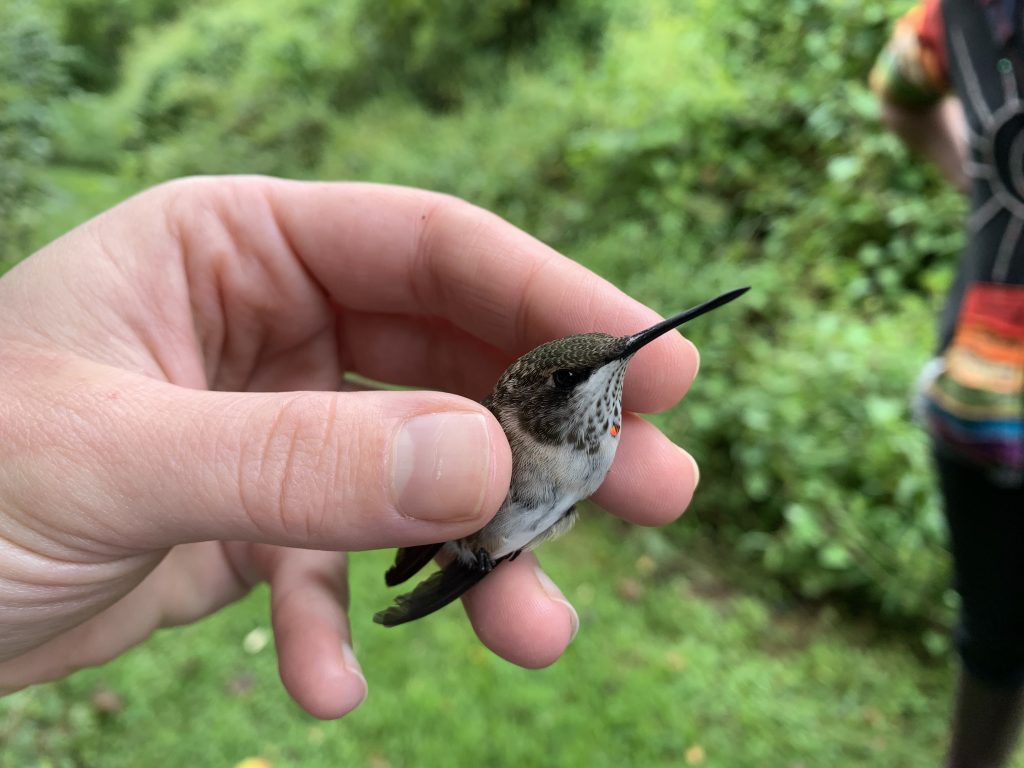
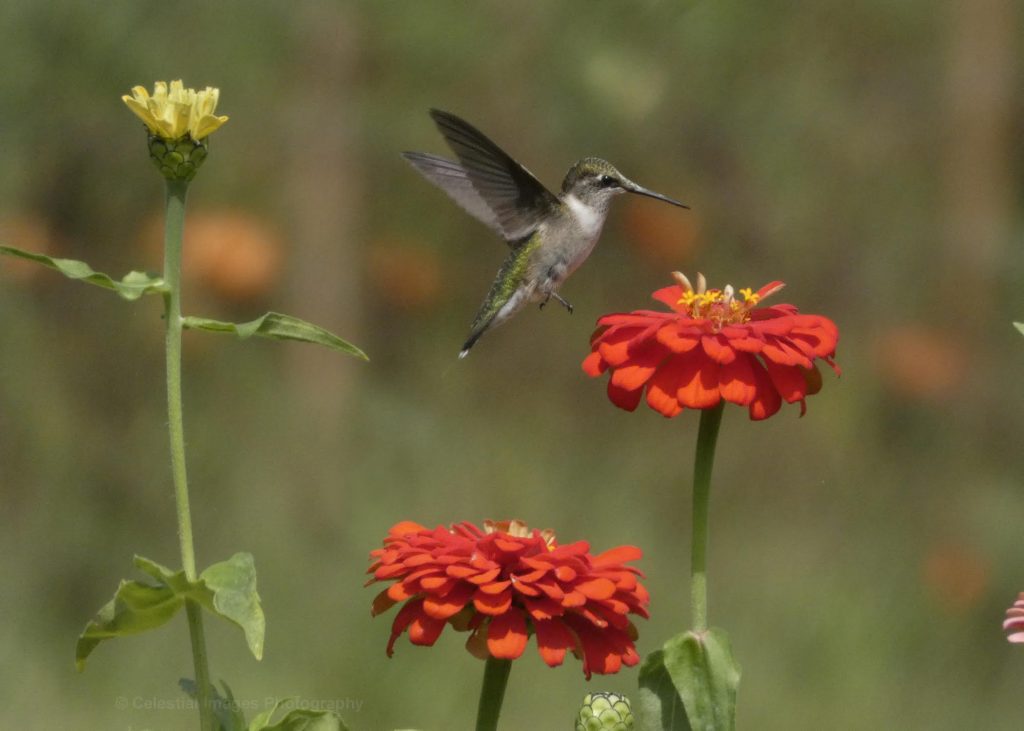
Ruby-throated Hummingbird at Rushton Farm. Photo by Celeste Sheehan

After peeling yourself out of bed in the pitch black of pre-dawn in deliberate disobedience of your circadian rhythm, you wander through the dark to the bathroom where you reluctantly flip on the light and stand blinking into the mirror with owl sized pupils. You go through the motions of getting yourself dressed, quiet as a mouse so as not to wake your sleeping significant other. Finally you creep to the kitchen to adeptly pour coffee into your thermos without spilling a single precious drop even though the light from the east is still woefully dim.

When you get to the preserve, it is near dawn. The air is fresh, and the trees are alive with tinkling chip notes of migrant birds. As you get to work setting the nets in the hedgerows, you take comfort in the sound of an Eastern Screech Owl singing its haunting song down in the lower woods. You smile as the familiar catbird belts out its harsh petition for the sun to rise now. Above you, a rainbow stretches from one lavender cloud to the next and now you remember what it means to be a part of nature.

Billions of birds now have their sights set somewhere over that rainbow as they travel south by starlight. Our bird banding operation at Rushton Woods helps us monitor which migrants are using our specially managed preserve, understand how long they spend here preparing and fueling up for the journey, learn about populations and lifespans, and study their movements.

  • Yellow-breasted Chat captured this week. Photo by Blake Goll/Staff
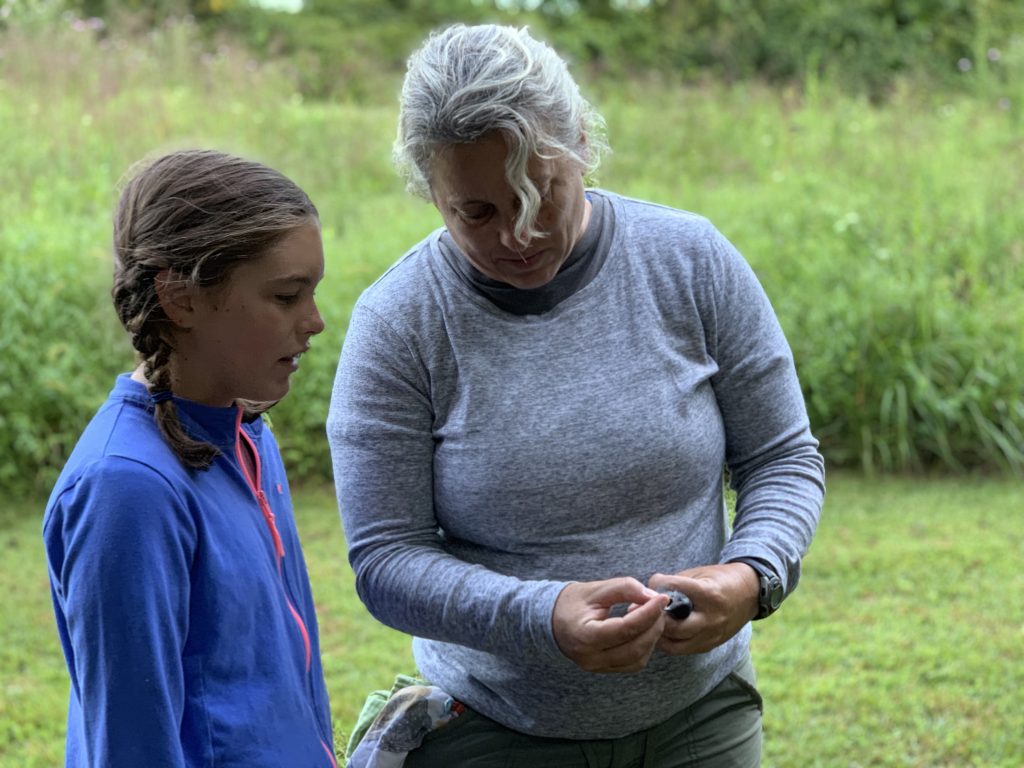
  • Director of Bird Conservation, Lisa Kiziuk, educates visitor about a Gray Catbird before releasing it. Photo by Blake Goll/Staff

This fall has been excellent so far with a catch most days of 90-100 birds despite the warm weather we’ve been experiencing. Some highlights have included Connecticut Warbler, Yellow-breasted Chat, Nashville Warbler, and Worm-eating Warbler. Some of the most abundant species include Gray Catbird and American Goldfinch.

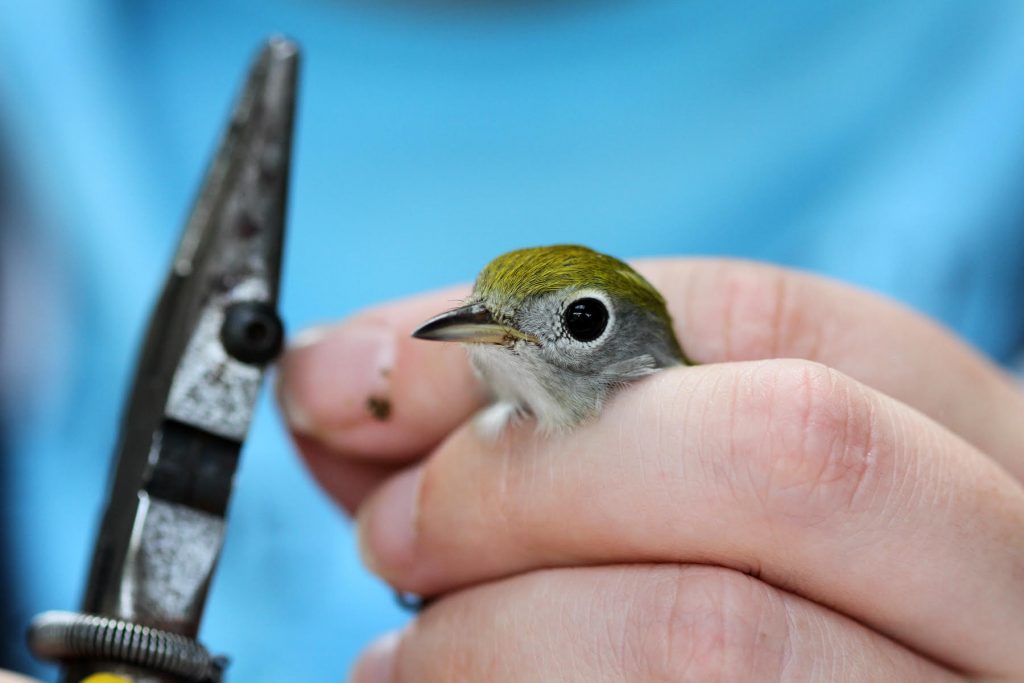
  • Chestnut-sided Warbler being banded. Photo by Celeste Sheehan
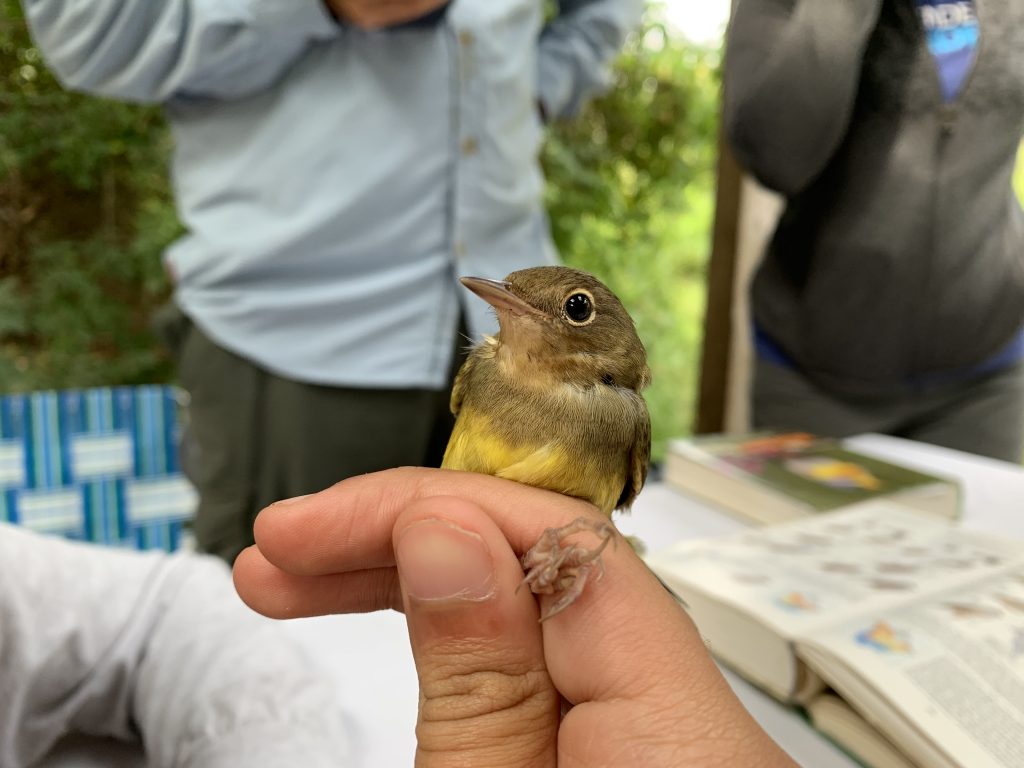
  • Connecticut Warbler banded 9/5. Photo by Blake Goll/Staff
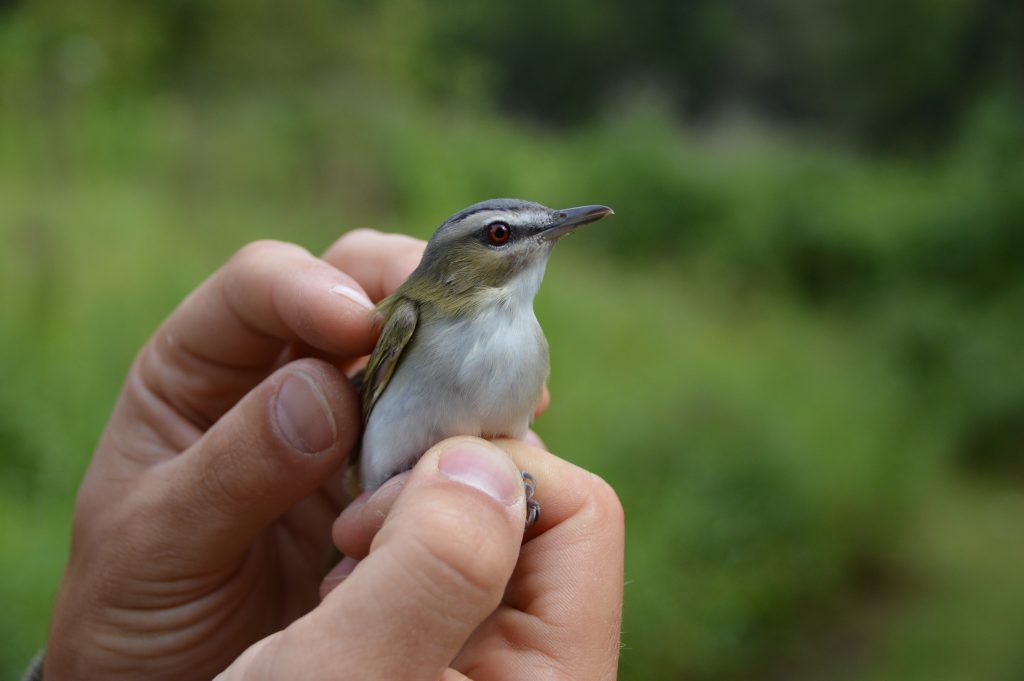
  • Red-eyed Vireo banded this week. Photo by Blake Goll/Staff
  • American Redstart. Photo by Blake Goll/Staff
  • Black-throated Blue Warbler banded this week. Photo by Celeste Sheehan
  • Young Ruby-throated Hummingbird caught at Rushton this fall. We simply release these at the net since we do not have a special hummingbird banding license. Photo by Blake Goll/Staff

Songbird Banding Open House is Tomorrow Morning (9/14) from 7-10:30 am at Rushton Woods Preserve

Come on out to observe our bird banding, see incredible migratory birds up close, and chat with field scientists.

There’s a lot going on in the woods,

Blake

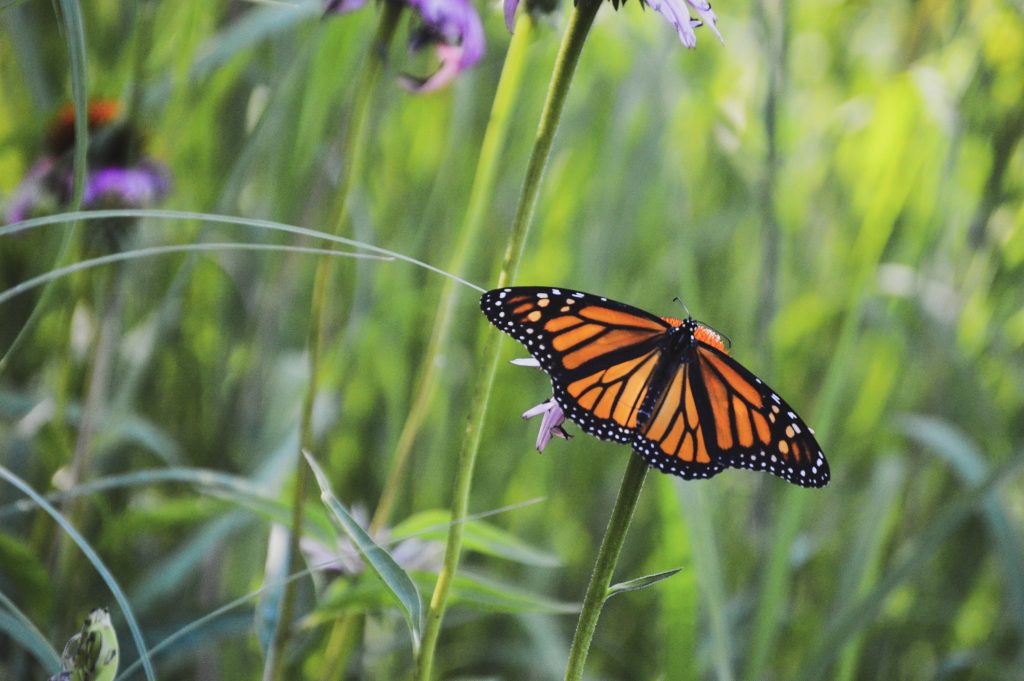
Monarch butterfly. Photo by Blake Goll/Staff

Filed Under: Bird Banding, Bird Events, migration Tagged With: Bird banding, fall bird migration

Southbound

September 2, 2019 By Blake Goll

Baltimore Oriole banded this May. Photo by Blake Goll/Staff.

Summer is short for our migratory birds like this dazzling Baltimore Oriole. They grace us with their stunning tropical colors and songs for just a few months before their restless souls are again pulled southbound. The truth is, many of these neotropical migrants would likely call the lower latitudes their real home. The North’s appeal lies only in our temperate protein pulse, set in motion each spring by the freeze/thaw cycles found nowhere else. Rich nutrients from glacial soils migrate to the surface of rivers as it warms, thus supercharging an insect driven food web.

This spring’s banding season was our best spring yet with a total of 608 birds of 51 species. That total number includes 483 brand new birds plus 125 recaptures. All but one of the recaptures were our own birds either banded within the same spring season or in previous years at Rushton. The one outlier, or foreign recovery, was an American Goldfinch that was originally banded last fall as a hatch year bird in Maryland!

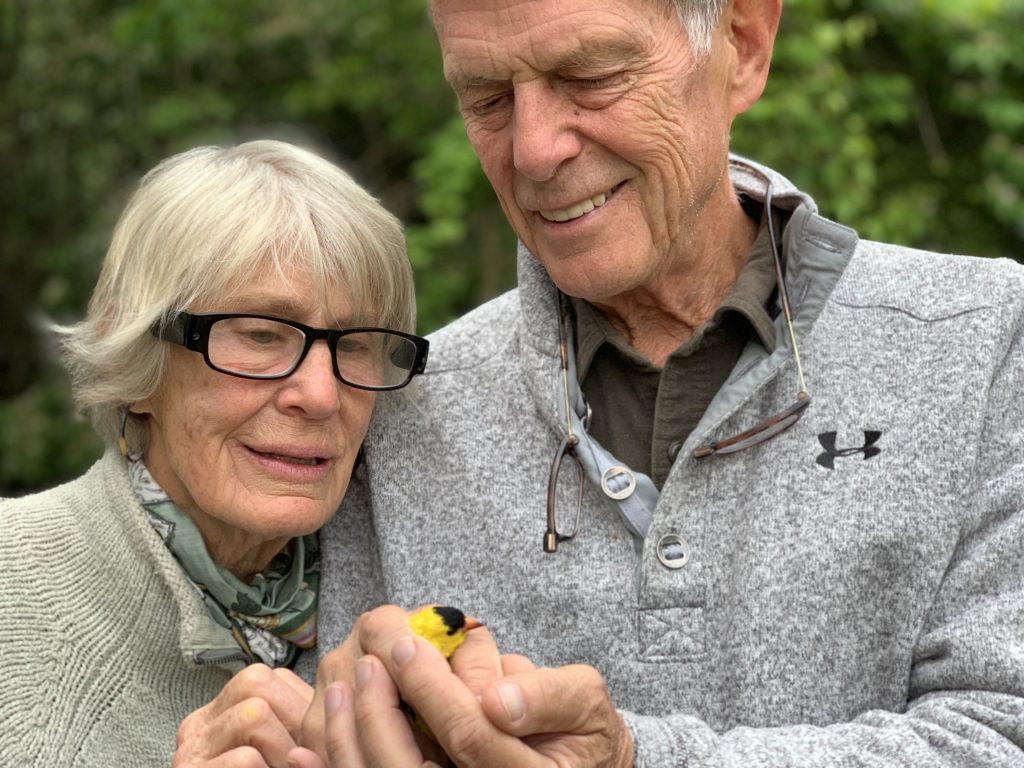
Visitors helping to release an American Goldfinch after it was banded this May. Photo by Blake Goll/Staff

April and May set some other records for us as well. We were seeing stripes as Black-and-white Warblers dripped from the trees; sure enough, the data showed that we more than doubled out highest Black-and-white capture (14 in 2017) with a total of 33! Oriole numbers were up as well with 7 Baltimore and 3 Orchard. This could very well be a testament to the rich edge habitat, which is preserved around our Rushton Farm that promotes conservation.

Visitors of all ages, from grade schools to universities, flocked to our banding station this spring to learn about these incredible creatures and how our banding efforts help us understand more about them. Check out our previous blog post to learn more about why we band birds at Rushton. Also please enjoy the galleries below of the highlights from our spring banding season. (Click on the individual photos for slideshow style with captions)

April 2019 Rushton Banding Highlights

May 2019 Rushton Banding Highlights

You can visit our banding station at Rushton Woods Preserve now that we are officially opened to the public for fall migration every Tuesday and Thursday morning (weather permitting) from sunrise until about 11 am. Fall migration extends from September 3rd to the first week of November. Stay tuned here for updates and photos throughout the exciting fall season, which is already off to a roaring start with 104 birds caught this past Tuesday.

There’s a lot going on in the woods,

Blake

A bird bander measures the wing of an American Goldfinch this April. Photo by Blake Goll/Staff

Filed Under: Bird Banding, Bird Conservation, migration Tagged With: Bird banding, migration, migratory bird, Oriole

Getting the Band Back Together

August 29, 2019 By Bird Conservation Team

Fall migration is just around the corner. And that means the banding station at Rushton Woods Preserve will be back in operation.

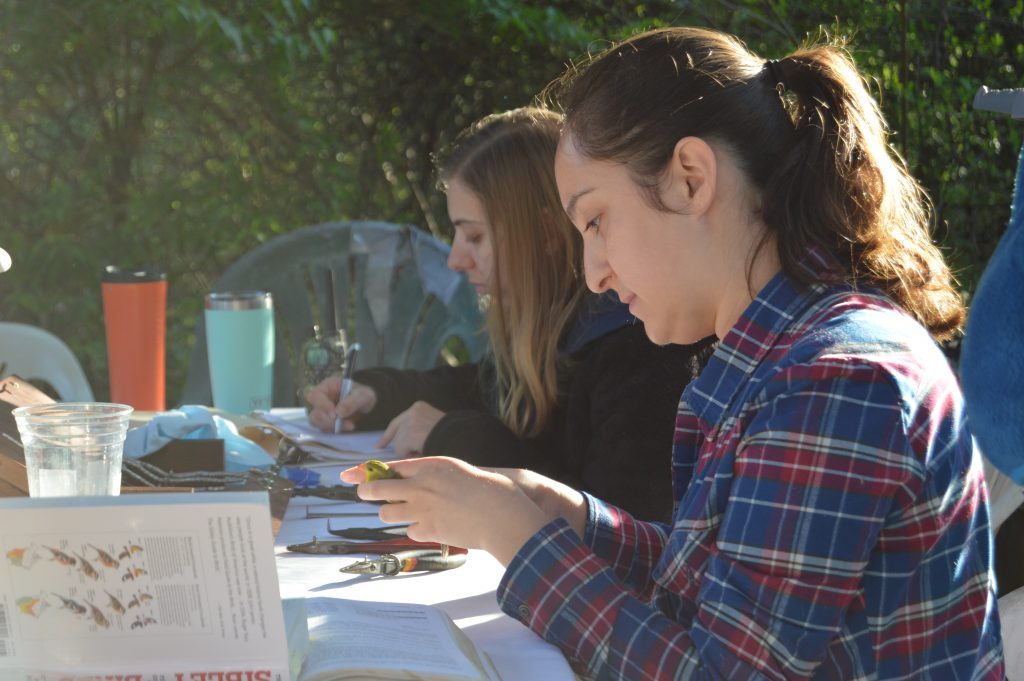
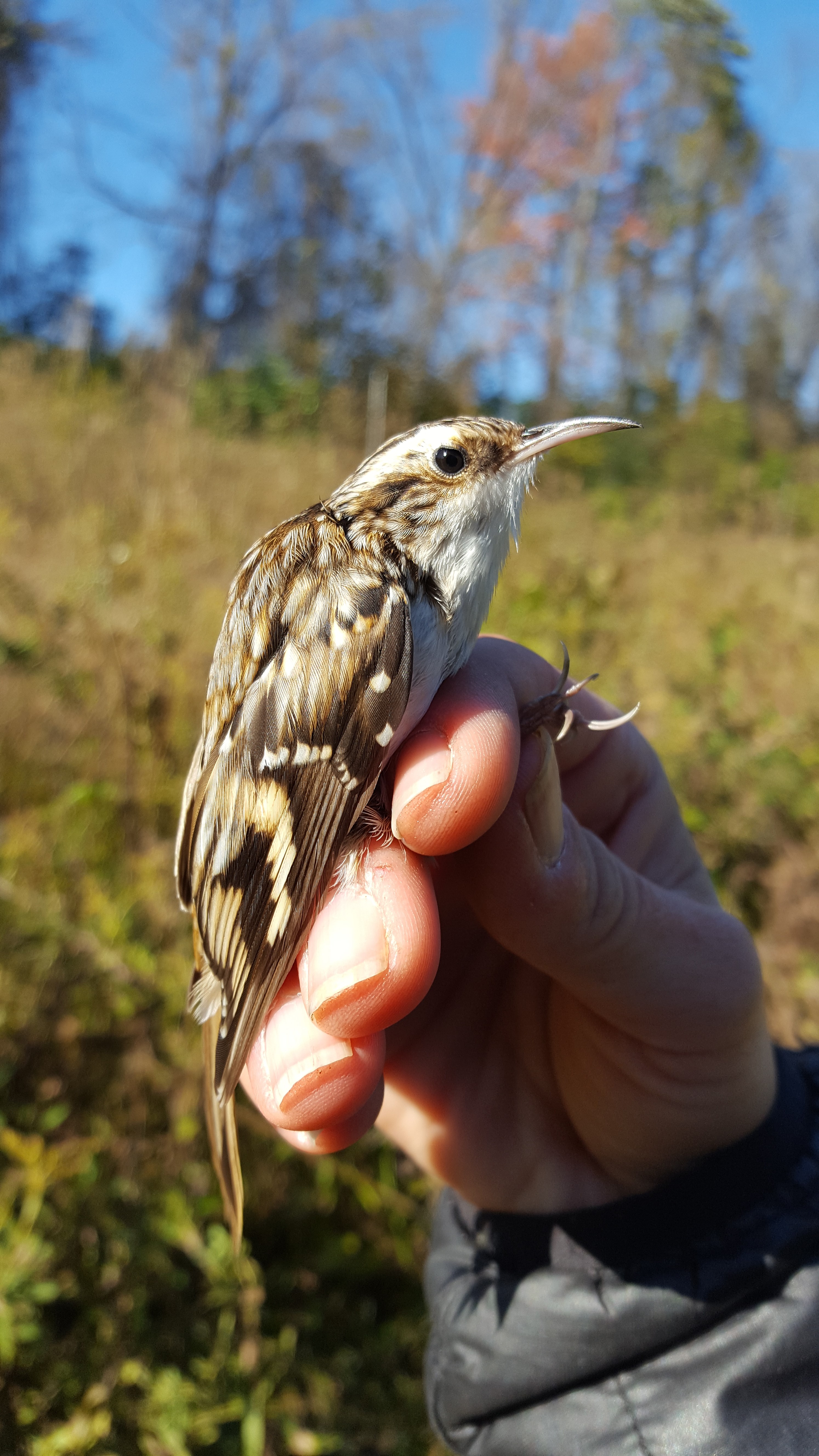
Bird banding is an important and powerful scientific tool in bird conservation. Understanding our reasons for banding and being able to relate those reasons to the public, along with proper training and the maintenance of high scientific standards is necessary for the success of our banding/outreach program.

Elementary school students observe banding at Rushton Woods Preserve

Rushton Woods Preserve (RWPR) lies within an Audubon Important Bird Area (IBA), offering a great opportunity for banding and allowing us to study the seasonal and long term population patterns and species diversity of migratory and breeding birds. The RWPR banding project contributes to continent-wide monitoring efforts and exemplifies the benefits of low-impact land management practices on bird populations. The RWPR station also allows us to train committed volunteers in the basics of bird banding and creates a setting for responsible nature education and conservation outreach.

In 1595, one of Henry IV’s banded Peregrine Falcons was lost in pursuit of a bustard in France. The falcon showed up 24 hours later in Malta, 1,350 miles away; thanks to banding, they were able to calculate that the falcon averaged a speed of 56 miles per hour. Duke Ferdinand placed a silver band on a Grey Heron around 1669 and the bird was then recovered by his grandson in about 1728, indicating that the heron had lived at least 60 years. In 1803, John James Audubon tied silver cord to the legs of a brood of Eastern Phoebes near Philadelphia and was reportedly able to identify two of the nestlings when they returned to the neighborhood the following year.

These centuries-old records are not only amazing, but gave inspiration to naturalists and scientists interested in understanding the mystery of migration. Today, bird banding is helping to answer questions not only about migration and longevity, but also site productivity, dispersal of young, metapopulations , site fidelity, survivorship, behavior, ecotoxicology and many other population ecology questions important to bird conservation and management around the world. In North America, banding is overseen by the US Geological Survey’s Bird Banding Laboratory (within the Department of the Interior) and the Canadian Wildlife Service. These offices issue federal permits, distribute bands, and compile all the data collected from bird banding. All of the data collected at the RWPR is sent here and is made available to researchers and other banders. Learn more at https://www.pwrc.usgs.gov/BBL/homepage/history.htm.

If you would like to observe the banding process and learn about the science, banding activities at the Rushton Woods Preserve banding station are open to the public on Tuesdays and Thursdays. See our events calendar for dates, time, and other details.

Filed Under: Bird Banding, Bird Conservation, Bird ecology, Bird Events

  • « Previous Page
  • 1
  • …
  • 3
  • 4
  • 5
  • 6
  • 7
  • …
  • 24
  • Next Page »

CONTACT

925 Providence Road
Newtown Square, PA 19073
(610) 353-2562
land@wctrust.org

501(c)(3) EIN 23-2841453

JOIN OUR MAILING LIST

Copyright © 2026 · WCTRUST.ORG